400 Volunteers Read Robert Caro's The Power Broker Aloud for 66 Hours
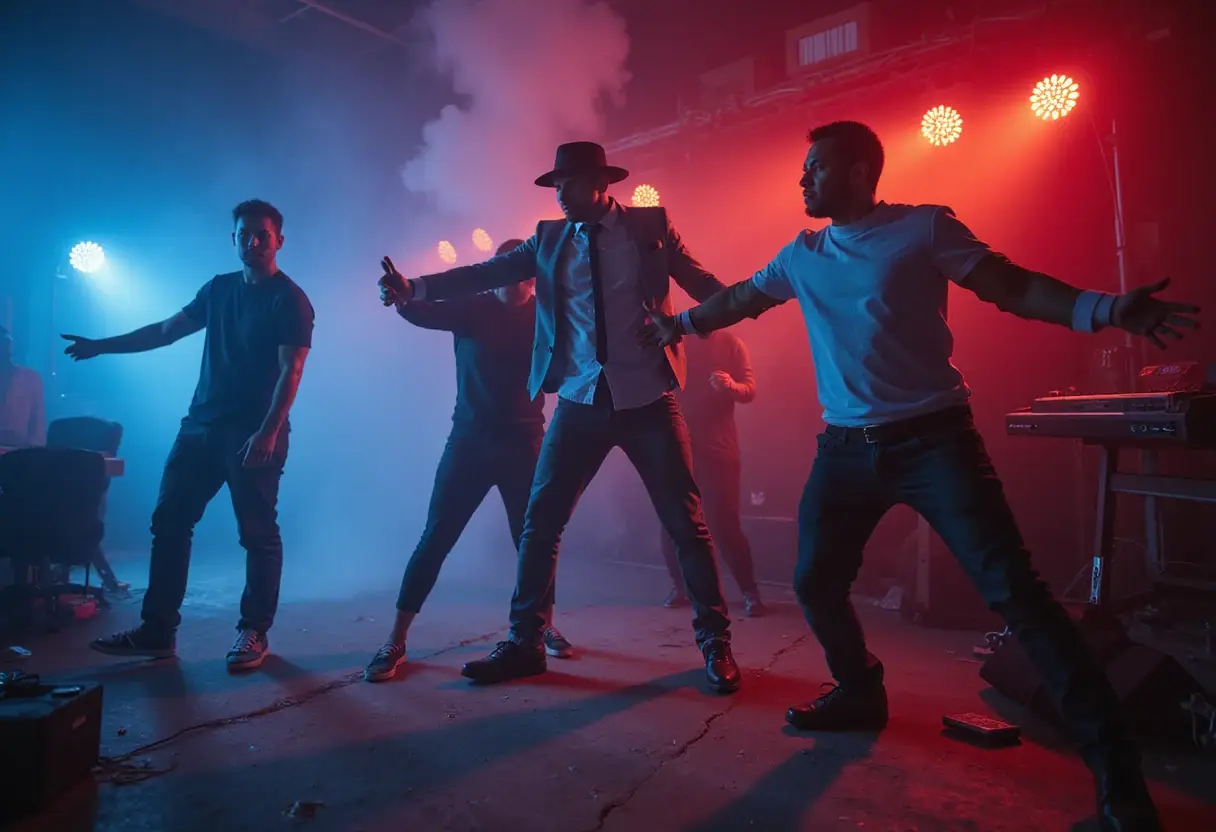
More than 400 volunteers read all 1,162 pages of The Power Broker aloud in a Brooklyn warehouse. Robert A. Caro delivered the last line himself, on video, at the end of a 66-hour marathon.

Programme
- More than 400 volunteers read The Power Broker aloud in ten-minute turns over 66 hours.
- The event ran from Thursday into Sunday at Judgy Baby, a warehouse under Moses's Gowanus Parkway.
- The Power Broker turns 50; it runs 1,162 pages and covers Robert Moses's tenure as NYC Parks Commissioner.
- Organizer Brad Vogel said the idea grew from a Power Broker reading group he ran last year.
- Robert A. Caro read the final page via pre-recorded video on the livestream.
More than 400 volunteers read Robert Caro's 1,162-page The Power Broker aloud, in ten-minute shifts, over 66 hours at a Brooklyn warehouse. The marathon ran from Thursday into Sunday at Judgy Baby, an industrial space in the shadow of the Gowanus Parkway — a highway built by the book's subject, Robert Moses. Robert A. Caro himself read the final page, on pre-recorded video, as the last volunteer of the event.
The organizers, Brad Vogel, Judgy Baby's director of special projects, and his team, recruited readers through an open call. Vogel told The New York Groove the idea came out of a Power Broker reading group he ran last year.
"Instead of people saying 'no that's ridiculous,'" Vogel said, "people were actually excited."
The book marks its 50th anniversary this year. It chronicles Moses's transformative tenure as New York City Parks Commissioner, during which he built miles of highways, roads, bridges and parks — at the expense of low-income families, farmers and other less powerful New Yorkers. Power Broker devotees are not a niche crowd. The marathon's opening stage filled with luminaries: Caro's editor, the voice of the New York subway system, and current government officials, a spread one participant likened to a "nerd Illuminati."
What happens at a 3 a.m. reading slot?
One reader, a Lit Hub writer on the Caro beat, drew a 3:10 a.m. Sunday slot after requesting afternoon, evening and — after a pause — morning availability. He arrived at 2:00 a.m., set his alarm for 1:15 a.m., and crossed Brooklyn toward the harbor.
The warehouse, some 50 hours into the marathon, was livelier than expected. A few people napped. Most chatted, ate, or read novels. There was coffee, wine, and a pile of commemorative t-shirts.
The system ran on precision. A volunteer pointed each new reader to where the last one stopped. Readers had to find a natural pause — possibly mid-sentence, possibly on a comma — when their ten minutes ended. Caro is long-winded, participants were warned. The marathon was also running ahead of schedule, so readers were asked to slow down. Caro really does get people excited.
The 2:00 a.m. stretch landed in the Tavern on the Green controversy, one of the rare moments Moses faced personal public scrutiny. Each reader passed the book to the next with hearty applause, no introductions — a succession of what one participant called "Vestal priestesses keeping the flame of this project warm." One literal-minded reader slowed down with long, deliberate pauses between each word, drawing delirious laughter and a round of cheers.
At 2:50 a.m., the Lit Hub writer took the on-deck chair, then the stage. His section opened: "Robert Moses still ran the show." He stumbled twice — "daises" briefly looked like "daisies," and "Rockefeller 3d" read as "three d" until corrected. He was delighted to find a Caro list in his three pages, a comma-laced inventory of Moses's plan for Lincoln Center.
Why do New Yorkers keep turning the pages?
The event's closing energy recalled other collective civic efforts — the City Marathon, the WGA writers' strike — everyone stretched, everyone proud, nobody willing to let the rest down.
The book's pull for New Yorkers is its living nearness. As one volunteer put it, reading The Power Broker in New York feels like running into an ex — every corner you turn, there Moses is again, standing in your way.
The final morning, the Liv Hub writer pulled up the livestream to catch the closing pages. Caro, on video, read the penultimate line: "Couldn't people see what he had done?" The listener, sleep-deprived, misheard it as "we" — and teared up a little at the sound of it in Caro's thick New York accent.
Original: nygroove.nyc
More from Daniel Okafor
Show full bio
News editor covering companies, deals and strategy in arts in the broadest sense at Arts & Voices.
1,514 articles