ADAA Fair debuts Thursday with 63 galleries after institutional reset
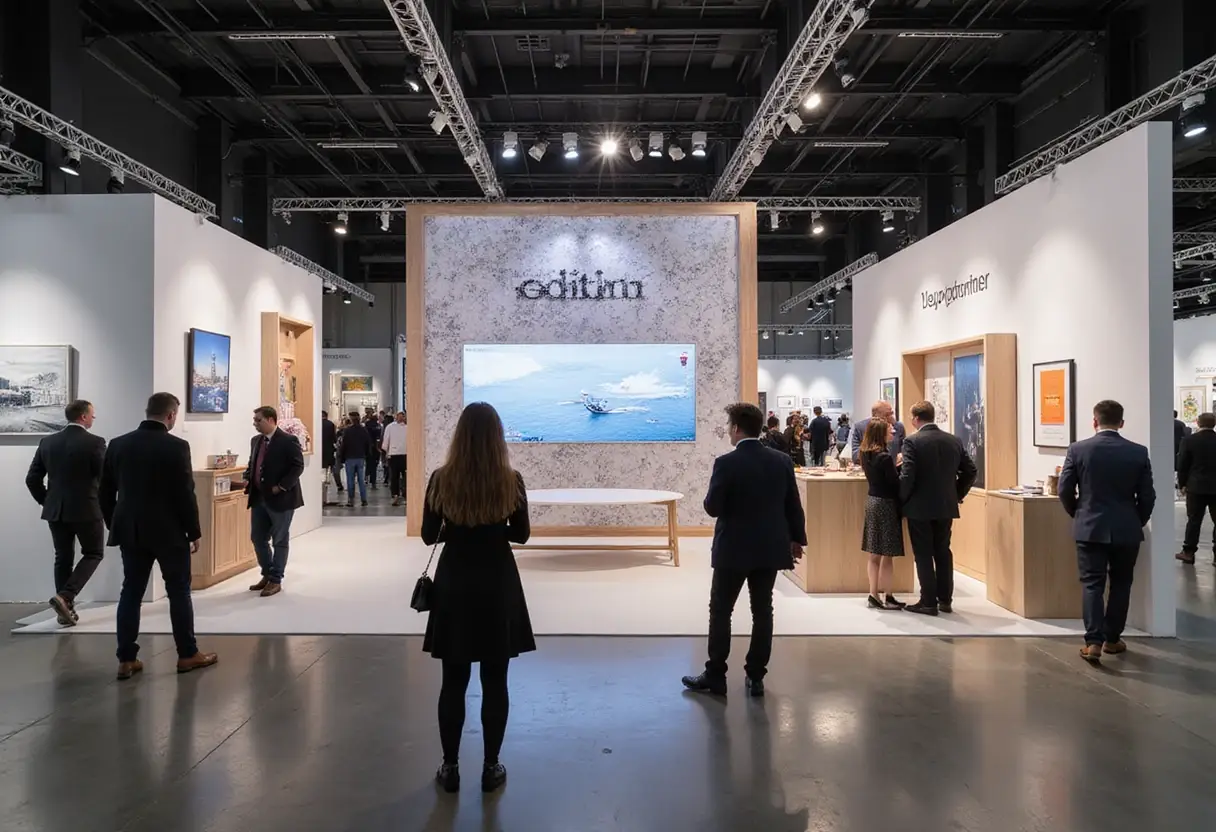
The ADAA Fair debuts Thursday at the Park Avenue Armory with 63 galleries, 12 newcomers and a brighter mood, spanning abstract expressionism, charged family memory and a tender Hopper watercolor.
Programme
- The ADAA Fair debuts Thursday with a preview gala and 63 participating galleries.
- Public visiting runs Friday through Monday at 643 Park Avenue, Manhattan; 12 galleries are newcomers.
- ADAA has offered an annual fair at the Park Avenue Armory since 1989.
- In 2024, exhibitors blamed sluggish sales partly on timing three days before the presidential election.
- The Whitney Museum replaced the Henry Street Settlement as ADAA's charitable beneficiary.
By Daniel Okafor
The ADAA Fair debuts Thursday with 63 galleries at the Park Avenue Armory, according to Art Review's preview. The renamed successor to The Art Show begins with a preview gala Thursday and opens to the public Friday through Monday. Twelve galleries are newcomers. They include Goya Contemporary of Baltimore (A5) and David Lusk of Tennessee (D5).
Art Review calls the mood more upbeat than two years ago and says the fair is less exhausting than the larger international fairs. The program spans modern and contemporary artists of many nationalities, from large-color abstraction to mournful, quiet painting.
It ranges from Edward Munch's lithograph suite at John Szoke (D16) to the modern drawings shared by David Nolan and Marc Selwyn Fine Art (A16). The review calls this “a terrific, freaky, horny salon wall of modern drawings.” Now that is a sales pitch.
What changed after the 2024 slowdown?
Art Review describes the Art Dealers Association of America (ADAA) as the country's strongest solidarity group for art sellers. About 200 member galleries pay dues for gatherings, collegiality and lobbying power in Washington. Since 1989, membership has also brought the chance to exhibit in an annual fair at the Park Avenue Armory, the association's most visible platform.
In 2024, many exhibitors blamed sluggish sales on one detail: the fair fell three days before the presidential election.
Since then, ADAA has skipped a fair, changed directors, lost the Henry Street Settlement as its charitable beneficiary to the Independent Fair, and named the Whitney Museum as its replacement. It also renamed The Art Show, whose old name implied there was only one, as the more accurate ADAA Fair.
Which paintings carry the fair?
Art Review groups the abstract displays under Abstract Expressionism. Pat Passlof (1928-2011) has several works at Schoelkopf (B11). At Eric Firestone (A7), the review finds him in finest form with Keeping Still, Mountain (1971-72), a large, enveloping ode to the I Ching. Its green sweep ends in a trunk or path at the bottom.
Larry Poons, 89, belongs to the same New York School as Passlof and has worked for 70 years. Art Review traces his progress from geometric patterns through messy waterfalls of paint to controlled chaos now on view at Yares Art (A5). The selection samples his last 20 years.
Barret Snook (2005) becomes a proper jungle of squiggles beneath a low horizon, its branches of color politely squirming. In Untitled (026D-3) (2026), Poons has melted back into pure action. Acrylic gathers at the brush's brink, giving the surface a terrific sense of movement.
Can a print still be a print?
Art Review's stand includes Zipora Fried at Sikkema Malloy Jenkins (A3). She covers large white museum boards with dense flag-waves of colored-pencil hatching. Up close, the marks resemble embroidery; farther away, they resemble test-pattern color bars.
Alteronce Gumby (b. 1984), included by Pace Prints (B3), pours paper pulp into long diagonal stripes of Play-Doh colors, sprinkles in topaz and quartz, and lets the wet mass dry into one wafer. Their inclusion tests the definition of print. The classification may need a larger label.
Lita Albuquerque, whom Art Review identifies as an American land artist who took up Yves Klein's obsession with pigment powder, contributes single-color panels.
Each has a middle depression turned into a gilt crater with metal leaf. Michael Kohn (A2) lights a gold crater on fuschia so it appears to glow. At Gavlak (B13), a silver crater on black reflects nearby colors and those of the viewer. Art Review calls the group lighthearted experiments with negative space and complementary color.
Where does memory enter the pictures?
At June Kelly (D3), Philemona Williamson (b. 1951) presents oversized, storybook-like illustrations of children aloofly coming of age or having fun with puppets.
Art Review sees them as a companion to TR Ericsson's devotional efforts at Totah (C4). Ericsson (b. 1972) copies old photographs, including images of his mother, in flat, earnest photo-realism. He intrudes with trivial, touching moments, such as a gasoline can in a silly holiday Polaroid.
One print of a seahorse uses ink made from his mother's funerary ashes. Her death by suicide inspired the project, Art Review reports. The combination is tender without becoming decorative, which is a difficult line to hold. Ericsson's smaller gestures do the heavier lifting.
Which American names anchor the survey?
Art Review notes the familiar American standbys: Andrew Wyeth, Milton Avery, John Marin and Philip Guston appear on repeat.
An easily missed showpiece is Edward Hopper's small 1926 watercolor of Talbot's House, a historic Second Empire home in Rockland, Maine, at Hirschl & Adler (B2). Hopper angles and crops the house abruptly, implying an approach to something physically larger than the viewer but minutely detailed.
Guy Pène du Bois was Hopper's friend and best man. The American realist painter and art critic appears at Avery Galleries (C5).
Art Review prefers his small interior at Debra Force Fine Art (D18), provisionally mistaking it for a funeral parlor. It is End of the Party (ca. 1936).
Light falls on a tablecloth and a woman's leg; the faces remain vague; a dog fixes the arrangement. The review calls it “the saddest painting I have seen in some time.” The dog has done more narrative work than most humans.
Art Review lists the public dates as Friday through Monday at the Park Avenue Armory, 643 Park Avenue, Manhattan; adaafair.org. The next measure is simple: whether the fair's more upbeat mood produces the sales that eluded it in 2024. The reset does not need superlatives. It needs buyers.
Original: news.artnet.com
More from Daniel Okafor
Show full bio
News editor covering companies, deals and strategy in arts in the broadest sense at Arts & Voices.
1,282 articles