AI Takes Over AFM as Innovation Hub Doubles Down for 2026
AFM 2026 expands its AI-focused Innovation Hub into a 15,000-square-foot AFM House with nearly 20 firms, as Hollywood's tolerance for the technology grows.
Programme
- AFM 2026 expands its Innovation Hub into a 15,000-square-foot 'AFM House' opposite the Fairmont Century Plaza HQ.
- Nearly 20 companies will exhibit at the Hub, up from last year, alongside new AI-focused panels.
- Largo.ai, a Stallone-backed Swiss firm founded in 2018 as an EPFL offshoot, returns with a 'Shark Tank'-style pitch panel.
- Oxen.ai, founded in 2022 by IBM veteran Greg Schoeninger, joins after its September 'Cmd+Shift+Create' summit.
- The PGA hosts a main-stage panel on 'the AI Decisions Facing Film and TV Leaders'.
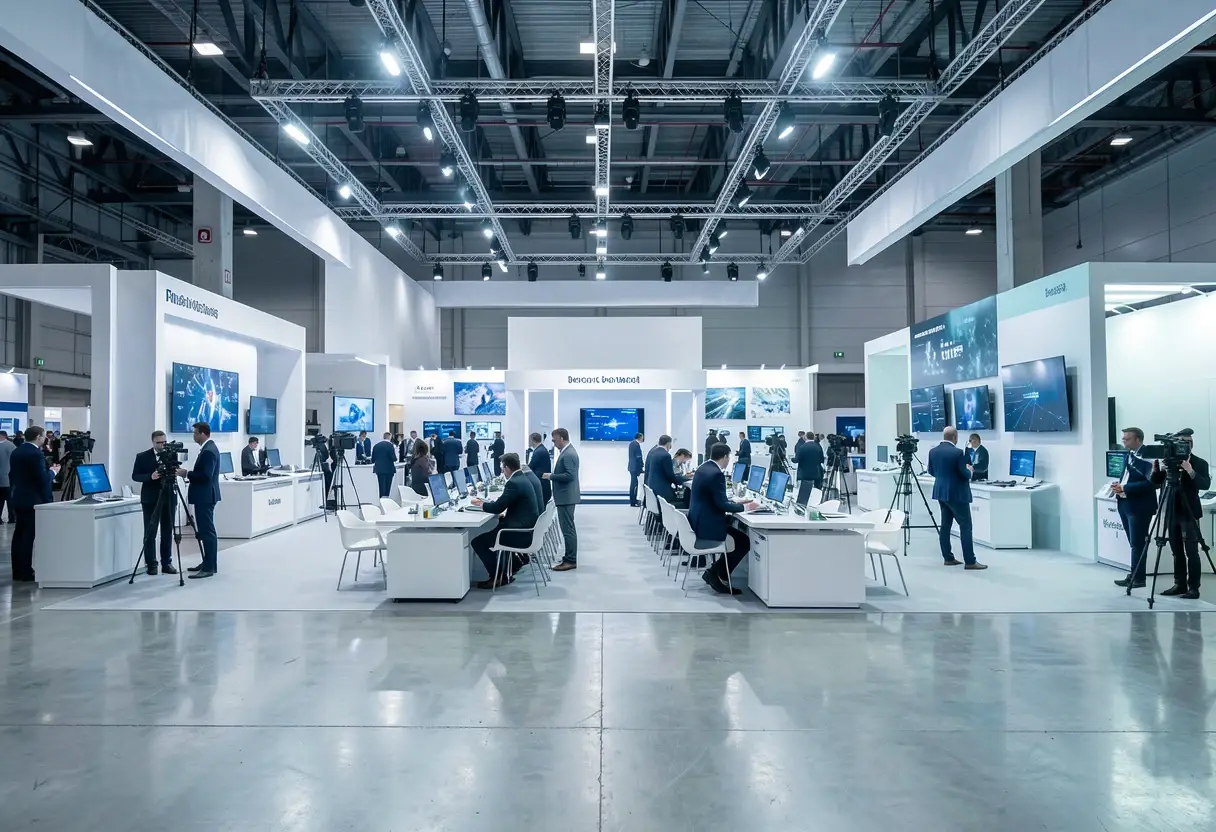
The 2026 American Film Market will expand its AI-focused Innovation Hub into a 15,000-square-foot "AFM House" across from its headquarters at the Fairmont Century Plaza, with nearly 20 companies exhibiting and a new suite of panels on artificial intelligence's impact on the film business.
The five-day Los Angeles market, produced by the Independent Film and Television Alliance, already has a strong slate lined up, including a new Armando Iannucci film and A24's expensive "Elden Ring" adaptation. But AI — the industry's third rail — will sit at the center of the conversation.
What does the expansion change?
The Innovation Hub launched last year in collaboration with the Marché du Film, the Cannes marketplace that proved notably AI-friendly this year. This year's expansion signals Hollywood's growing tolerance for AI in how films are produced, sold and distributed — the core functions of AFM.
"Technology is going to be a key driver, no matter where you sit on kind of AI," said Jackie Brenneman, who took over as IFTA president in January and is steering her first AFM. "AI as a creative tool — there's a lot more debate on that than AI as a really great way to analyze data and make predictions."
She was careful to frame AFM's posture as neutral. "At AFM, we're not here to make a judgment call," she said, adding that most tools on show lean toward helping people "make better decisions or do things better, faster, cheaper."
Returning exhibitor Largo.ai, a Sylvester Stallone-backed Swiss firm founded in 2018 as an offshoot of the Swiss university EPFL, uses AI to help brands, studios and creatives determine whether an idea is producible. Its tools include simulated focus groups and casting projections, giving independent filmmakers capabilities usually reserved for deep-pocketed studios. Its chief AFM panel is a "Shark Tank"-style pitch where producers show distributors how the platform assesses commercial viability.
CEO Sami Arpa insists Largo is "data-assisted" rather than data-driven. "In the tools specifically, we never tell people what to do," he said. He acknowledged the broader danger: "There are tools a bit going beyond that. They are replacing full human creativity. Obviously, people are feeling danger from that, and I think they have the right to feel that danger. But with our experience, we don't think the audience is welcoming full AI-generated content if a human still is not at the center of the creativity."
For those who do want fully AI-generated content, Oxen.ai has joined. Founded in 2022 by IBM veteran Greg Schoeninger, it operates both as a platform where creators build AI shots and as a studio producing shots for vendors — with users from Disney, Google and Live Nation. It distinguishes itself from aggregators like Higgsfield and OpenArt by publishing token costs upfront, including the pennies for Black Forest Labs' FLUX models and $55 per million tokens for Claude's Fable model. "It's a subtle thing, but it's a huge reason people switch," Schoeninger said.
AFM invited Oxen.ai after its September "Cmd+Shift+Create" summit. Schoeninger sees the market's embrace as a "tipping point," comparing the moment to 1993's "Jurassic Park": "You might get ripped on if you're doing a whole film in AI, but if you just use it for those shots that you need it, it seamlessly fades into the background or helps bring the film to life."
The risk of going public
AI will also anchor AFM panels, including the Producers Guild of America's main-stage session on "the AI Decisions Facing Film and TV Leaders." Paris-based Cine Group brings its Marché du Film-backed Cinemas Club, hosting a panel on non-generative AI as a "utility rather than Tilly" — the AI actress rankling Hollywood's creatives.
Moderator Patrick von Sychowski, Cine Group's international editor-in-chief, said "sticking your head in the sand is not a solution," and that AFM is "trying to stay a step or two ahead of the times."
The risk is real. Urbanworld, the BIPOC-focused festival, lost a yearslong sponsor in the AI-averse Writers Guild of America over its AI program last month, and Cannes excludes AI-generated films from its official lineup. Brenneman draws a firm line: "We're not a festival. We do not make judgment calls. That's for the buyers." Whether buyers reward that neutrality — or punish it — will be the market's real verdict.
Source: Variety Film
More from Tom Whitfield
Show full bio
Market editor covering people, launches and day-to-day practice in arts in the broadest sense at Arts & Voices.
1,285 articles