Amy Macdonald makes Stuttgart’s Schlossplatz a rock singalong
Amy Macdonald opened her September 19, 2021 Jazz Open set at Stuttgart’s Schlossplatz with “We Could Be So Much More” and “The Hudson,” then moved through anthems and “This Is the Life.”
Programme
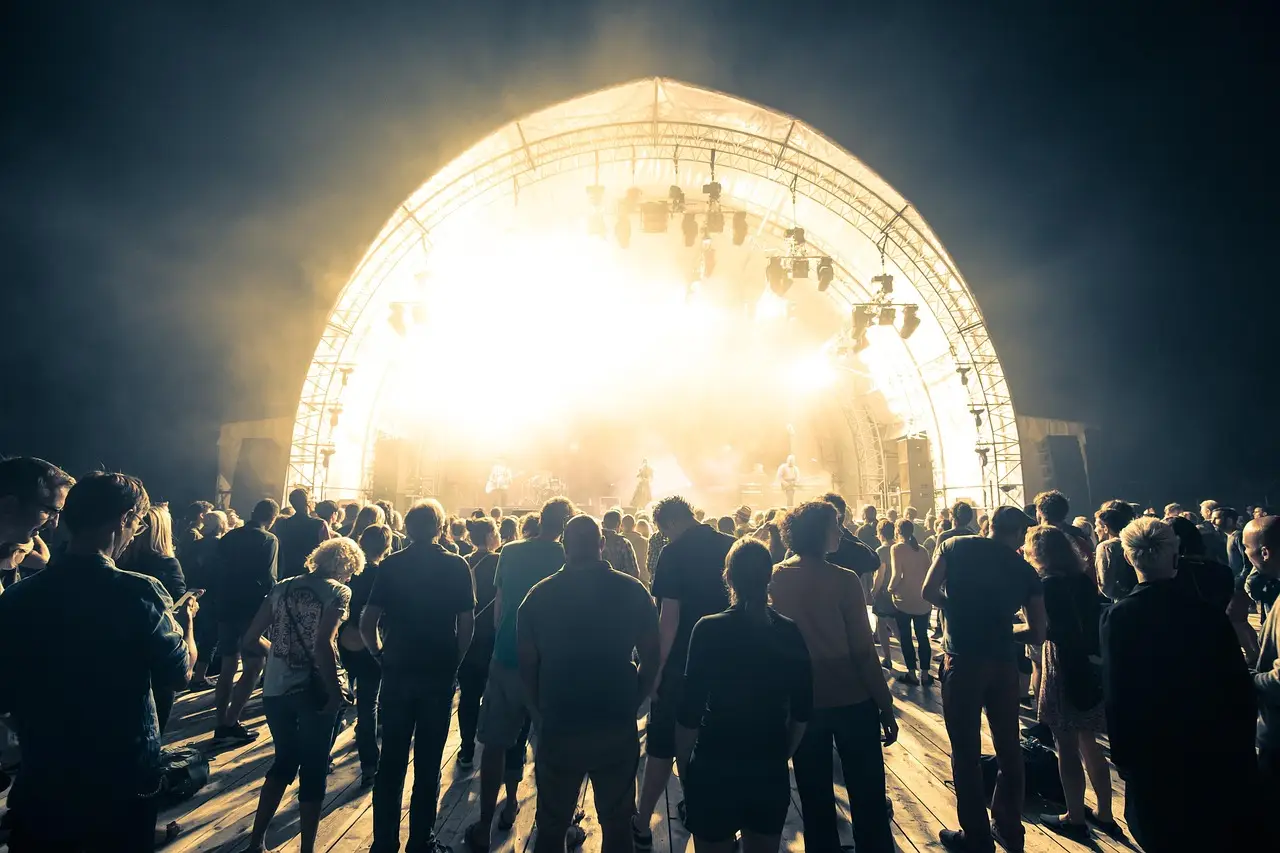
- Amy Macdonald performed at Stuttgart’s Schlossplatz on September 19, 2021, during Jazz Open.
- The account names nine songs and places them within a single running order.
- Macdonald opened with “We Could Be So Much More” and “The Hudson”.
- Two performances, “4th of July” and “Feed My Fire”, were stripped back, according to Alper.
- “This Is the Life” brought the crowd together before “Let’s Start a Band” closed the show.
By Tom Whitfield
Amy Macdonald played Stuttgart’s Schlossplatz on September 19, 2021, turning Jazz Open into what Eric Alper calls “a giant singalong”. Alper’s video account describes her Scottish voice as unmistakable and her acoustic guitar as driving.
Alper begins with two of the nine songs he names, then maps the concert’s larger arc. The sequence reaches into rock favourites, narrows for two stripped-back performances, expands again for “This Is the Life” and closes with another invitation to sing. It is a compact description, not a technical appraisal, but it shows how Macdonald moves between control of the song and shared ownership of the chorus.
- “We Could Be So Much More” and “The Hudson” opened the set.
- Alper then mixed songs from ‘The Human Demands’ with favourites including “Mr. Rock & Roll,” “Slow It Down” and “Poison Prince”.
- Stripped-back versions of “4th of July” and “Feed My Fire” created what Alper calls “an intimate turn”.
- “This Is the Life” brought the crowd together, according to the account.
- “Let’s Start a Band” closed the performance.
Alper’s running order makes the architecture legible. Songs from ‘The Human Demands’ sit alongside rock material, including “Mr. Rock & Roll,” “Slow It Down” and “Poison Prince”. The account does not identify who selected each “favourite” or how the songs from ‘The Human Demands’ were distributed within the set. It records the balance, not the programming brief.
The middle changes the terms. Alper says the stripped-back versions of “4th of July” and “Feed My Fire” “gave the set an intimate turn”. That is a specific claim about pacing: the same performer who has just led a large set can reduce the arrangement and reset attention before the title song.
“This Is the Life” then supplies the shared moment, according to Alper. He says it brought the crowd together. The source gives no crowd count, set duration or detail about who sang. It supports a claim about a communal effect, not a measurable claim about attendance or audience demographics.
Closing with “Let’s Start a Band” gives the concert a deliberate ring structure, in Alper’s telling: a collective rock number ends a set that has already invited collective singing. The source does not identify an encore, a support act or a complete running order. It therefore cannot settle how the published sequence sat within the wider performance.
Alper’s critical language stays brief. He identifies the voice as Scottish, the guitar as driving and the reduced arrangements as intimate. None of those terms supplies evidence about vocal technique, guitar tone or the size of the audience. They remain judgments within a short concert account, not a technical appraisal.
What does this change for a concertgoer?
It offers a clear expectation rather than a surprise: expect the acoustic guitar and Scottish singing to remain central, and expect the Jazz Open set to move between stripped-back songs and mass participation. The account gives no basis for judging sound quality, staging capacity or the full repertoire.
For a listener weighing a live show or a video set, the practical value is therefore narrow but usable. The account supports an emphasis on sequence when describing the Stuttgart night, not a claim that every performance will follow the same order.
Future concert promoters can test the formula beyond Schlossplatz: acoustic opening, deliberate reduction in scale, communal title song and group finale, with the present evidence confined to one crowd, one place and one event.
Source: thatericalper.com
More from Tom Whitfield
Show full bio
Market editor covering people, launches and day-to-day practice in arts in the broadest sense at Arts & Voices.
1,719 articles