Art Basel Paris Closed Two Days Early as Protests Hit the Grand Palais
Art Basel Paris shut two days early as protesters threatened the Grand Palais. Dealers now weigh compensation, insurance gaps and an overcrowded fair calendar.

Programme
- Art Basel Paris closed Friday, two days ahead of schedule, amid protests over education spending and inequality.
- Miguel Abreu's gallery typically does about 20 percent of its fair business during the final two days.
- TEFAF Maastricht closed four days early in March 2020; The Art Newspaper later identified more than 25 Covid cases.
- Art Dubai, postponed after war broke out with Iran on February 28, let galleries defer to 2027 without extra fees or pay via a percentage of sales.
- A fair can cost tens or even hundreds of thousands of dollars before a single work sells.
By Elena Vasquez
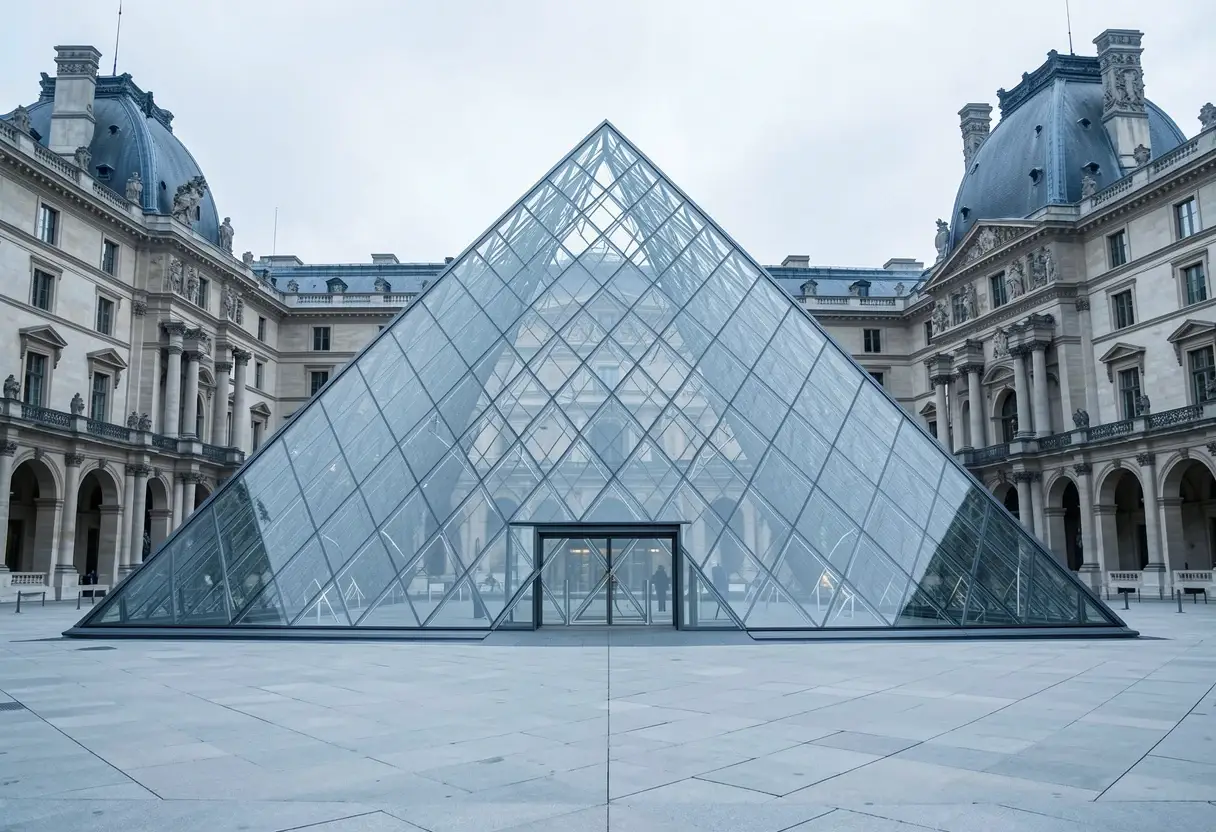
Art Basel Paris closed on a Friday evening, two days ahead of schedule, as organizers braced for a second weekend of demonstrations over education spending and inequality. Activists were threatening to converge on the Grand Palais itself, where dealers were offering paintings worth tens of millions of dollars.
The fair had opened its ultra-exclusive Avant-Première event the previous Tuesday. Rioting and looting had already hit Paris the Saturday before the opening. On that day, two art professionals found themselves trapped in a Paris metro station as protesters stampeded down the stairs, trailed by clouds of tear gas. They could not see, could barely breathe, and struggled to find their way out. A block or two away, people sat in restaurants, eating and drinking as though nothing had happened.
Closing was the sensible decision. As one observer put it: nobody wants to explain to an insurance company how a seven-figure Gerhard Richter ended up in the middle of a riot.
What does the closure cost galleries?
The decision raised an uncomfortable question: what happens when an international art market built on gathering wealthy people in expensive places runs into a world that is not always hospitable?
The industry has precedent to study:
- Art Basel Miami Beach was set to debut in December 2001; the September 11 attacks forced organizers to postpone the inaugural edition until 2002.
- In 2015, Paris Photo closed early after coordinated terrorist attacks across Paris, including at the Bataclan concert hall, killed 130 people.
- In March 2020, TEFAF Maastricht closed four days early after an exhibitor tested positive for Covid-19. Reporting by The Art Newspaper later identified more than 25 cases among attendees and exhibitors.
- Two years after that, the same fair was robbed.
Sometimes organizers decide the show must go on. After devastating wildfires swept through Los Angeles in January 2025, Frieze insisted its Los Angeles fair would proceed in February, arguing that bringing collectors and galleries to the city would support the local arts community.
There is no obvious rule for these situations. Cancel a fair, and galleries lose business. Hold it, and organizers risk appearing indifferent to what is happening outside.
Who lost money in Paris?
Some dealers in Paris were not particularly bothered by the closure. They had already made their sales during the VIP days. Marc Payot, president of Hauser & Wirth, told the Financial Times that his gallery generally does most of its business early in the fair.
Not everyone operates like Hauser & Wirth. New York dealer Miguel Abreu said his gallery typically does about 20 percent of its fair business during the final two days. That is one in five fair dollars, arriving after the VIP crowd has gone home.
"People are actually more explorative on the weekends," Abreu said. "They don't come in with preconceptions of what's what and what's worth buying or not."
Abreu understood the decision to close on Saturday. Sunday was another matter. Sources say exhibitors were not consulted before that day was canceled, too. It remains unclear whether or how Art Basel will compensate galleries for closing two days early, though sources report a loose coalition of exhibitors is forming to ask the fair for restitution.
An Art Basel spokesperson said the decision to remain closed Sunday was based on uncertainty about how long the demonstrations might last and their potential impact. The spokesperson said organizers had consulted galleries, the fair's Selection Committee, and authorities about the early closure, though the spokesperson did not specify whether Sunday had been discussed separately. Art Basel is speaking with exhibitors about possible financial accommodations but has announced no measures.
The costs extend beyond the galleries. Art Basel is refunding unused weekend tickets. Restaurants, cabdrivers, and workers at the fair itself lost potential business. Even if every dealer had sold everything by Friday, the financial consequences would not have stopped at the doors of the Grand Palais.
What can insurance actually cover?
Cheryl Karim, national fine arts practice leader at the insurance broker Gallagher, has worked in art insurance for some 33 years. She said gallery policies can include event-cancellation coverage for documented expenses that cannot be recovered, including booth fees, shipping, storage, and travel. Galleries can also buy separate coverage for individual fairs, though the terms vary considerably.
What cannot be insured is opportunity cost: the possibility that someone might have bought a painting had the fair stayed open. Unlike a conventional retailer with predictable monthly revenue, a gallery cannot easily prove what would have sold on a particular Saturday afternoon. Nor can an insurance policy replace a relationship with a collector who never walked through the door.
Karim said interest in terrorism coverage has increased over the past decade. Insurers have long weighed location, security, transportation, and previous disruptions when evaluating fairs, and clients are becoming more conscious of what they are actually buying protection against.
The structural risk is growing. A fair can cost tens or even hundreds of thousands of dollars before a single work sells. For a smaller gallery, one disastrous outing can be difficult to recover from. Several in a row can be ruinous.
What does Art Dubai's model change?
Art Dubai offers an alternative template. After war broke out with Iran on February 28, fair director Dunja Gottweis consulted exhibitors and collectors before postponing the event until May. Galleries could defer until 2027 without additional fees, or take part in May without paying booth fees upfront, instead giving organizers a percentage of sales.
"This was really not about making money," Gottweis said by phone from Dubai. "This was just to show up and support our community."
The fair is extending the idea to new exhibitors in 2027, who will pay half their booth fee upfront and the remainder through a percentage of sales. It is a relatively simple change, but it shifts organizers into sharing financial risk rather than leaving dealers to shoulder it alone.
Is the calendar itself the problem?
Another problem has nothing to do with protests, natural disasters, or geopolitics: the art world calendar is becoming absurdly crowded.
Philip Hoffman, the art adviser and founder of the Fine Art Group, has grown frustrated with the relentless string of events. "Right now there are too many fairs crammed into too little time," he said. His team must choose between the November auctions in New York and Frieze Abu Dhabi, which falls during the same period. They are going to New York.
"I physically can't get to two places on the same day," he said.
Hoffman does not believe instability or civil unrest necessarily discourages collectors from visiting a country, provided they can get in and out safely. The international art market is not about to abandon Dubai or Paris because of one difficult year, nor should it.
Gottweis offered a warning to galleries that depend too heavily on a handful of fairs. "It's dangerous to put all your eggs in one basket and have your business depend on sales during one week. I don't think the current world is supporting this so much."
None of this means the art market should stop expanding. Growth outside New York, London, and Switzerland has created opportunities for artists, galleries, and collectors who might otherwise have been left out. Whether that amounts to democratization is another question, especially when the price of admission remains so high.
But an industry that prides itself on international reach ought to be prepared for the consequences. The world outside the fairgrounds is not always peaceful, predictable, or interested in the needs of the art trade. Sometimes it is at war. Sometimes it is protesting. Sometimes it is on fire. The art market wanted to be everywhere. It had not counted on everything else being there, too.
Original: nam02.safelinks.protection.outlook.com
More from Elena Vasquez
Show full bio
Senior reporter covering technology and product news in arts in the broadest sense at Arts & Voices.
833 articles