Artawa marks 10 years with 168 works and 500 visitors
Artawa’s 10-year anniversary show, Resonance X, put 168 works in a City Centre brewery on Nov. 5, drew about 500 people and sold 40-plus paintings. The show runs to January 2027.
Programme
- Artawa marked 10 years with its Resonance X show on Nov. 5 at Beyond the Pale Brewery in Ottawa.
- The show displayed 168 works and drew about 500 visitors, according to founder Kina Forney.
- More than 40 paintings sold on the night; sponsors were the City of Ottawa, Wallack’s and the Urban Art Collective.
- Forney played cello with the live band, and the remaining works stay on display until January 2027.
- Artawa began as monthly or so coffee-shop sketching sessions with local artist friends.
By Grace Kim
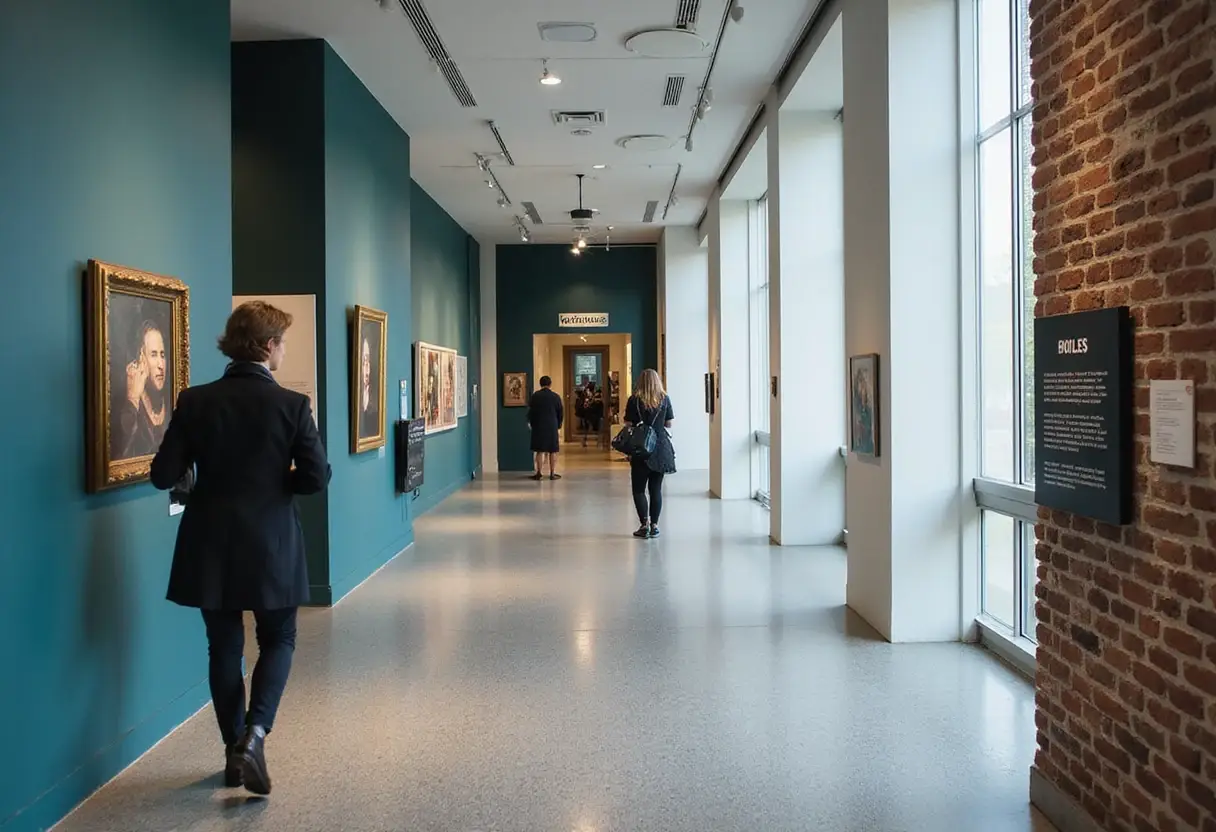
Artawa’s tenth-anniversary show, Resonance X, displayed 168 works at Beyond the Pale Brewery in Ottawa on Nov. 5. Founder Kina Forney estimated around 500 people came through the City Centre venue, and more than 40 paintings sold that night.
Forney moved back to her hometown of Ottawa wanting a safe, accessible space where local creatives could gather and find belonging. A lifelong creative who also teaches at the Ottawa School of Art, she wanted to connect with fellow artists.
How did a coffee-shop meeting become a 10-year collective?
It started as a monthly or so gathering of local artist friends at a coffee shop, sitting together and sketching or painting for a few hours. Those sessions grew into Artawa, a grassroots collective that shares ideas, develops connections, celebrates individual creative expression and fosters creativity without barriers.
Resonance X marked the move from informal meetings to a programmed exhibition. Forney set the theme of resonance and invited artists from across the city to answer it through a connection to the local landscape, community or a memory.
“I wanted it to be coming from a really pure place,” said Forney. “You want people to have that creative, artistic license as well as to take the prompt and do what it means to them. That was pretty much the whole idea.”
The 168 displayed pieces ranged widely in subject:
- OC Transpo blues, mushrooms and wildlife
- Ryan Browne’s painting of an OC Transpo bus shelter, with a shadowed figure waiting in the gloom and a bus’s taillights receding into the distance
“There’s something for me about waiting for the bus in the middle of November. That just says Ottawa,” said Browne. “That’s Ottawa to me. That’s memory, that’s resonance.”
Browne’s work was among the first to sell that evening. The event carried the support of three sponsors: the City of Ottawa, Wallack’s and the Urban Art Collective.
What the sales and the crowd showed
Beyond the Pale was flooded with visitors, and the patio stayed packed despite the cool temperature. People lingered before individual works, taking in details and engaging with the stories behind them. The audience included younger and older artists, disabled artists and artists of colour.
Around 500 people came in and out of the show, Forney said, making Resonance X wall-to-wall. Photographer Reilly Armstrong documented the crowd and the works on the night.
Sabine Modder, one of the artists whose work was on display, tied her piece to the isolation of the pandemic. “I had a lot to get out because I had so much pent-up emotion and everything,” said Modder. “I couldn’t go out and socialize. I couldn’t connect with people. So I had to connect with my art.”
She also described the mood in the room. “There was an excitement, people were really gearing up and I think it’s been very appreciated,” she said.
Modder argued that an online connection cannot replace a shared room. “I wish I’d actually known about (Artawa) ages ago because I would have shown up,” she said. “If I had known about it earlier, I would definitely have taken advantage because I would have needed it more then than I do now.”
Sara Primsa described these accessible, free spaces for artists as invaluable. “That’s why I feel so passionate about communities,” said Primsa. “I think it’s an important part of bringing people in.”
Primsa, who said she sometimes lives on the fringes of society, explained why such settings matter to her. “I lean into those inclusive type settings… I found it really warm and welcoming to find those communities.” She tied the collective’s function to a wider claim: “Giving people opportunities to self-discover and feel more comfortable with themselves and encourage each other to feel more comfortable about themselves… together, I think we have the power to help society.”
Elisabeth Baechlin, another participating artist, registered the scale of the turnout. “I’m surprised how busy it is. I haven’t been here on a (Thursday) before, so it’s even crazier than normal.”
Why did Forney take the stage?
After the initial showcasing of artwork, the programme turned to live music, and Forney came on stage to join the band, playing cello. The move placed the collective’s founder inside the evening as a working artist as well as its organiser, in keeping with a group built on many forms of participation.
Forney’s own assessment was about recognition and connection. “It was an overwhelmingly positive response. Everyone was happy and excited to see the art on the walls and the whole space was vibrating,” said Forney. “I think the best part was that the artists got to identify themselves… I feel like so many people made great connections and that’s what it’s about.”
What does this change for Ottawa’s artists?
The practical answer is concrete. The collective can assemble about 500 visitors for a barrier-free group show, turn foot traffic into more than 40 paintings sold in a single evening, and keep work visible until January 2027. Forney’s method is simple to repeat: one prompt, no stylistic filter, artists from across the city.
For participating artists, that means access to attention and to a market, not only an audience. Some works, including Browne’s, sold during the evening, and the rest stay on the walls until January 2027.
Artawa’s tenth year closes with a full room, a live band and more than 40 paintings sold. Whether the collective can hold that turnout once the anniversary crowd thins is the next measure of a model that began with a few friends and a coffee shop.
Source: algonquintimes.com
More from Grace Kim
Show full bio
Correspondent covering technology and product news in arts in the broadest sense at Arts & Voices.
1,220 articles