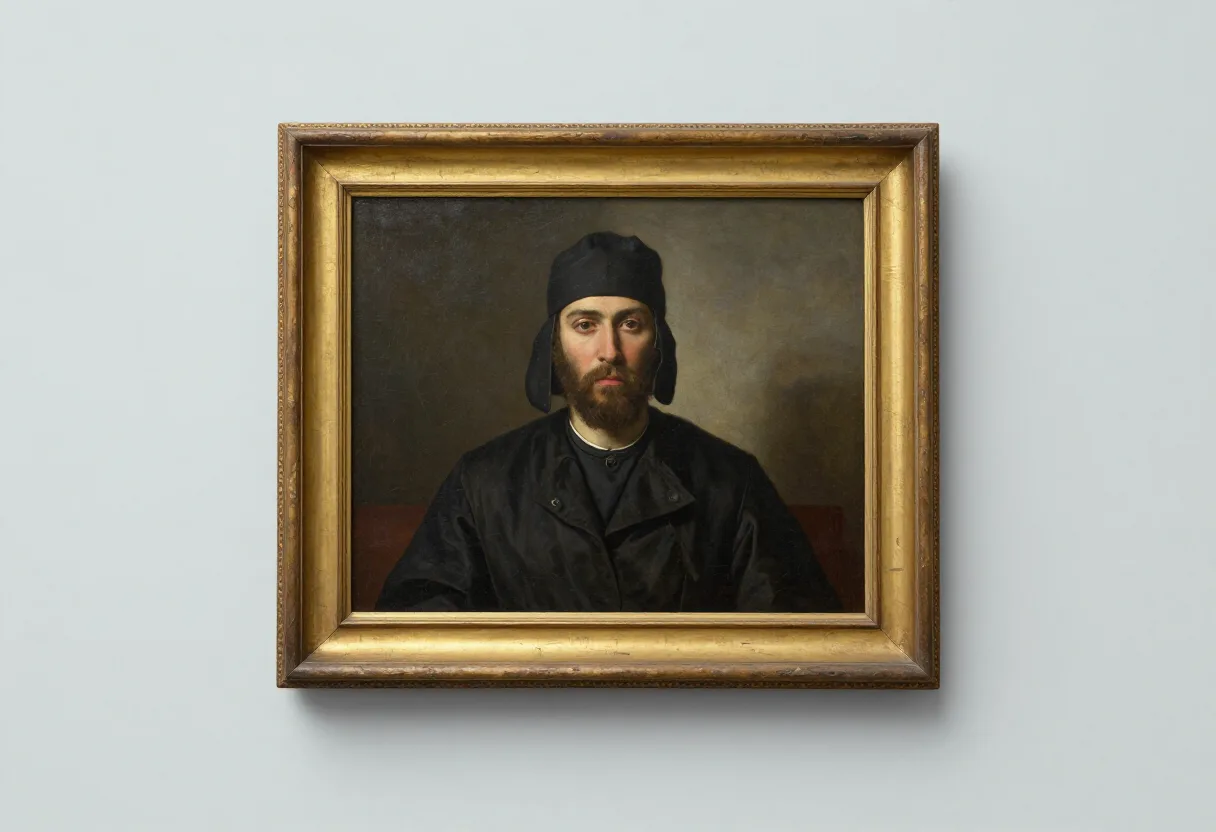
Auschwitz Watercolors Dispute Ignores the Roma Faces Within
A new California lawsuit reopens the fight over seven Mengele-ordered Auschwitz watercolors. Roma victims depicted and executed in the portraits remain largely unnamed and uncompensated.

Programme
- Babbitt's daughters filed a California lawsuit 17 years after her 2009 death over seven watercolors held by the Auschwitz-Birkenau State Museum.
- All Roma prisoners forced to pose for the portraits were later executed; only one, Celine, is known by name, from a 2006 NPR interview.
- The Nazi regime killed an estimated 250,000 to 500,000 Roma in the Porajmos.
- A 2009 video interview used the derogatory phrase "the Gypsy faces" to describe the subjects.
Seventeen years after her death, Holocaust survivor Dina Gottliebova Babbitt's daughters have filed a California lawsuit demanding the return of seven watercolors held by the Auschwitz-Birkenau State Museum. The paintings depict Roma prisoners. All of them were executed after being forced to pose.
The suit, reported by the Los Angeles Times and the New York Times, reopens a decades-long ownership dispute. But coverage of the case has consistently missed the people at its center, argues a Roma scholar writing in response to the new litigation: the Roma victims who were depicted, killed, and forgotten.
Dr. Josef Mengele, nicknamed the "Angel of Death," ordered Babbitt to paint the portraits as part of pseudo-scientific experiments designed to prove what he perceived as Roma racial inferiority. Babbitt, then a prisoner, painted to save her own life and her mother's. Every Roma person forced to sit for these portraits was later killed.
Who owns the suffering depicted?
Babbitt survived, emigrated to the United States, and built a prolific career in animation. She spent decades trying to recover the watercolors, describing a visceral need to hold them again in a 2009 interview, the year of her death. She often tried to recreate the paintings from memory.
The Roma subjects, by contrast, have received almost no attention. A recent New York Times article references them only in passing, the scholar writes, failing to engage with their loss or injustice. Of all the prisoners depicted, only one name survives: Celine, whom Babbitt identified in a 2006 NPR interview. The rest remain unrecorded.
In that same 2009 video, the journalist casually referred to the subjects as "the Gypsy faces" — a derogatory term all too familiar to Roma communities. Some reporters now avoid the pejorative, the scholar notes, but still know little about Roma history.
What does the "Forgotten Holocaust" figure tell us?
The Nazi regime killed an estimated 250,000 to 500,000 Roma people during the genocide Roma call the Porajmos — "the Devouring" in Romani. Some scholars argue the true toll is significantly higher, but insufficient documentation during and after the genocide makes exact numbers impossible. Roma victims of the Holocaust have received little to no acknowledgment or restitution, despite the trauma's continued effects.
That history shapes the present. Roma communities across Europe, the United States and beyond still face marginalization, scapegoating, and daily acts of discrimination, mockery and hostility.
Can portraiture be separated from the experiment?
Portraiture normally honors its subject, the scholar observes. In Auschwitz, artistic tools were distorted into ammunition to humiliate and exterminate. These Roma "sitters" received only death, their faces bound to experiments meant to cast their ethnicity as subhuman.
Yet, ironically, Babbitt captured their profound humanity. The scholar describes an elderly woman who defiantly gazes out, daring viewers to look away; a middle-aged man whose wavy hair is prematurely white; Celine herself, in a striking blue dikhlo, looking determined and dreamy, as though she still had her life ahead of her.
The scholar's hope is concrete: future exhibitions that research the subjects' stories and honor both painter and painted, regardless of the lawsuit's outcome. The task is threefold — disentangle the watercolors from the barbaric experiment that produced them, offer justice to Babbitt's heirs, and restore dignity to the Roma subjects whose lives were cut short.
A non-Roma friend, moved by the faces, put it simply: "I want to hug her." She went on to imagine the watercolors in a museum's dedicated Roma collection. Whether the California court, or any museum, will bring that vision about remains the question the case now forces.
Original: latimes.com
More from Elena Vasquez
Show full bio
Senior reporter covering technology and product news in arts in the broadest sense at Arts & Voices.
825 articles