Barcelona Museum Begins Returning Romanesque Murals to Aragón
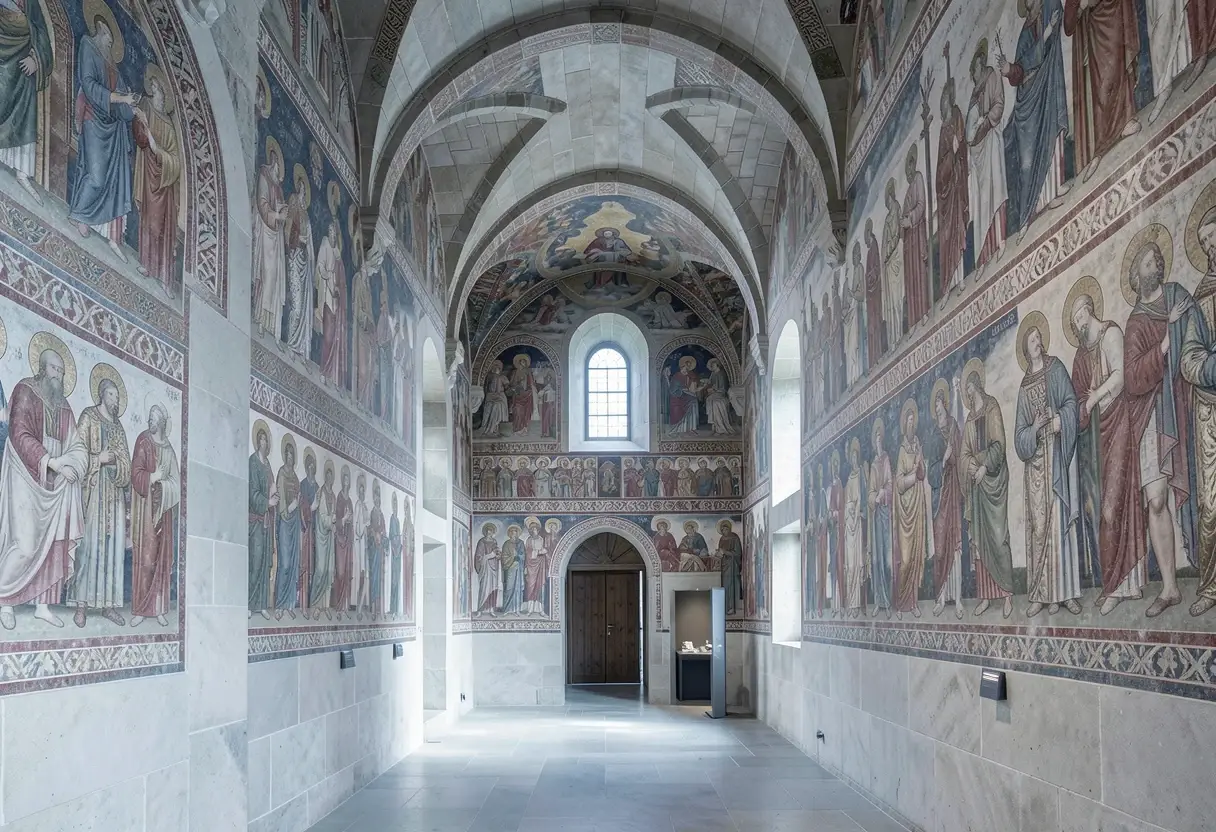
Barcelona's MNAC began on 17 June taking down Romanesque murals removed from Sijena Monastery 66 years ago, after Spain's Supreme Court ratified their return to Aragón.
Programme
- MNAC in Barcelona began dismantling the murals on Tuesday, 17 June.
- The Romanesque murals were removed from the Monastery of Villanueva de Sijena 66 years ago, in the 1960s.
- Spain's Supreme Court ratified the return order in 2025, following a ruling by Court Number 2 in Huesca.
- Pedro Olloqui, Aragón's director-general of Culture, attended the start of work at 8 a.m.
By Daniel Okafor
The Museu Nacional d'Art de Catalunya in Barcelona began dismantling the so-called secular paintings on Tuesday, 17 June — Romanesque murals taken from the Monastery of Villanueva de Sijena 66 years ago. The works will return to Aragón after decades of litigation.
Pedro Olloqui, director-general of Culture for Aragón, attended the start of the work at 8 a.m. inside the museum. He called the date the starting point for the collection's return to its place of origin.
Why are the murals leaving Barcelona now?
The paintings belong to a set of murals that once decorated the monastery's walls. Their removal happened in the 1960s. That transfer opened a long stretch of disputes in both ecclesiastical and civil courts — a tug-of-war between two Spanish regions over who owns the historical material.
The handover was ordered by a ruling from Court Number 2 in Huesca. Spain's Supreme Court ratified the decision in 2025, making delivery compulsory for the Barcelona institution. There is no appeal left to file and no ambiguity left to enjoy.
What happens at the museum this week?
The physical work now underway at the Catalan museum is delicate. Workers are detaching the Romanesque panels (wall paintings from the 11th–13th-century style that dominated medieval Iberia) from their mounts, preparing them for transport east to Aragón. Olloqui's early-morning presence signalled that Aragón intends to watch every step.
The process marks the conclusion of the legal battle between the two regions. Sixty-six years after the murals left the monastery, the courts have settled the question of possession: the works go back.
Why does this case matter beyond Catalonia and Aragón?
The Sijena dispute has long functioned as a test case for contested ecclesiastical art in Spain. Monastery treasures moved to big state museums in the 20th century often carried murky paperwork. When a Supreme Court ratification forces a national-calibre museum to empty its Romanesque galleries, other institutions holding similar acquisitions will read the signal.
The return also closes a chapter in the broader debate over regional cultural property in Spain. Catalonia acquired the murals when the monastery's nuns sold parts of their collection; Aragón argued the sale was invalid. The 2025 ruling settled it in Aragón's favour.
What comes next is the actual homecoming: the murals travel back to Villanueva de Sijena, where Aragón plans to re-house the works in their original setting — a rare instance of Romanesque wall painting returning to the walls that first carried it.
Source: brasilemfolhas.com
More from Daniel Okafor
Show full bio
News editor covering companies, deals and strategy in arts in the broadest sense at Arts & Voices.
1,468 articles