Berlin Philharmonic Plays Bogotá for the First Time in 144 Years
The Berlin Philharmonic gave its first-ever concerts in Colombia at Bogotá's Teatro Mayor, with Petrenko conducting Elgar, Tchaikovsky, Brahms and Strauss.

Programme
- The Berlin Philharmonic performed in Colombia for the first time in 144 years, at Bogotá's Teatro Mayor.
- Kirill Petrenko conducted Elgar's Enigma Variations, Tchaikovsky's Fourth, Brahms's First Piano Concerto and Also sprach Zarathustra.
- Víkingur Ólafsson replaced the injured Daniil Trifonov in the Brahms concerto.
- Encores included the Nutcracker Russian Dance and Brahms's First Hungarian Dance.
- The orchestra's next tour stop was Brazil.
The Berlin Philharmonic played in Colombia last week for the first time in its 144-year history. Two concerts at Bogotá's Teatro Mayor, led by chief conductor Kirill Petrenko, drew ovations that one local listener compared to a football crowd after a penalty shootout.
Alberto Salazar, a Colombian fan who has followed the orchestra since childhood, reviewed the visit for Slippedisc. His verdict: the famous Berlin sound survives the trip. "I had heard it through speakers for years; I wasn't prepared for what it would feel like to be in the room," he wrote.
What did they play?
The first programme paired Elgar's Enigma Variations with Tchaikovsky's Fourth Symphony. Salazar found Petrenko's Enigma "far more objective" than the overly romantic readings he knew, focused on the architecture rather than the sentiment.
He sensed some trepidation in the players before the interval — altitude, acoustics or jet lag, he couldn't tell. Tchaikovsky was another matter. "From the opening fanfare, this was raw, tragic music-making, full of pathos," Salazar wrote. "Tchaikovsky himself might have been in the room."
The finale delivered the loudest fortissimo he had ever heard live: intense, balanced, rhythmically locked. The audience held its breath. Petrenko offered the Russian Dance from The Nutcracker as an encore.
Who stood out on the second night?
The second evening brought a substitution. Víkingur Ólafsson replaced the injured Daniil Trifonov in Brahms's First Piano Concerto, followed by Richard Strauss's Also sprach Zarathustra.
Salazar wanted more bite in the Brahms — "more of that imposing Brahmsian weight" — though he admired the tone. Ólafsson's encore, Bach's Air on the G String, was for the reviewer "his finest moment".
The Strauss was the revelation. Petrenko made the piece sound like a great oration, with startling clarity in the fugue from "Von der Wissenschaft" ("Of Science"). "I never heard such intellectual rigour in a symphonic performance," Salazar wrote. "This was without a doubt the highlight of both evenings."
Which musicians caught the eye?
Salazar, a Digital Concert Hall (the orchestra's streaming platform) veteran, name-checked the personnel:
- Oboist Albrecht Mayer — "the most beautiful oboe timbre I had ever heard in person"
- Hornist Sarah Willis, beaming as usual
- Daishin Kashimoto in the concertmaster's chair
- Flutist Emmanuel Pahud, indifferent to the fuss
- Timpanist Wieland Welzel, locked onto Petrenko's every gesture
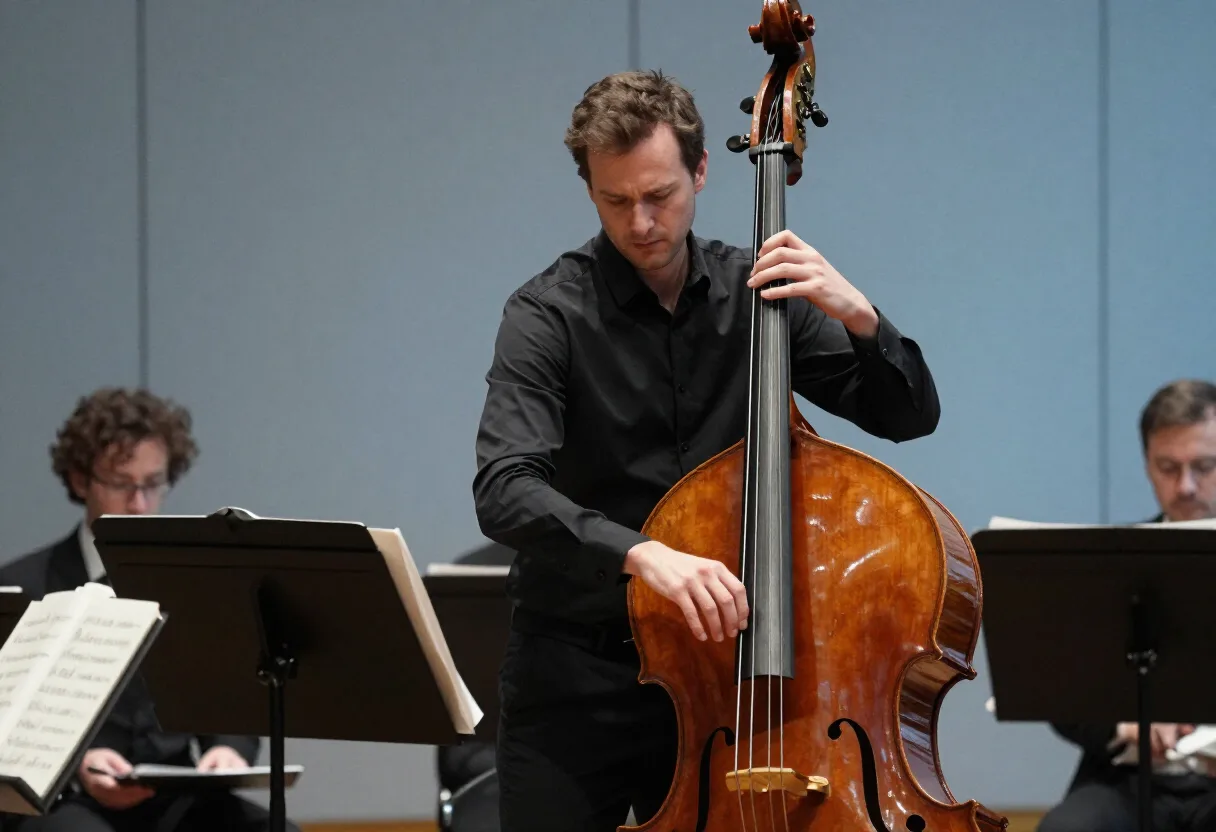
The double basses, he noted dryly, "looked grumpy". Who can blame them.
What happened after the concert?
Past 10pm on a chilly Bogotá night, musicians lingered at the back entrance, signing programmes and posing for photos. Salazar spotted Petrenko in a simple polo shirt before an Audi whisked him away. "I felt I had seen behind the mask," he wrote.
His attempted greeting to Sarah Willis — a mumbled tribute — earned a quizzical look and a quick exit. He counted it as a success. Fair enough.
A man in the audience managed what Salazar couldn't: "¡Qué regalazo!" — what a gift. The orchestra flew on to Brazil, its next tour stop. Salazar hopes it won't be another 144 years.
Source: Slipped Disc
More from Daniel Okafor
Show full bio
News editor covering companies, deals and strategy in arts in the broadest sense at Arts & Voices.
603 articles