Bonnie Garmus Trades Chemistry for Poetry in 'Peck & Peck'
Garmus follows 'Lessons in Chemistry' with 'Peck & Peck', a 1980s New York poetry saga of twins, typefaces and the fight for originality. She talked to Jane Ciabattari.
Programme
- Bonnie Garmus's second novel 'Peck & Peck' is published by Scribner, an imprint of Simon & Schuster.
- The novel is set in 1980s New York City; its hero, Batter Gray, is a 25-year-old aspiring poet from Yuba City, California.
- Garmus learned over a hundred typefaces by sight at the Colorado Institute of Art.
- The novel's origin traces to a promise made at fourteen to read a poem a day.
- Her debut, 'Lessons in Chemistry', featured 1960s chemist Elizabeth Zott.
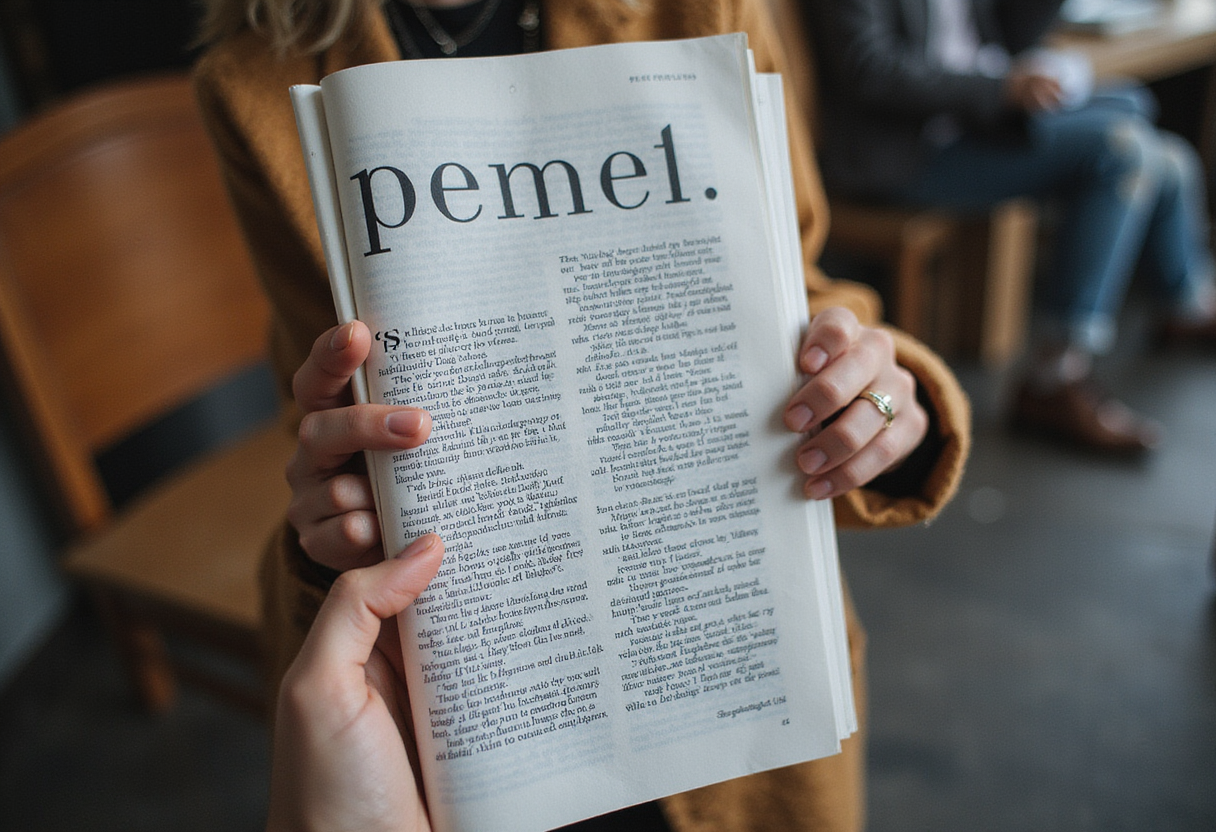
Bonnie Garmus's follow-up to the mega-selling Lessons in Chemistry is Peck & Peck, a coming-of-age novel set in the 1980s New York poetry world, published by Scribner, an imprint of Simon & Schuster. Its hero, Batter Gray, is a 25-year-old aspiring poet from Yuba City, California who becomes entangled in a dynastic family feud.
In an interview with Jane Ciabattari, Garmus traced the novel's origin to a promise she made at fourteen. An English teacher read the class a poem every day — Nikki Giovanni, Langston Hughes, W.H. Auden, Yeats — and made his students vow to keep reading one poem a day for life. "We all agreed," Garmus said. "But then came summer vacation and that promise went right out the window."
Decades later, hearing her teacher's favorite Giovanni piece on the radio, she resumed the habit and subscribed to the Poetry Foundation's email list. "Oddly enough, something changed in me," she said. Around that time she began imagining a character who, like her teacher, "instinctively knew which poems were good and which weren't."
Why 'Peck'?
Garmus chose the family name for its contradictions. "To peck at something means to hurt it, but a peck can also be a kiss," she said. The name, she added, captured the book's conflicts — twin brothers, capitalism and social good, originality and conformity — and "the constant ephemeral battle of proving how and why art matters."
The Pecks founded an iconic poetry quarterly, carried forward by generations of twins. The current pair, Declonius and Salton, are feuding opposites. Garmus said she interviewed several twin sets, spoke with a twin therapist and consulted behavioral twin studies. The surprise finding: twins have "a strong need to be recognized as individuals."
She compared them to couplets. "What if they don't rhyme?" she asked, citing Yeats's "Crazy Jane Talks with the Bishop." Non-rhyming couplets still work. "Things don't have to agree; they simply have to respect each other."
What did she draw from her own life?
The typography thread comes from training. Garmus studied graphic and advertising design at the Colorado Institute of Art; by graduation she knew over a hundred typefaces by sight. Rainey Gray's line — "Ever try reading something without a typeface? Good luck" — carries that expertise.
The novel's five-story Manhattan headquarters, with its aviary and twin glass domes, has no real-world model. "The building just comes from my imagination," Garmus said. She once sketched the Aviary in mud with a stick and pebbles rather than lose the idea on the walk home.
Phone Book Parties — one hundred strangers gathered to hear wisdom read aloud — are not real. "I wish they were," she said. Guests come for the extravagant invitation, not the poetry. "But by the end of the evening, they would be transformed by it."
Garmus framed the whole book as a stand against sameness, naming brands, AI and fascism as forces that "make people look, act, and think the same." Against them she sets the Sagrada Familia, the Bilbao Guggenheim, the Dancing House and the Harbin Opera House — "visual poetry, a reminder that new ideas exist."
Her husband David and daughters Sophie and Zoë did not see the manuscript until the first full draft. What does this change for readers expecting another Elizabeth Zott? A different book entirely — male protagonist, poetry scene, no chemistry — though the same argument underneath: originality over conformity. Garmus has several ideas for the next book. "The characters will let me know," she said.
Original: bookshop.org
More from Tom Whitfield
Show full bio
Market editor covering people, launches and day-to-day practice in arts in the broadest sense at Arts & Voices.
496 articles