Busan Draws 200,043 Admissions Amid Politics and Producer Deals
Busan's 31st edition drew 200,043 admissions — its best since 2015 — as a political storm over 'The Assassin(s)' and Majidi's anti-war speech gripped a newly A-list festival.
Programme
- BIFF's 31st edition (Oct. 6–15) drew 200,043 screening admissions, its highest since 2015; total attendance hit 277,027.
- Majidi's 'Midday Meal' won the Busan Award and qualifies directly for the Oscars' international feature race.
- Solaire Partners and Questry agreed a KRW100 billion ($74.6 million) Korea–Japan content fund on Oct. 12.
- Netflix has used AI in some form on around 300 titles, per senior director Lee Sung Q.
- Hive Media Corp withdrew 'The Assassin(s)' cast from BIFF appearances after protest threats; Singapore kept it as its Oct. 21 opener.
By Daniel Okafor
Busan logged 200,043 admissions this year, its highest screening tally since 2015. The 31st Busan International Film Festival ran Oct. 6–15, and politics refused to stay in the lobby.
Counting talks, outdoor events and side programs, total attendance reached 277,027 — roughly 40,000 more than the milestone 30th edition. Organizers credited a new opening date and a bigger slate. The numbers are good. The week was louder than that.
Who showed up — and where they watched
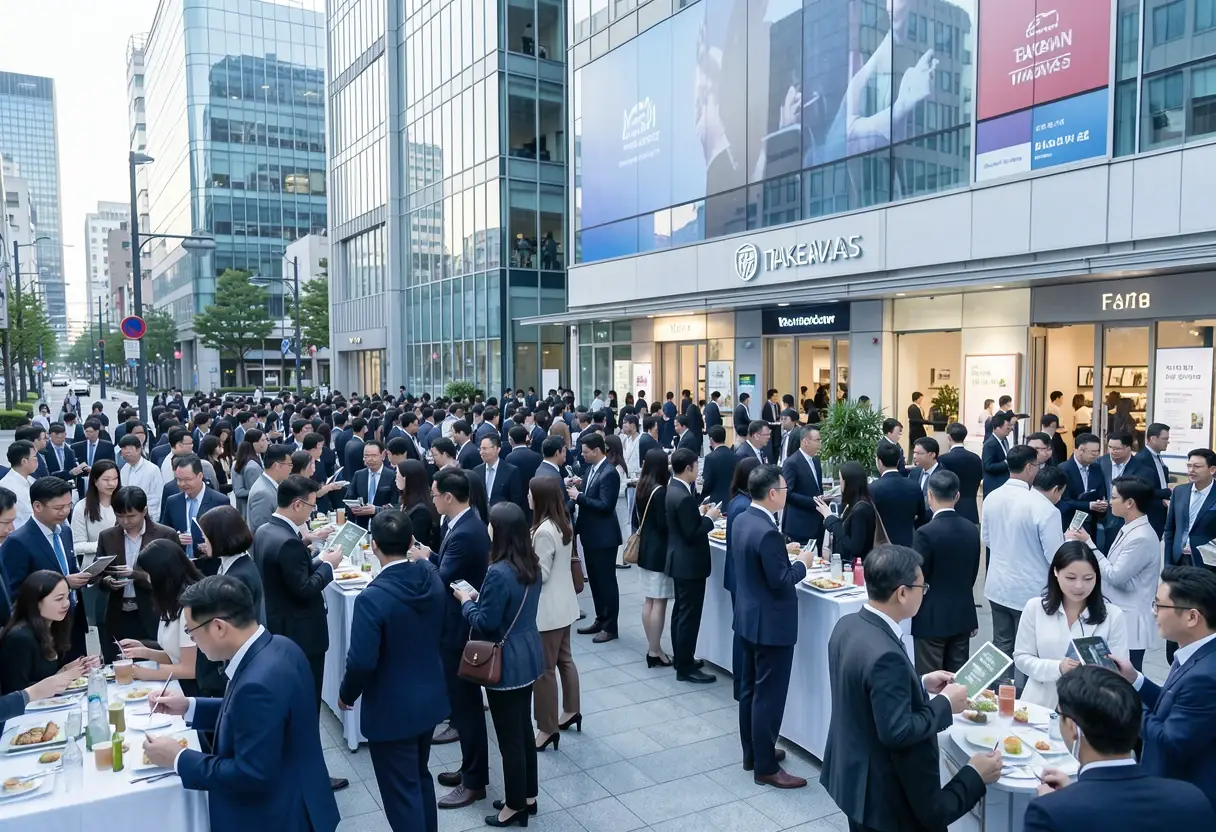
Community BIFF, the audience-programmed strand in Nampo-dong, pulled 29,511 visitors, more than 1.7 times last year's figure. BIFF Everywhere took films to a record 18 locations, including Buddhist temples, traditional markets and a National Assembly building in Seoul.
The Asian Contents & Film Market (ACFM), the festival's industry arm, held steady. It counted 30,484 visitors, up 1.6%, with registrations climbing 4.3% to 3,158 participants from 1,266 companies across 58 countries. Exhibitors rose 17% to 339, and Czech & Slovak and Cambodian pavilions debuted.
Money is the friction. "The biggest obstacle is funding," ACFM director Ellen Y.D. Kim told Variety. "The scale and the role of the market have grown quickly, but public support has not kept pace. National funding for ACFM has stayed at the same level for two years running." She added: "For anyone who wants to work with Asia, there is no place as efficient over four days."
Malaysian directors Woo Ming Jin and Lau Kok Rui agreed on the gathering's pull. "You can count on everyone being here, exchanging about policy changes, sharing project updates… It's motivational," they said.
Why did 'The Assassin(s)' hijack opening week?
Hur Jin-ho's thriller about the Aug. 15, 1974 shooting of first lady Yuk Young-soo opened Sept. 23 and topped the Korean admissions chart. Conservative politicians and online critics accused it of distorting history. On Oct. 1, BIFF cancelled "Actors House: Lee Min-ho." A day later, Hive Media Corp. pulled the cast and crew from all festival appearances, citing the safety of audiences after a conservative group announced daily protests outside lead actor Yoo Hae-jin's home.
At the jury's press conference, jury president Zhang Yimou deflected carefully. "Creation and historical truth: what does historical truth really mean? History is also written by people, so is history itself truly real? Sometimes that in itself is a question mark," he said. Juror July Jung, director of "Next Sohee," was blunter: "What I feel now, even though it isn't my film, is that my heart feels so cold as a filmmaker."
Around 20 filmmakers, including Chung Ji-young and Lee Myung-se, later urged politicians to stop using the film as a weapon. They also criticized the People Power Party, whose 109 lawmakers had written to the Singapore International Film Festival demanding withdrawal. Singapore kept "The Assassin(s)" as its Oct. 21 opening title.
What did the jury decide?
Politics returned at the close. Majidi's "Midday Meal," the story of a rural schoolteacher, won the Busan Award from Zhang's jury, and the director spoke against the war in Iran, citing a February U.S. strike on a school in Minab that killed 156 civilians, 120 of them schoolchildren. "They will stand firm to the end and fight to get their independence back," he said. "I wish for a future with no war."
Because Busan is now an A-list festival (FIAPF-accredited), "Midday Meal" goes straight to the Oscars' international feature race without a national selection. Other winners:
- Special jury prize: Eddie Cahyono's "Ibuku" (Indonesia)
- Best director: Lee Yun Chan, "To Be Ordinary" (Taiwan)
- Best actor, shared: Zhou Xun ("The First Taste of Loneliness") and Himeno Kashun ("Satoko Always")
- Artistic contribution: Li Danfeng, sound director, "The First Taste of Loneliness"
The guest list matched the status: Michelle Yeoh, named Asian Filmmaker of the Year after a 15-year absence; Ann Hui with the Camellia Award; Alfonso Cuarón on his first official Korea trip; Isabelle Huppert, Maggie Gyllenhaal, Koreeda Hirokazu and Lee Chang-dong with his Netflix drama "Possible Love."
How are producers and money responding?
The Producers Guild of Korea and Indonesia's APROFI launched the Asian Producers Alliance, with bodies from the Philippines, Taiwan and Hong Kong signing on — the seed of a standing coalition for co-productions and policy. Solaire Partners and Japan's Questry signed an MOU on Oct. 12 for a Korea–Japan content fund worth KRW100 billion ($74.6 million).
"Co-production used to be an option; now it is an essential strategy for sharing risk," Kim said. France's Ecce Films sales rep Li-yan Fan was more measured: "Co-production is becoming inevitable, but it still depends on the nature of each project and the resources available where you're shooting."
On AI, Netflix's Lee Sung Q said the streamer had already used AI in some form on around 300 titles, while director Kang Yoon-sung pegged potential savings at 30% to 40% of a feature's budget — then undercut his own math. "The quality of the footage AI makes is very high, but when it comes to delivering emotion and moving audiences, I think we're in a period where it has actually gotten worse," he said.
Thailand, the ACFM's first Country of Honor, added five titles to the Busan Story Market for remake. Europe! Hub counted 36% of the festival program as at least a European co-production. Both numbers suggest Busan's real business now runs east and west at once.
Source: Variety Film
More from Daniel Okafor
Show full bio
News editor covering companies, deals and strategy in arts in the broadest sense at Arts & Voices.
568 articles