Connected TV Is Rewriting What India's Streamers Greenlight
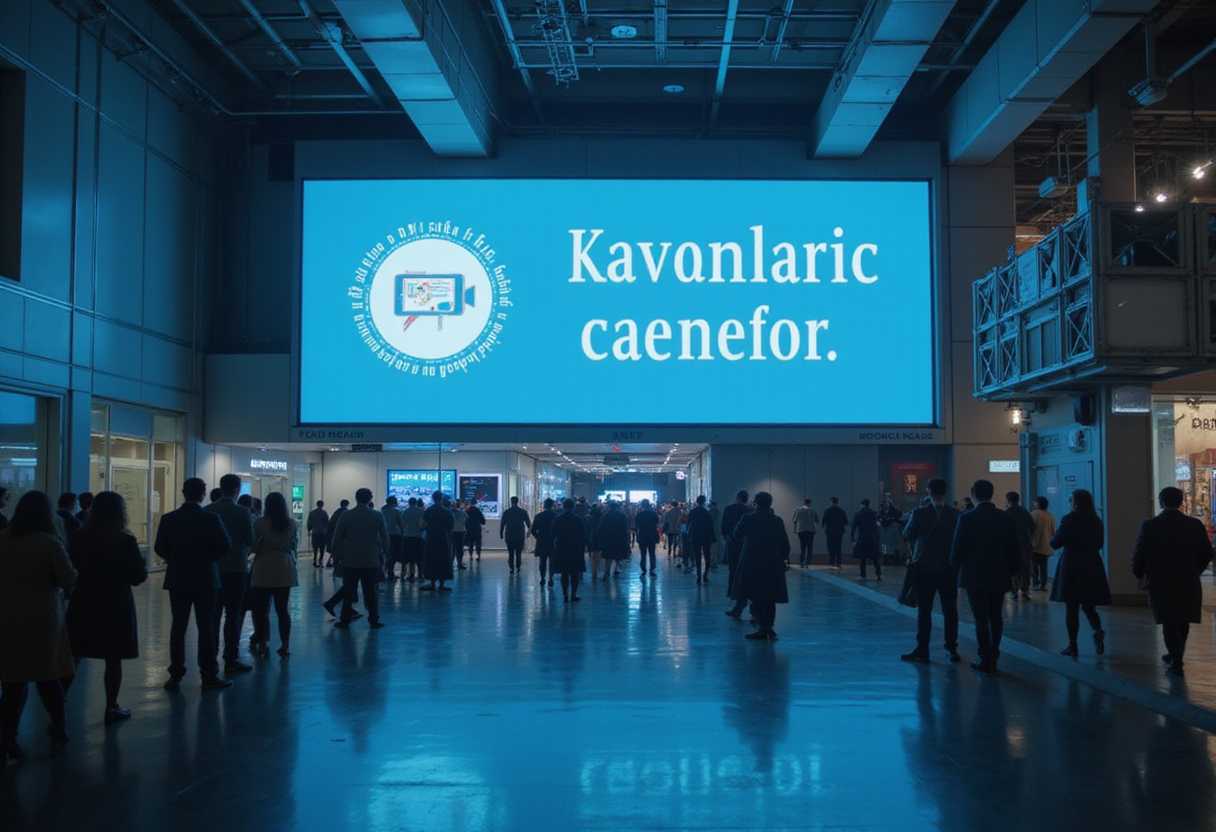
Prime Video, Sony, JioStar, Zee and NDTV chiefs told FICCI-Frames in Mumbai that connected TV is reshaping commissioning, not just viewing habits, across India.

Programme
- Gaurav Gandhi of Prime Video said the platform now develops shows based on whether they are co-viewing or individual-driven experiences.
- Kevin Vaz of JioStar put India's connected TV audience at nearly 200 million viewers and said it is growing fast.
- NDTV has used CTV to expand niche shows like 'Lifeline' and 'Launchpad' that linear schedules could not justify, according to CEO Rahul Kanwal.
Prime Video is now developing shows around whether audiences will watch them together, Gaurav Gandhi, VP and head of Prime Video for Asia-Pacific and Australia-New Zealand, told the FICCI-Frames conference in Mumbai.
Streaming began as a largely solo experience, Gandhi said during the opening presentation, "India's Screen Economy – The Next Wave." That assumption no longer holds. "So much of our time is being spent today thinking about like, hey, this is a co-viewing show compared to this is an individual-driven show first," he said.
Connected TV, Gandhi argued, combines the shared, lean-back experience of television with digital's convenience, choice and ad targeting. It also creates a discovery problem. "The challenge it brings up with is in that world of so much choice, when you're in a lean-back experience, how easy do you make it for customers to be able to get to what you want to get to?" he said, adding that recommendation engines need to get much better.
Moderator Vivek Couto, co-founder, CEO and executive director of Media Partners Asia, framed CTV as a screen that pairs TV's scale with digital's addressability and asked the panel how it would reshape the industry's economics.
Kevin Vaz, chair of the FICCI Media & Entertainment Committee and CEO of entertainment at JioStar, said he preferred to talk about the large screen rather than CTV specifically. "The large screen has always been communion, the large screen has always brought families together and been a unifier," he said. CTV preserves that function while adding measurement and addressability, letting advertisers — most of whom, he said, prefer the bigger screen — aim their messages at specific audiences. Citing a figure presented earlier in the session, Vaz put India's CTV audience at nearly 200 million viewers and said it is growing fast.
Gaurav Banerjee, managing director and CEO of Sony Pictures Networks India, recalled the old marketing line "Medium is the message" and warned that industry discourse can get swayed by the signal rather than the substance. "So it finally doesn't really matter how people get to that large-screen experience, but what do they do when they get there?" he said.
For Banerjee, CTV offers the same opportunity television has offered for three decades: a family gathered around a program it can talk about over dinner. He recalled watching "Nukkad" with his family as a child in the 1980s. "I think that's something that hasn't truly changed and should not change, and that's something that we have to keep building and keep protecting," he said.
News is seeing the most concrete programming shift. Rahul Kanwal, CEO and editor-in-chief of NDTV, said linear planners always worry that a show with narrow appeal will sink a channel's ratings. On connected TV, NDTV has doubled down on "Lifeline," about healthcare, wellness and anti-aging, and "Launchpad," about upskilling. "News channels typically wouldn't be able to do that kind of content because there wouldn't be enough eyeballs in that," Kanwal said, adding that CTV viewers open such content only if they are interested.
Vaz said the definition of a hit has shifted as screens have multiplied. Success used to be judged on a single large-screen measure, he said, but now also counts audience votes, engagement and social media trends. Technology, he added, can match each story with the viewer it suits, when and where they want it, so that one person's flop can be another's hit.
Punit Goenka, CEO of Zee Entertainment Enterprises, said the industry has moved beyond the TV-versus-digital split into an attention economy, where content, technology and data have to work together. Asked what makes content win amid endless choice, he kept it to a single line. "Infinite content does not mean infinite consumption," he said.
With close to 200 million CTV viewers and commissioning decisions already bending toward the family screen, India's largest media groups are betting that the next wave of the screen economy will be decided less by the platform than by what audiences choose to watch on it together.
Source: Variety Film
More from Marcus Bennett
Show full bio
Staff writer covering industry trends and analytics at Arts & Voices.
187 articles