Daniel Kraus Turns Whalefall From Novel Into Screen Survival Story
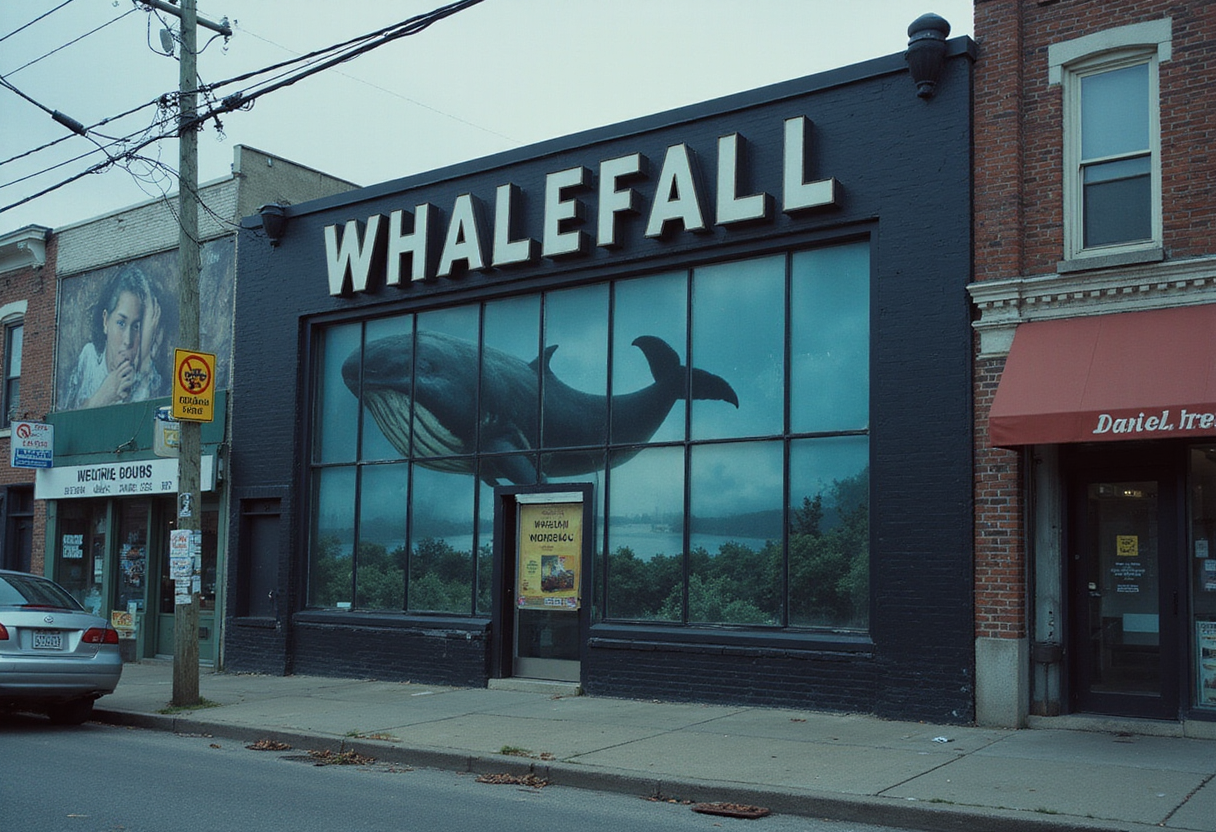
Pulitzer winner Daniel Kraus co-wrote the Whalefall film with director Brian Duffield, framing the whale as setting, not villain — his comp is Cuarón's Gravity.
Programme
- Daniel Kraus co-wrote the Whalefall film adaptation with director Brian Duffield.
- Kraus won the Pulitzer Prize for his novel Angel Down.
- Austin Abrams stars as the protagonist trapped inside a whale.
- Kraus calls Alfonso Cuarón's Gravity the best comparison for Whalefall.
- Kraus cites The Cay, Hatchet and Lord of the Flies as formative survival books.
Pulitzer Prize winner Daniel Kraus has adapted his own novel Whalefall for the screen, co-writing the film with director Brian Duffield. The interview, published by The Film Stage, covers the leap from page to screen, his recent Pulitzer win, and the survival-at-sea tradition his story sits inside.
The novel that earned Kraus the Pulitzer is Angel Down — a separate work from Whalefall, though the interview treats both as part of the same run. Whalefall, as its trailer signals, traps its protagonist, played by Austin Abrams, in the belly of a whale. The premise invites the obvious reading: man versus beast. Kraus rejects it.
Is the whale the villain?
No. Kraus says the whale in Whalefall is actually a setting, not a villain. That distinction shapes the adaptation. If the animal is a place rather than an antagonist, the story becomes about surviving an environment, not defeating a creature — the difference between a monster movie and a survival story.
For comparison, Kraus does not reach for Moby-Dick. He names Alfonso Cuarón's Gravity as the best comp for Whalefall. The logic is clear: both strand a lone character in a hostile, airless medium where the clock and oxygen, not an enemy, drive the tension.
Which survival stories shaped it?
The conversation ranges across a familiar canon of sea-survival and castaway films that Kraus argues remain underrated:
- All Is Lost (2013), J.C. Chandor's near-wordless solo sailing disaster
- White Squall (1996), Ridley Scott's school-ship disaster drama
- In the Heart of the Sea (2015), Ron Howard's account of the Essex sinking
Kraus also cites the survival books he read as a child — The Cay by Theodore Taylor, Hatchet by Gary Paulsen, and Lord of the Flies by William Golding — as formative for Whalefall's stripped-down, one-protagonist stakes.
Two further titles surface in the discussion: Walter Hill's Southern Comfort and Carroll Ballard's The Black Stallion. Neither is a sea story. Both, like Whalefall, put characters under pressure in isolation, which appears to be the thread Kraus follows when he assembles his reference points.
What does this change for the adaptation?
For readers of the novel, the interview offers one concrete reassurance: the author wrote the screenplay himself, alongside the director. That limits the drift that often separates a book from its film version, though it does not eliminate it — Kraus discusses the differences between books and movies directly, without claiming the two forms can match each other beat for beat.
What remains unsaid is a release date or distributor detail for the film; the interview concentrates on craft and lineage rather than the rollout. Until those specifics arrive, the strongest signal here is creative: a Pulitzer winner, a director-co-writer partnership, and a premise — a man inside a whale — reframed as setting rather than monster. That reframing, more than any marketing line, is what will decide whether Whalefall reads as genre or as something closer to Gravity.
By Tom Whitfield
Original: pulitzer.org
More from Tom Whitfield
Show full bio
Market editor covering people, launches and day-to-day practice in arts in the broadest sense at Arts & Voices.
524 articles