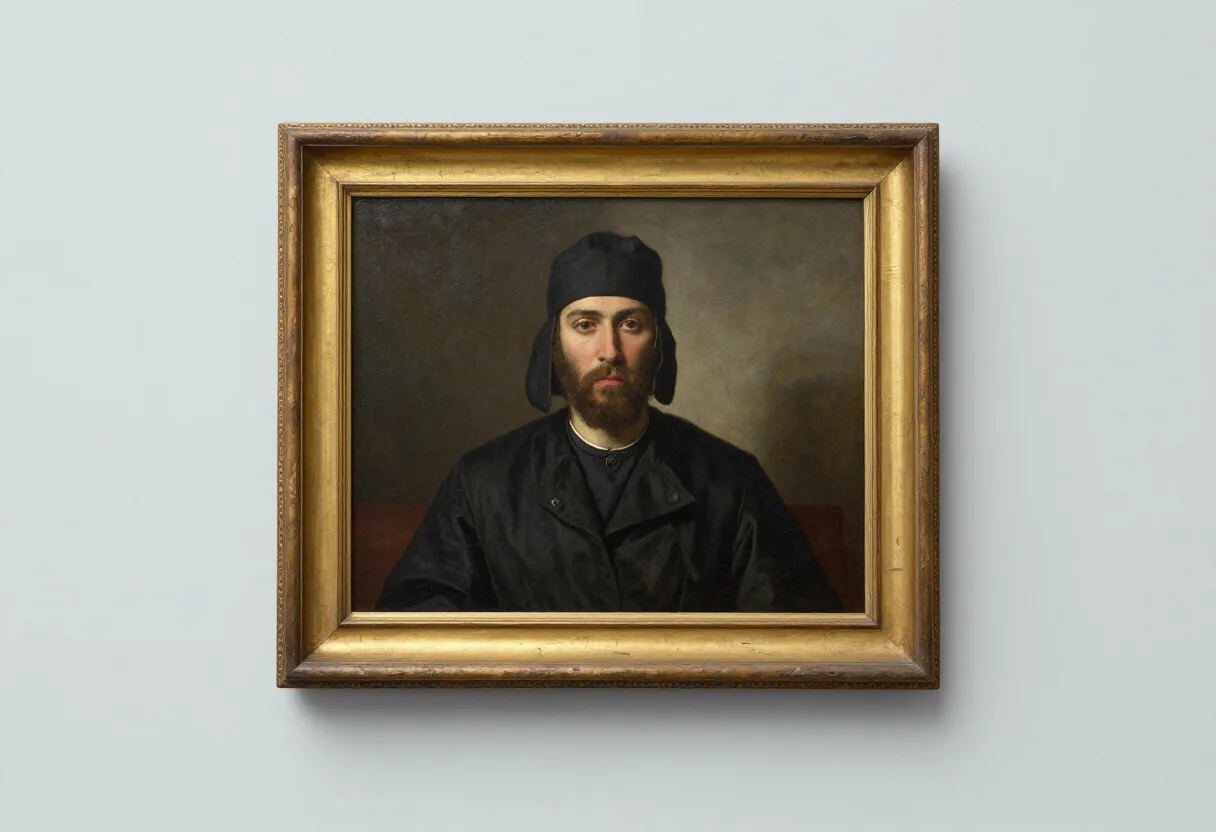
David Chipperfield Builds a Concrete Gallery for One Kiefer Painting
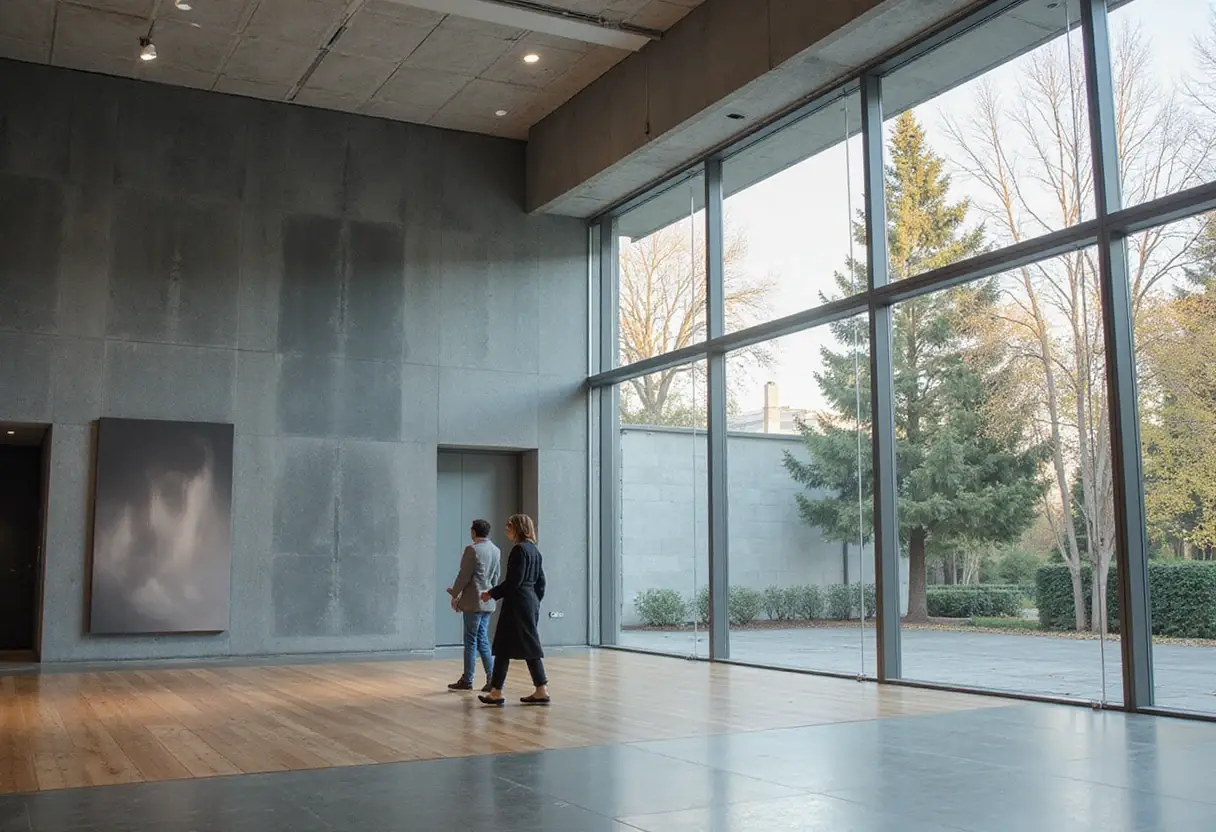
David Chipperfield Architects has completed the Anselm Kiefer Pavilion in Künzelsau, Germany — a monolithic concrete gallery built around one 11-by-7.1-metre painting never before exhibited.
Programme
- The Anselm Kiefer Pavilion houses a single work: Kiefer's Schwarze Flocken, measuring 11 by 7.1 metres.
- The pavilion sits in the sculpture garden of the Carmen Würth Forum in Künzelsau, Germany, completed by the same firm in 2020.
- It is the artwork's first-ever public presentation; its size had prevented display at the museum before.
- The building needs no active climate control: a three-layer wall of concrete, brickwork and clay plaster keeps the room frost-free.
- The firm also marked 15 years since its Hepworth Wakefield (2011) and Turner Contemporary (2011) opened.
By Daniel Okafor
David Chipperfield Architects has built an entire concrete gallery to house one painting. The Anselm Kiefer Pavilion now stands in the sculpture garden of the Carmen Würth Forum in Künzelsau, Germany — a museum and conference hall the firm completed in 2020.
The pavilion's sole tenant is Kiefer's Schwarze Flocken (Black Flakes), a large-scale mixed-media work measuring 11 by 7.1 metres. The German painter named it after a poem by Paul Celan, the Holocaust survivor. Its size, apparently, is the whole story: the museum could never exhibit it before. So the museum got a building instead.
Why did one artwork need its own building?
Chipperfield's Berlin office designed the cuboid volume in direct collaboration with Kiefer, tailoring the interior to the artist's specifications. "The building's form directly traces the interior volume specified by the artist and focuses on a few, precisely placed elements," the practice said.
The exterior is bush-hammered concrete (a textured finish struck with a hammer-headed tool) over brick, echoing the concrete surfaces of the main Carmen Würth Forum next door. A canopy protrudes over the entrance, described by the architects as a "restrained portico" that "provides shelter from the weather and marks the transition between landscape and exhibition space."
The statement is characteristically blunt about the pavilion's purpose: "This structure is precisely tailored to the work and enables its first-ever public presentation."
How does the interior treat the painting?
Inside, clay plaster lines the walls and the timber roof beams sit exposed. Rooflights admit natural light, tracked deliberately through the day and the seasons. No hermetic white cube here.
"The aim is not uniform illumination, but a focused, tranquil atmosphere that slows down the act of seeing and directs attention to the artwork," said David Chipperfield Architects.
The practice dispensed with conventional museum kit. "Unlike conventional exhibition spaces, the room is not subject to strict climate control or lighting parameters," it continued. "Its three-layer wall construction, comprising concrete, brickwork and an internal layer of clay plaster, is designed to adapt to varying climatic conditions and maintain frost-free conditions without active climate control."
That's the quiet technical triumph of the project. Three layers of wall do the work of a mechanical plant, keeping the room frost-free by material intelligence rather than machinery — a passive-systems gambit (climate regulation without powered equipment) that would embarrass most purpose-built depots.
The pavilion continues a busy stretch for the firm. In October 2026, David Chipperfield Architects published a short film marking the 15th anniversary of two projects it calls among its most important: the Hepworth Wakefield gallery in West Yorkshire and the Turner Contemporary in Margate, both opened in 2011.
Photography is by Studio Menges Tugushi.
A single painting with its own hilltop building sets a useful benchmark. When an institution says a work is too big to show, the answer, apparently, is architecture.
Original: carmen-wuerth-forum.de
More from Daniel Okafor
Show full bio
News editor covering companies, deals and strategy in arts in the broadest sense at Arts & Voices.
646 articles