Desert Data From Spain Drives Philippe Parreno's 5 Moons in Sydney
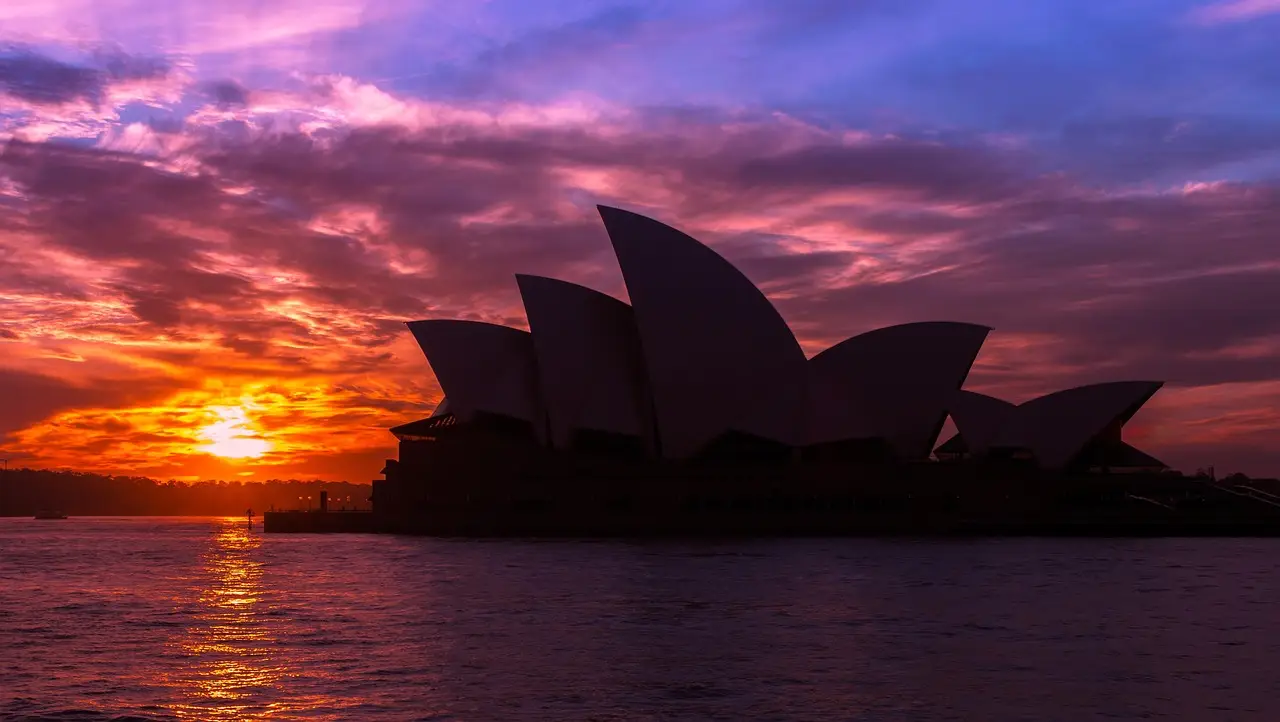
Philippe Parreno's first major Australian show runs at Sydney's MCA until 26 April 2027, with lights, sound and airflow driven live by desert weather data from Spain.

Programme
- Philippe Parreno: 5 Moons is the artist's first major Australian exhibition, at the MCA Sydney until 26 April 2027
- The show is powered by real-time wind, humidity and temperature data from an abandoned almond farm 17,000km away in Spain's Tabernas desert
- The exhibition includes an 11-hour film shot on the Spanish farm, shown on the museum's third floor
- Parreno previously took over Tate Modern's Turbine Hall in 2016 and showed a precursor of the film at Haus der Kunst, Munich, in 2024
The Museum of Contemporary Art in Sydney has opened its summer blockbuster, Philippe Parreno: 5 Moons, the acclaimed French artist's first major Australian exhibition — and much of it is remotely controlled by weather data captured 17,000 kilometres away on an abandoned almond farm in Spain.
The show, named for the five lunar cycles of its run, is live until 26 April 2027. Parreno, known for takeovers of Tate Modern's Turbine Hall and the Palais de Tokyo in Paris, treats the exhibition itself as his medium. At the MCA he has built connected environments across the museum's three levels, drawing on works from his four-decade career.
What actually powers the show?
Sensors on the farm in the Tabernas desert of south-east Spain — a region best known as the backdrop for spaghetti westerns such as The Good, the Bad and the Ugly and Once Upon a Time in the West — record wind speed, humidity and temperature in real time. An algorithm converts that data into commands for the sound, air flow and lighting in Sydney.
As our reviewer puts it: the land is improvising a score, and the museum is playing it. The desert connection is personal. Parreno's family migrated from that same region of Spain hundreds of years ago to Algeria, where he was born.
What will visitors see?
The components sound deliberately unglamorous: expensive lamps, a massive industrial fan, speakers, marquee lights, a glowing cluster of power adapters, a silvery light sliding up and down a pole, flickering bulbs. Taken alone, it reads as "a spectacle without a story."
Elsewhere the environments get richer:
- An orange-carpeted gallery with floating, helium-filled, fish-shaped balloons in citrus tones, where a grand piano plays an enigmatic score
- A giant luminescent cuttlefish gazing from a screen, its fins undulating amid ambient electronics from swiveling speaker banks
- A darkened third-floor gallery showing an 11-hour film shot on the Spanish farm, where visitors can watch a night pass under the Spanish moon
Live sound from the Spanish terrain plays in the galleries too, producing uncanny collisions. During the reviewer's visit, nocturnal Spanish insects were punctuated by the toot of an ocean liner docked outside in Sydney Harbour.
Where's the meaning?
Backstory matters in Parreno's work; without it, his ecosystems risk seeming opaque or, worse, inane. A white-walled room where helium speech-bubble balloons cover the ceiling and coloured lights flash gains weight only once you learn the lighting pattern translates a mystical adventure by French writer René Daumal into morse code.
"What I normally try to do for exhibition is to try to create sort of a milieu, or an ecosystem, where things are responding to each other," Parreno says.
The philosophy runs deeper than gimmickry. His 2016 Turbine Hall takeover — which delighted some viewers and frustrated others — hinged on a hidden jar of yeast whose biodata influenced the whole installation. "Lots of the things I do require people to endorse a fiction," Parreno commented at the time.
5 Moons continues that inquiry: how perception changes a thing, and how the way we imagine land transforms it. When he showed an earlier version of the film at Munich's Haus der Kunst in 2024, he said the work was designed to feel as if the land was "speaking to you." He asked then: "With the ways climate change is changing the world, how do we address the landscape? Are we going to keep transforming it? Or is it maybe the other way around – that the land is looking at us."
What does this change for the visitor?
Parreno's early exhibitions in the late 80s and 90s carried revolutionary ambitions — "You want to change the world. You want to produce a new reality," he recalls. Now his goal is quieter: an escape from the signal-response loop of everyday life.
"I want to create that thing that you don't see much [these days]," he says. "In the system we live in, you are always obliged to respond to a signal. Here you are not. You just float with your own attention, and you spend the time you want."
Whether Sydney audiences float or flounder, 5 Moons gives them nearly a year and a half to find out.
Source: theguardian.com
More from Grace Kim
Show full bio
Correspondent covering technology and product news in arts in the broadest sense at Arts & Voices.
1,754 articles
Also on view
Inhotim Closes 20th Anniversary With 5 Million Visitors and Two New Shows
Powerhouse Parramatta Opens in Sydney, Australia's Biggest Cultural Build Since Opera House
Fierce Festival Returns to Birmingham: VR Sauna, Pool Show, Cluedo Hall
Flesh-like speakers and post-apocalyptic scenes open Walker Design Triennial