Donald Insall, architect who restored Windsor Castle, dies at 100
Donald Insall, who restored Windsor Castle after the 1992 fire and helped create English Heritage, has died aged 100. His studio confirmed the death and called him a "pioneering conservationist".

Programme
- Donald Insall has died at the age of 100, his studio announced.
- He led the restoration of Windsor Castle after the 1992 fire.
- He founded Donald Insall Associates in 1958 and chaired it until 1998.
- His Chester study visited more than 400 buildings and led to conservation officers across England.
- His book Living Buildings (2008) was reprinted in 2018 with a foreword by King Charles.
By Tom Whitfield
Donald Insall, the architect who led the restoration of Windsor Castle after the 1992 fire, has died at the age of 100. His studio, Donald Insall Associates, announced the death in a statement.
The studio described him as a "pioneering conservationist". That label carries weight: Insall did not merely repair old buildings. He built the intellectual framework — and the institutional machinery — through which Britain now treats them.
What did Insall actually believe?
He drew a sharp line between preservation and conservation. "Preservation he said is 'what you do for marmalade'," his studio recounted in its statement. "In the case of buildings, this means keeping them in their original state for posterity."
Conservation, by contrast, meant something more demanding. "Conservation means working with old buildings, streets and towns in ways that allow them to live on usefully and delightfully for new uses when and where appropriate and for future generations," the studio said.
The distinction sounds academic. It was not. It underwrote an entire professional culture in which buildings are adapted rather than embalmed — and Insall's career supplied the evidence.
A career built project by project
Born in Bristol on 7 February 1926, Insall began his architectural studies in 1942 at the Royal West of England Academy School of Architecture. He went on to study civic design at the Royal Academy Schools and later at the School of Planning in London.
After training, he worked for the London practice Phillimore and Jenkins, which restored and designed country houses. In 1958 he founded his own studio with Peter Locke. Insall served as its chairman until 1998.
The project list is long:
- Wotton House, the 18th-century baroque mansion in Buckinghamshire, saved from demolition in 1957
- The renovation of William Morris's Kelmscott Manor in Oxfordshire
- The conservation of Chester's historic city centre
- The post-fire restoration of Windsor Castle in Berkshire
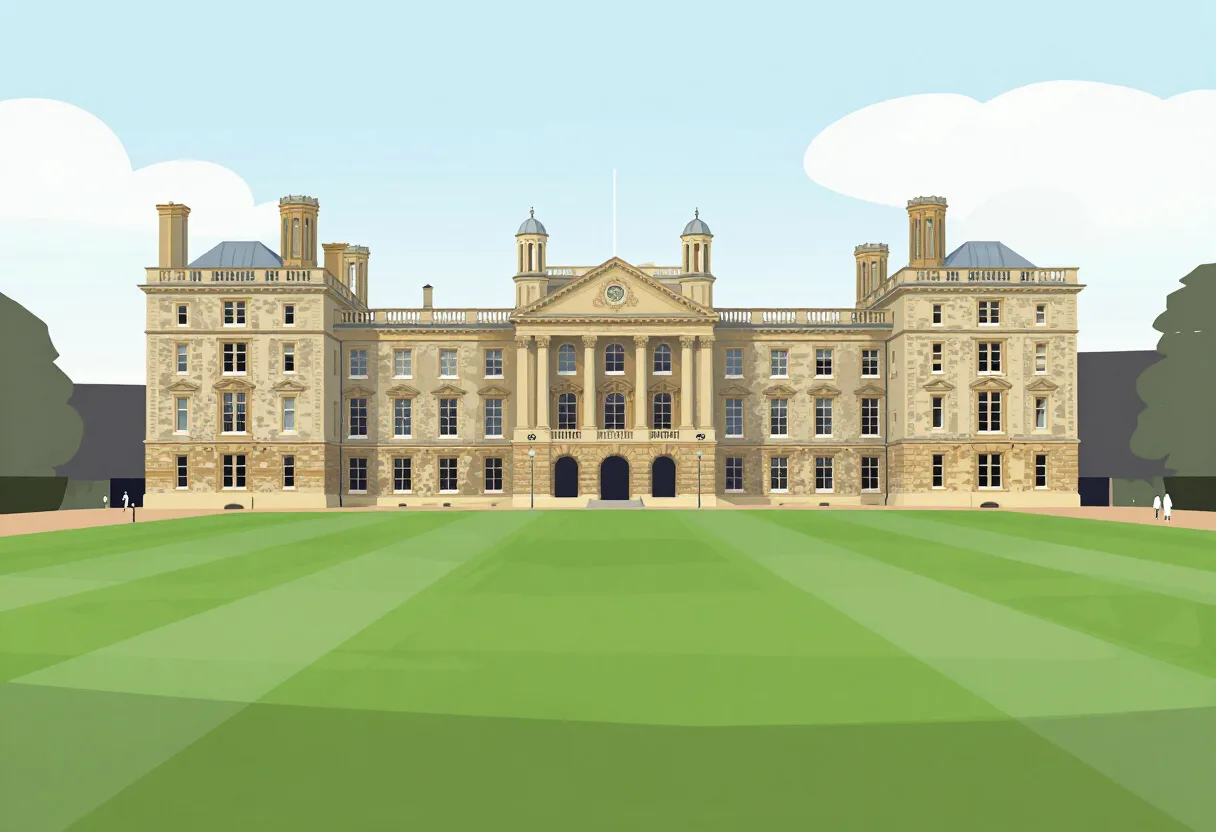
- Kedleston Hall, among other historic properties
The Chester study deserves particular attention. It involved visiting more than four hundred buildings in the city. Its consequences extended far beyond one city: the study led to the creation of conservation officers by local councils across England. One survey, in effect, seeded a national profession.
Institutional influence and royal endorsement
Insall was also a founding commissioner of English Heritage, the charity he helped create. Whatever one thinks of how that body has evolved, its existence is partly his doing.
His book Living Buildings, first printed in 2008, was reprinted in 2018 with a foreword by King Charles, then Prince of Wales. The King wrote that Insall had been "deeply involved, not just as a tireless practitioner, but in mentoring and inspiring others" in the realm of heritage and architectural conservation.
A royal foreword is easy to dismiss as ceremony. But it confirms something the record already shows: Insall's ideas about conservation reached the top of British institutional life, not just its building sites.
What was his method?
Insall insisted the best results came from a disarmingly simple starting point: friendship.
"I think that as a result of our experience over the years", he said, "we have developed a method that we feel is a wise one. We always try to make friends with the building itself, but also with its current users, so that both their respective needs can be met."
The friendship was procedural, not sentimental. "We prepare a life story of the building, and from there we assess the building's positive aspects," he continued. "We also take a look at its less successful features and see how these can be helped. However, the important thing is to take a positive approach to the project."
Study first, judge second, intervene last. In an era of accelerated retrofit and heritage disputes, that sequence remains the discipline's baseline.
What does this change for the practice?
The studio Insall founded continues without him. Recent projects include the renovation of a Grade II-listed Oxford college library and the renovation of the "deconstructed" Hardwick Old Hall ruin in Derbyshire. The method — the building's "life story", the friendship with users — is documented, teachable and now embedded in practice. What dies with Insall is the memory of a Britain in which historic buildings had no systematic defenders; what survives is the system he built to replace it.
Original: dia.co.uk
More from Tom Whitfield
Show full bio
Market editor covering people, launches and day-to-day practice in arts in the broadest sense at Arts & Voices.
690 articles