Dudamel Picks Up Bernstein's Baton: NY Phil's Tosca Opens Carnegie Era
Dudamel led the NY Philharmonic's inaugural concert opera at Carnegie Hall, with Kaufmann, Rebeka and Tézier in Puccini's Tosca. Susan Hall calls it a promising five-year start.
Programme
- Gustavo Dudamel conducted the New York Philharmonic's inaugural opera in concert at Carnegie Hall.
- The performance opened a five-year agreement between Carnegie Hall and the orchestra.
- Jonas Kaufmann, who boycotts the Met, sang Cavaradossi opposite Marina Rebeka's Tosca and Ludovic Tézier.
- Critic Susan Hall compared Dudamel's impact to Leonard Bernstein's last Carnegie appearance before the move to Lincoln Center.
Gustavo Dudamel led the New York Philharmonic in its inaugural opera in concert at Carnegie Hall — and, by most accounts, he was the evening's real star. Puccini's Tosca opened a five-year agreement between Carnegie Hall and the orchestra with, in Slippedisc critic Susan Hall's verdict, "a promising start."
The cast carried weight. Jonas Kaufmann, who boycotts the Metropolitan Opera, sang Cavaradossi. Marina Rebeka took the title role. Ludovic Tézier completed the principal trio. New York, in other words, got the rival Tosca.
How did Rebeka fare as Tosca?
Rebeka began slowly, then found her footing. Hall described her as "shimmering in silk and sequins colored to match the tone of each act: white, red, and black as she plunges to her death." Once her voice warmed and her top range settled, she delivered "arresting rage and desperation." A concert performance, technically — but the soprano dressed the part act by act.
What redeemed Kaufmann?
Kaufmann erased the memory of a difficult Carnegie appearance a month earlier. He "luxuriated" in "Recondita armonia," the aria in which Cavaradossi compares his half-finished painting of Mary Magdalene to his love, Flora Tosca. Hall's judgment: "Full throated and resounding through the hall, Kaufman was undeniably a hundred percent here."
Why was Dudamel the star?
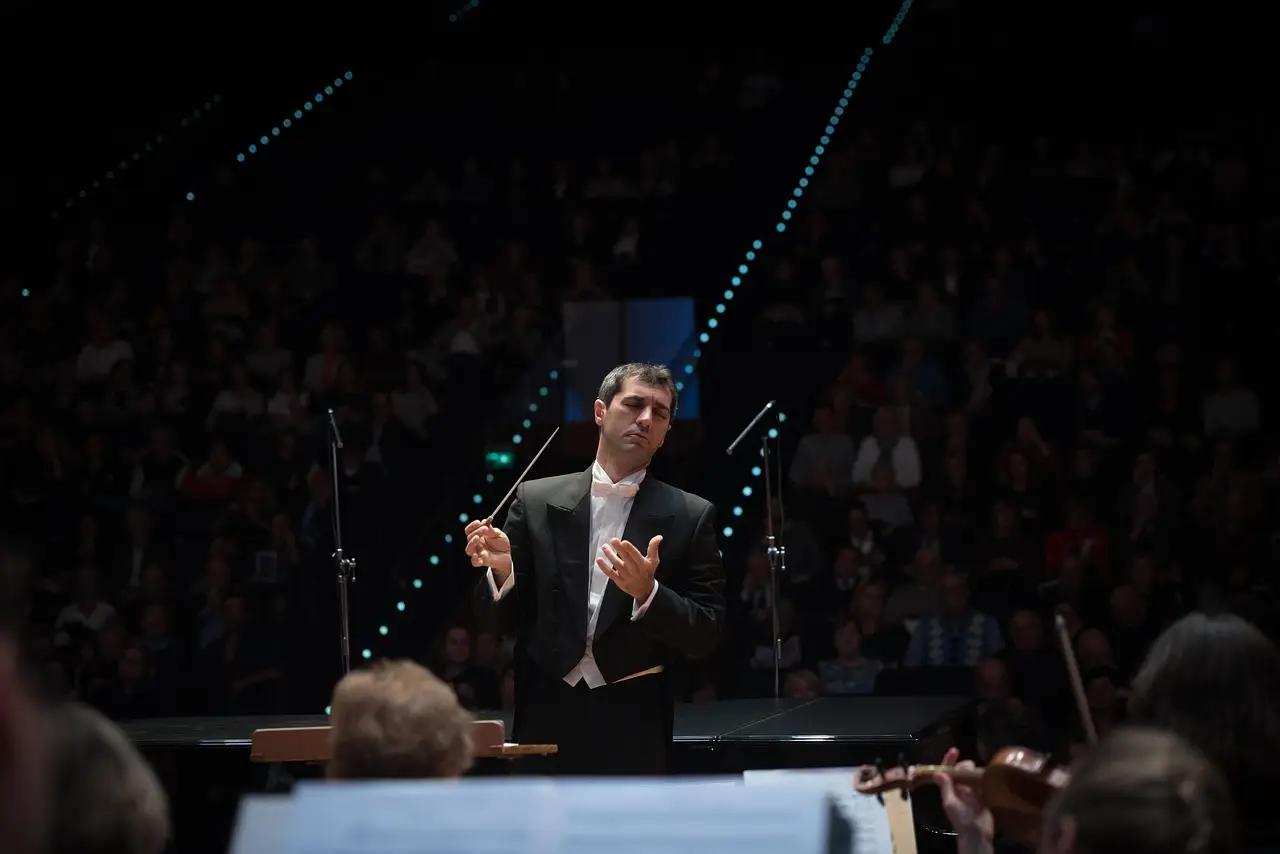
The conductor's discipline defined the night. Hall noted that his attention to the score showed "from the start that he could both keep the orchestra under the singer, not in competition, and still display the music in its finest details." The cello, the muted strings and the clarinet countermelody came through clearly under Kaufmann's first aria. The tenor reached his B-flat climax comfortably. Later, the French horns carried "a particularly rich nobility."
Hall's comparison carries the review's sting and its praise: "The Philharmonic has not sounded better since it performed its last concert on the stage before the move to Lincoln Center. Then Leonard Bernstein left his baton in Carnegie. Gustavo Dudamel has picked it up." That is a large claim. The orchestra apparently earned it.
The production mechanics stayed modest. An uncredited director of the singers created a catwalk in front of the orchestra, and the principals moved comfortably across it, mostly near the conductor. Dudamel turned his head quickly now and then to check they were ready to sing again. Hall read this as proof of his priorities: "He is here in the service of Puccini."
The audience, Hall reported, "was wild for him and his music." A hopeful start for opera in concert at Carnegie — and, for the Met across the plaza, an unwelcome reminder that Kaufmann's boycott now has a platform two miles north.
Source: Slipped Disc
More from Daniel Okafor
Show full bio
News editor covering companies, deals and strategy in arts in the broadest sense at Arts & Voices.
1,386 articles