Dutch Collective Turns Trump's 'Art of the Deal' Into Unauthorized Musical
Wunderbaum's unauthorized musical 'Die Kunst des Deals' adapts Trump's 1987 best seller at Schauspielhaus Bochum, selling out shows since its April premiere.

Programme
- "Die Kunst des Deals" premiered in April at Schauspielhaus Bochum and has sold out many performances, with more planned for 2027.
- The show is an unauthorized adaptation of Trump's 1987 book "The Art of the Deal"; rights requests to Tony Schwartz and Random House went unanswered.
- Bart relied on Germany's Copyrights Act, which permits parody or "pastiche" with demonstrated "intellectual engagement."
- Wunderbaum's previous production "The Dog Poop Attack" won a place at the Theatertreffen festival in 2024.
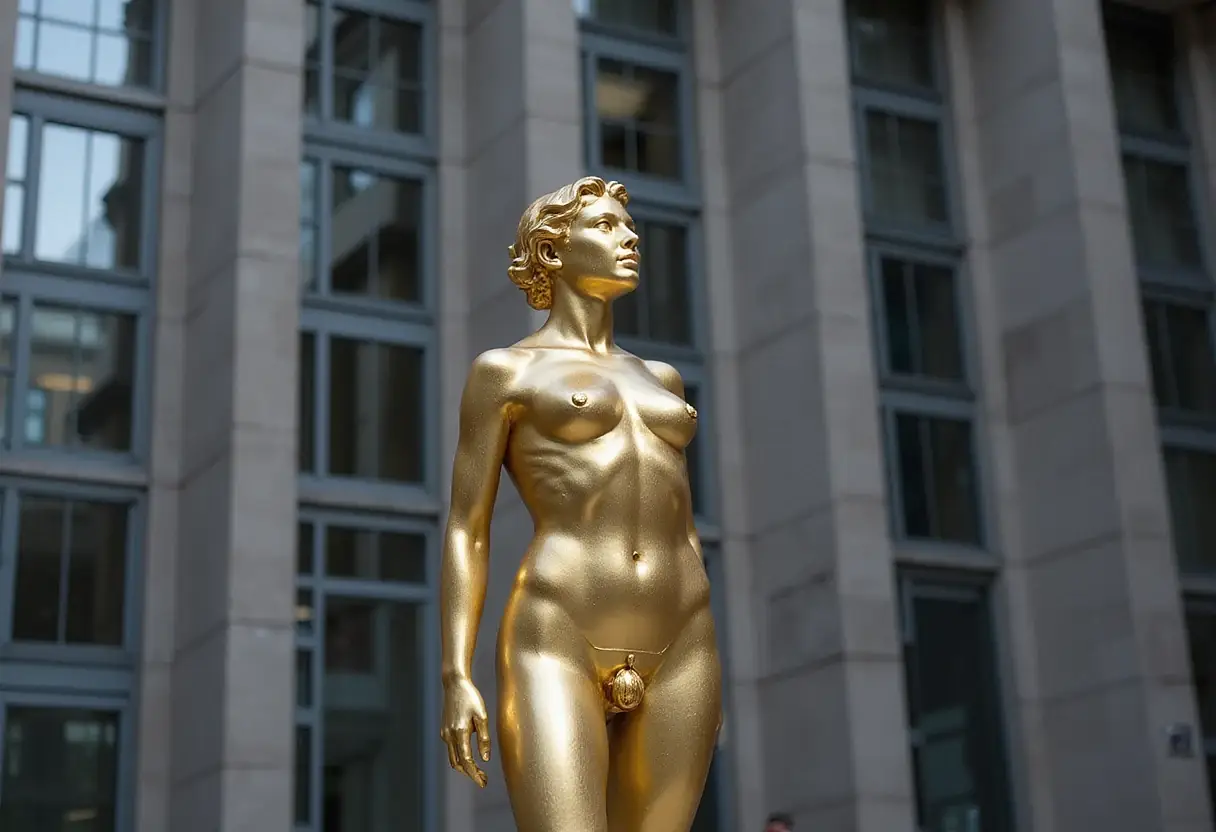
Since its premiere in April, "Die Kunst des Deals" has sold out many performances at the Schauspielhaus Bochum in western Germany. The unauthorized musical adaptation of Donald J. Trump's 1987 best seller "Trump: The Art of the Deal" features roller skaters, dancing gold bars and a 10-foot banana. The next performance is on Sunday, with more planned for 2027.
Walter Bart, the 48-year-old Dutch theater-maker behind the project, had long regarded the book as a key to understanding the current political era. He believed its advice on "truthful hyperbole" and winner-takes-all deal making explained the polarized dynamics of the moment. His collective, Wunderbaum, ran into trouble when inquiries about buying the rights went unanswered — and his collaborators refused to pay anything that would financially benefit Trump. Bart chose a riskier path: he skipped the rights altogether.
What does the law allow?
Bart said he relied on Germany's Copyrights Act, which permits parody or "pastiche" of another work if artists show "intellectual engagement" with the original. "That is a lot of gray area," Bart said, admitting uncertainty about his legal exposure. "I don't entirely know how it works." After a long pause, he added: "I guess that's a not-good answer."
The title itself is a legal workaround, a variation of the book's German title, "Die Kunst des Erfolgs" ("The Art of Success"). For legal reasons, Bart said, "we knew we had to be careful with the text." But "at a certain point we thought, 'We're just going to do this and see where it lands.'"
The show's first hour consists largely of six cast members, all playing actors in a musical about Trump, sitting on chairs before a bare curtain. They read out emails and text messages debating the project's ethics and logistics, including the rights wrangling. Bart wrote to Tony Schwartz, the book's ghostwriter, inviting him to collaborate; the email went unanswered. A December request to Random House's rights department drew an automated reply promising a response "as soon as we can" — and silence until shortly before the premiere.
How did critics and audiences respond?
Die Welt praised the show's "blend of self-deprecating humor, fearlessness and silliness." WDR, the public broadcaster, called it "flamboyant, provocative and unusual." Johan Simons, artistic director of Schauspielhaus Bochum — a state-funded theater whose productions have often featured Academy Award nominee Sandra Hüller — called the show a "twist on the genre of the musical" that turns it "into a game." He said he had not, "for one second," been concerned about the decision not to buy the rights, and praised Wunderbaum's "brazenness": its members "do what they want."
Wunderbaum drew wide attention in Germany in 2024 with "The Dog Poop Attack" at Theaterhaus Jena, a play about the real-life scandal in which a choreographer smeared dog feces on a newspaper critic. That production won a place at Theatertreffen, the annual festival of standout German-language productions. Bart said it emerged partly to attract media coverage to the under-the-radar Jena venue. "It worked," he said.
Will the show travel?
The production contacted the Kennedy Center in Washington about performing there before its closure, but an email to Richard Grenell, the center's president until this spring, went unanswered, Bart said.
Cast member Mona Vojacek Koper, a German American with a musical-theater background, admired the collective's willingness to make work "where you think, 'How can you make a piece about that?'" Musicals remain rare at German state-funded theaters, she noted: "Germans are not that open to musicals. They just think it's a superficial form that is kitsch filled."
Audiences in Bochum welcomed the levity. Abbi Schwartz, a 76-year-old dentist, said the show illustrated the parallels between the book and the current political moment. Nadja Skrövset, a 48-year-old doctor who saw the show twice, linked its themes to the rise of the far-right Alternative for Germany party. "Radicalization is happening everywhere," she said. "I think it's refreshing to be able to laugh about it and look at a giant banana."
Original: schauspielhausbochum.de
More from Marcus Bennett
Show full bio
Staff writer covering people, launches and day-to-day practice in arts in the broadest sense at Arts & Voices.
1,395 articles