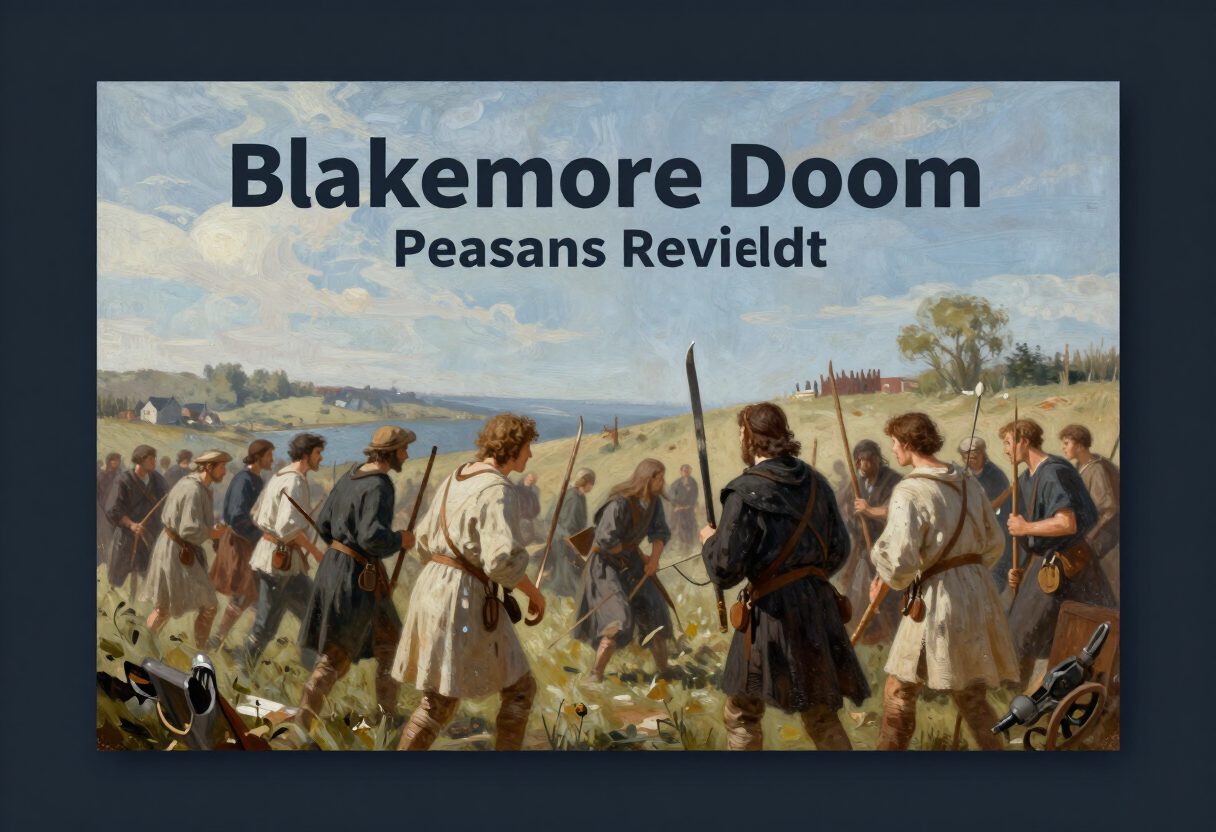
'Falcon's Children' takes flight from Substack to a Catholic imprint
Ross Douthat's Substack serial 'The Falcon's Children' will hit bookshelves next year via Word on Fire's Luminor imprint, after a 2023 Slate review urged a top-to-bottom rewrite of Chapter 1.

Programme
- "The Falcon's Children" is the first book in a planned YA fantasy trilogy by Ross Douthat.
- Luminor, the Catholic imprint of publisher Word on Fire, will release the print edition in 2026.
- Douthat originally serialized the novel as a free Substack exclusive.
- Slate critic Laura Miller reviewed Chapter 1 in 2023 and called for a top-to-bottom rewrite.
- A 2010 Mother Jones profile described Douthat's politics as "magical, Tolkien-like thinking."
Ross Douthat's Substack fantasy serial The Falcon's Children will hit bookshelves next year via Word on Fire's Luminor imprint.
Douthat has released chapters free on his fantasy Substack (a newsletter platform that lets writers publish serialized work directly to paying readers) since its launch. Luminor, the Catholic imprint of publisher Word on Fire, will issue the hardcover. The deal gives the serial its first physical edition.
Douthat's day job has continued apace. He left the New York Times opinion page and now contributes to Bari Weiss's 60 Minutes. He labels the novel speculative historical fiction. The tag does modest labor in a crowded corner of the genre.
What is the book actually about?
The narrative unfolds inside an empire called Narsil, ruled by a dynasty styled the Emperors of Narsil. Settings include the Skalbard Coast, the port of Cranholt on the Mersana River, and the Mandoran Invasion of Brethony. An in-world historian named Pharazel Maheris has written Lives of the Great Viceroys, a source text the author treats as received history.
The Substack wraps the prose with appendices for the patient. Worldbuilding posts catalogue emperors and the Nine Archangels in detail that would exhaust a casual reader by lunchtime. One page traces royal genealogies in numbered lists. A hand-drawn map anchors the site's menu, and the tone reads more like a 1990s role-playing-game bible than a working novel.
How has the writing landed so far?
Slate book critic Laura Miller read the opening pages in 2023 and filed a blunt verdict. Her published assessment: "If the rest of the novel is like Chapter 1, it needs to be rewritten from top to bottom." Sustained praise has been harder to locate since. Douthat's supporters counter that Chapter 1 is hardly the finished book.
The book's intellectual pedigree arrives by association rather than execution. A 2010 Mother Jones profile described Douthat's conservative vision as "into the realm of the utopian—it's magical, Tolkien-like thinking." The line now reads like a back-cover pitch waiting to be filed under received wisdom. Skeptics will note that Tolkien's worldbuilding drew on philology and a war; Douthat's posts catalogue his.
Can the print edition lift the reception?
Luminor reaches a Catholic-trade audience that mainstream publishers rarely touch. The imprint sits inside a niche where word of mouth travels parish to parish, a channel that bypasses standard literary reviews. A Tolkien-coded Catholic fantasy fits that pipeline without strain.
The free Substack serial will remain online. Pricing, cover art, and a publication month haven't been announced.
A columnist who built his public profile skewering liberal pieties now publishes a hardcover novel pitched at a Catholic readership. The commercial test is honest and unkind, and Luminor will deliver the verdict sometime in 2026.
Original: falconschildren.com
More from Daniel Okafor
Show full bio
News editor covering companies, deals and strategy in arts in the broadest sense at Arts & Voices.
515 articles