Five European Light Festivals Turn Winter Darkness into Public Art
Five European light festivals turn winter darkness into public-art seasons. Lyon drew roughly 2 million visitors last year, while Helsinki extended its program to eight days.
Programme
- Turin’s Luci d’Artista began in 1998 and maintains about 30 permanent pieces.
- Amsterdam’s 15th edition features about 20 works; guided canal cruises cost €29.75, or about $33.
- Lyon's Fête des Lumières drew roughly 2 million visitors last year.
- Stockholm’s sixth Nobel Week Lights, held Dec. 5-13, includes roughly 20 installations.
- Lux Helsinki extended its festival to eight days after attracting 450,000 visitors last year.
By Elena Vasquez
Lyon’s Fête des Lumières drew roughly 2 million visitors last year, and its Dec. 5-8 program continues a civic tradition begun in 1852.
Why do these festivals focus on winter darkness?
Each winter, an intense green beam splits the Copenhagen night sky. The festival calls the work “Green Beam,” a signature outdoor installation within its annual program of light-based art.
The Copenhagen Light Festival runs Jan. 29 through Feb. 21. It presents installations across the Danish capital. Across Europe, similar festivals can last from a couple of nights to several months.
Frederikke Krogh, the Copenhagen festival program manager, said: “We don’t want to hide the darkness. We want to embrace it.”
Berlin’s program primarily illuminates urban monuments and other landmarks. Prague’s mid-October event and Copenhagen’s January program showcase contemporary artworks that use light as their medium.
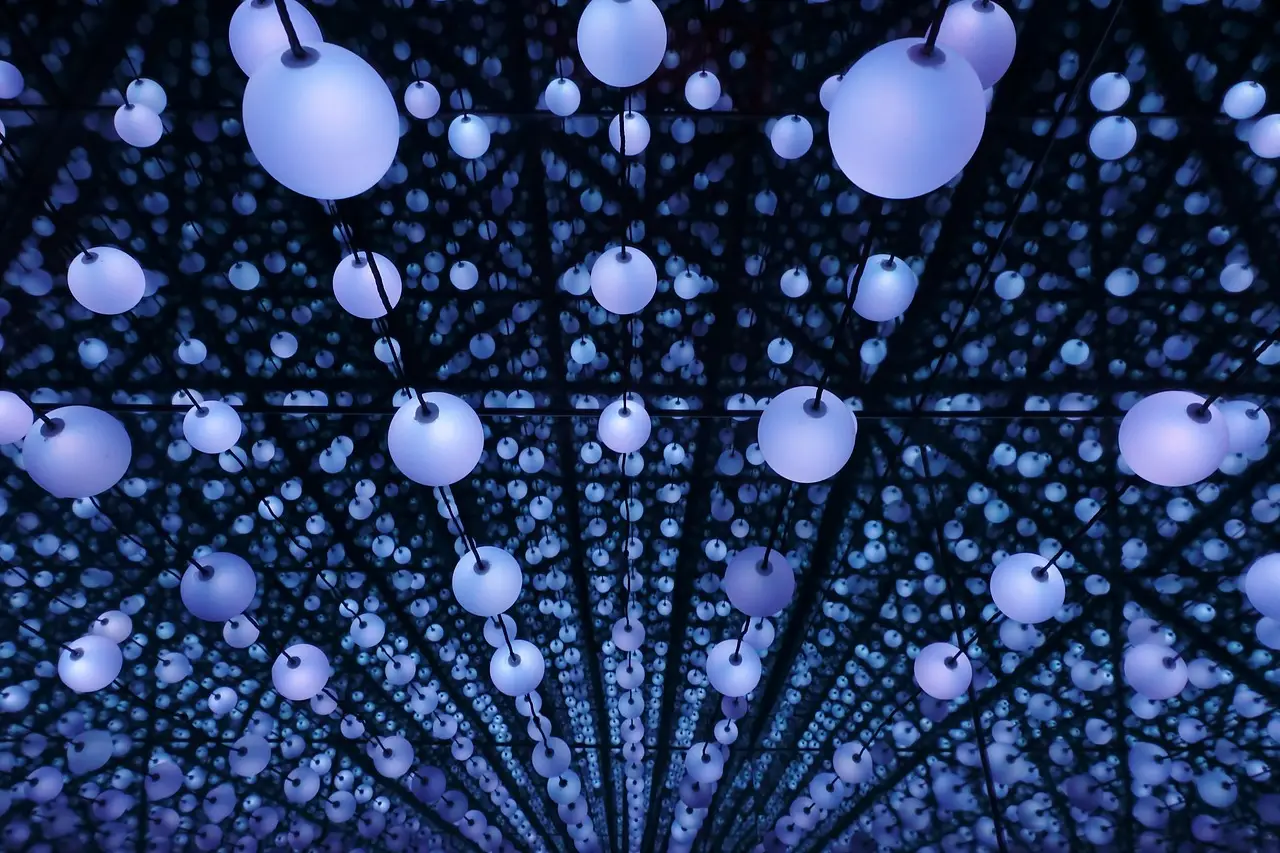
The common shift is from holiday decoration toward art that treats darkness as an active part of the medium.
What makes Turin’s program more institutional?
Luci d’Artista runs through Jan. 10. The festival began in 1998 and keeps about 30 permanent pieces, reinstalling them each year while commissioning new works for every edition. Grulli presents it as one of Europe’s more ambitious light shows.
Curator Antonio Grulli said: “Ever since we began, my team and I have treated the project as a real contemporary art institution.”
The program pairs internationally recognized artists from Italy and abroad with midcareer and younger practitioners. Grulli says many share a punk attitude. He also argues that light in art, used directly or indirectly, has a spiritual connection to the spirit and soul of people.
Tracey Emin’s neon “Sex and Solitude” returns this year. A new work by American multimedia artist Tony Oursler draws on his childhood memories of the first moon landing. “The Radiant Van” turns an ordinary van into a mobile magic lantern for Italian trio Canemorto.
Turin pairs a reinstalled collection with new annual commissions.
How do Amsterdam’s canals reshape the exhibition?
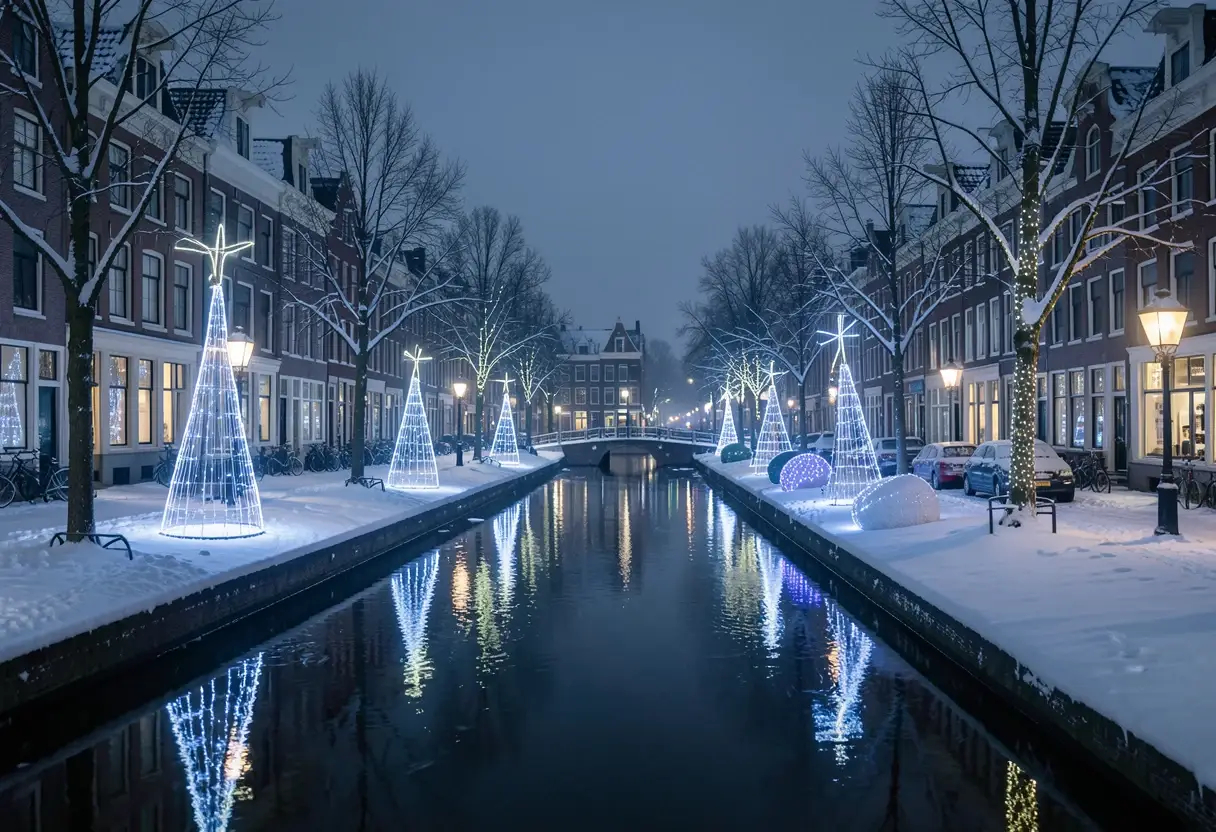
The Amsterdam Light Festival runs Nov. 26 through Jan. 17 in its 15th edition. About 20 works stand along, beside and sometimes within Amsterdam’s historic waterways. Visitors can reach them on foot or by bicycle.
From the water, reflective surfaces amplify colors and patterns. Artistic director Pam Toonnen said a boat changes visitors’ pace and height, revealing facades, bridges and artworks from viewpoints often impossible from the street.
Toonnen said the canal itself shapes how visitors perceive each work. Guided cruises cost €29.75, or about $33, and provide information about the artists and their works.
The lineup includes Dutch collective Touki Delphine, which makes monumental light and sound installations from discarded materials. It also includes Chila Kumari Burman, whose work explores Asian femininity.
Amsterdam’s canals work as both exhibition space and viewing platform.
Why does Lyon combine civic ritual with digital projection?
Lyon’s origins trace to an 1852 religious procession intended to install a statue of the Virgin Mary at an older pilgrimage site. Heavy rain prompted authorities to cancel planned fireworks; residents lit candles in their windows instead, beginning an annual tradition.
The city began lighting its monuments in 1989 and launched the modern festival a decade later. Today, video mapping projects animations onto buildings’ exact contours.
This year, three artists will transform St. Paul train station with careering lines and evocative music. The Gothic cathedral will appear to sprout flowers and organic life. Free-standing works and intricate overhead patterns along Rue de la République extend the program into the street.
With roughly 2 million visitors last year, Lyon is both the oldest and one of Europe’s largest light festivals.
Lyon scales a candle tradition through building-scale digital projection.
How does Stockholm tie light art to Nobel science?
Nobel Week Lights runs Dec. 5 through 13 and marks its sixth year. Stockholm receives about six hours of daylight on Dec. 10, the day of the annual Nobel Prize awards. The festival extends the ceremony’s excitement into the streets.
Roughly 20 installations by local and international artists draw on Nobel laureates and their contributions. “Fantastic Planet,” an illuminated maze in Gustav Adolfs Square, asks visitors to test their “internal GPS.” It echoes the discovery recognized by three researchers through the 2014 Nobel Prize in Medicine.
“Sol Machina,” in the Nobel Prize Museum courtyard, draws on physicist Hans Bethe’s Nobel Prize-winning studies. It transforms the sun’s energy into visible form.
Most works sit in the city center, while others occupy Tensta in the northwest. Free guided tours in several languages cover both routes.
Stockholm gives public light works specific links to scientific history.
What role does weather play in Helsinki?
Lux Helsinki runs Dec. 30 through Jan. 6. After 450,000 visitors last year, organizers extended the festival to eight days and shifted its dates across the New Year’s Day holiday.
About 20 outdoor works by Finnish and international artists punctuate the city, while several galleries host indoor light-based exhibitions. This year’s theme is “the light between worlds,” to be revealed in early December.
Artistic director Juha Rouhikoski said the cold gives Lux an extreme Arctic character and snow makes it frosty and dreamy. Climate change makes snow forecasts less reliable. Rouhikoski finds beauty in snowless editions, when black ground and a clear sky create very dark conditions and make the artworks stand out.
Helsinki treats changing winter conditions as part of the visual setting.
Original: copenhagenlightfestival.org
More from Elena Vasquez
Show full bio
Senior reporter covering technology and product news in arts in the broadest sense at Arts & Voices.
1,334 articles