Four Actors on Why Othello Remains Theater's Hardest Role
Wendell Pierce, Sharon D Clarke, Ryan Quinn and James Udom on playing Othello in 2024: the role's toll, its rewards, and one production postponed by illness.

Programme
- Bedlam's four-actor 'Othello' runs at the West End Theater in Manhattan from Nov. 7 to 29
- Wendell Pierce played Othello this spring at the Shakespeare Theater Company in Washington, directed by Simon Godwin
- The R.S.C. postponed Sharon D Clarke's Othello in August following her cancer diagnosis
- James Udom starred in the Classical Theater of Harlem's outdoor production this summer
- Ryan Quinn's Othello, directed by Eric Tucker, plays in street clothes with no set
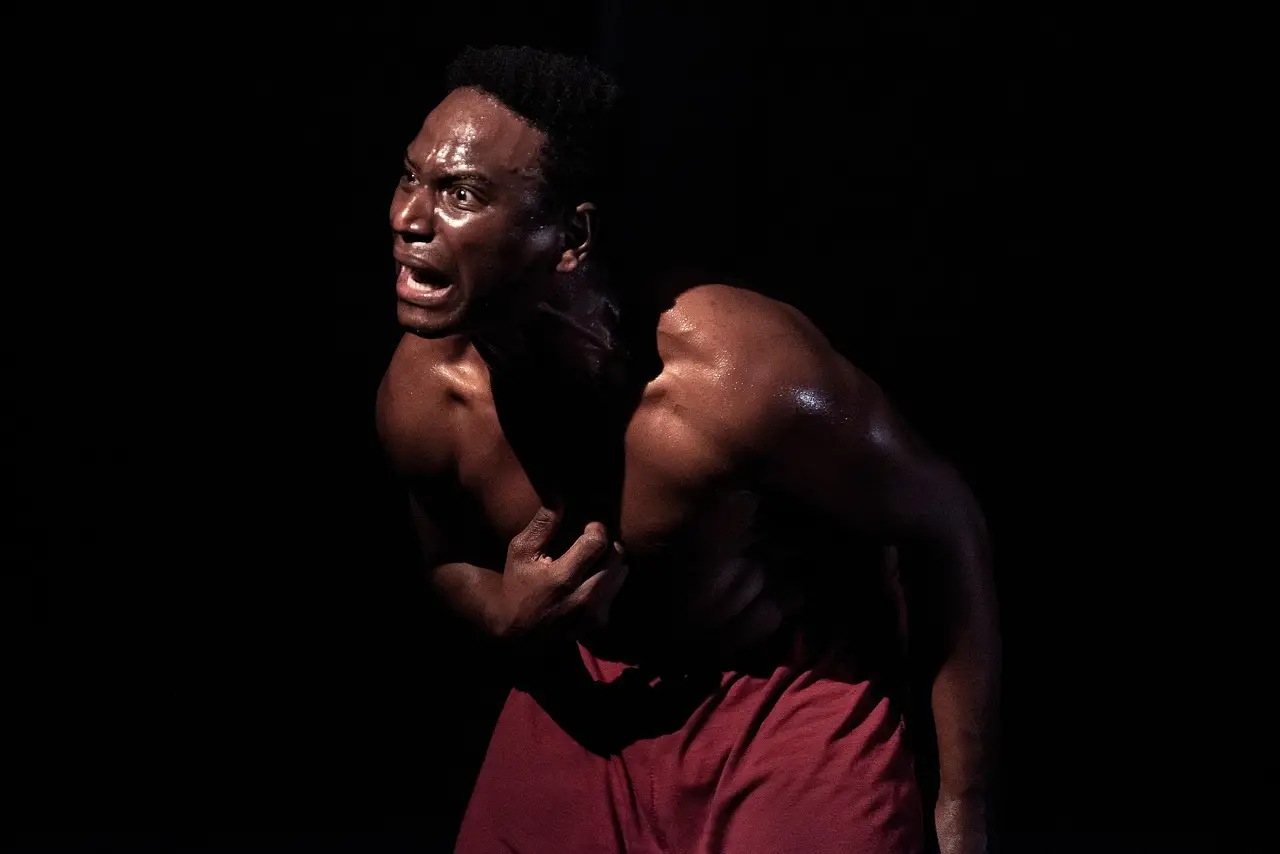
Bedlam Theater's stripped-down "Othello" returns to the West End Theater in Manhattan from Nov. 7 to 29, closing a year in which at least four actors — Ryan Quinn, Wendell Pierce, James Udom and Sharon D Clarke — have publicly grappled with the role many Black performers consider Shakespeare's most demanding test.
The part swings from affection and command to paranoia and femicide. The character was played in blackface for centuries; that practice has largely stopped, but actors say taking on the role can tax the spirit. Pierce, Quinn, Udom and Clarke each described both the cost and the unexpected reward.
What does Wendell Pierce's Othello reveal?
Pierce played the general this spring at the Shakespeare Theater Company in Washington, in a production directed by Simon Godwin. His Othello was a grown-up child soldier. "The only thing he has ever known in life is murder and violence," Pierce said in a phone interview.
His key discovery came from what the text omits. "One of the great discoveries I had in the play was realizing that there are no love scenes between Desdemona and Othello," he said. "So every scene that I was in with Desdemona became a profession of love, even when it was violent." That sublimation, he said, was the character's sickness.
Othello is one of the rare roles from which Pierce felt he had to separate himself. During rehearsals, a former Virginia lieutenant governor killed his wife and then himself — a reminder, Pierce said, of the danger of thinking poisoned thoughts. "I had to take real self care," he said.
The role also gave him what he called a kinship across time. At the Folger Shakespeare Library, Pierce read a letter by Ira Aldridge, one of the first Black Othellos. "I thought of Earle Hyman and Ira Aldridge and Paul Robeson and James Earl Jones," he said, before naming contemporaries like André Holland and Denzel Washington. "That is one of the gifts that the role has given me: a kinship with — and connection across time and place and generation to — so many other actors."
How does a four-actor Othello work?
In Bedlam's production, directed by Eric Tucker, four actors play all the parts. Ryan Quinn's Othello wears street clothes; there is no set, no uniform, no Jacobean folderol. Tucker plays Iago as a pleasant-seeming guy — the neighbor you'd call to jump your car.
"The thing that ignites all of it is love," Quinn said. "We may not know all of what it means to be a Black man, and I don't know what it means to be a white woman. But I'm married to a white woman. My dad's Black and married a white woman. I understand what it means to love." His way in, he said, was "not only love for Desdemona, but love for Iago, too."
Quinn, who also teaches theater at SUNY New Paltz, resists reading the general as deluded. "I don't think Othello's easily duped," he said. "I just think when he loves, he loves." He acknowledged why actors recoil from the part: the final scene, and the pressure of an iconic role. "You need to know that the ancestors are also speaking from you," he said.
Why did James Udom hire a trainer?
This summer's Classical Theater of Harlem outdoor production starred James Udom, directed by Carl Cofield. Because of the dearth of parts for Black men in Shakespeare, Cofield called Othello the "proving ground for an actor." That scrutiny reached the rehearsal room. When Othello slaps Desdemona, Cofield said, "we both checked in immediately. We were both like, 'No, that's not it, we can't come back from that, right?'"
Udom trained physically because "there is a physical uprightness to him that you slowly see degrade over the course of the play. As his mind falters, his body falters as well." When Othello stops trusting Desdemona, his horror manifests as seizures — "a trauma response to living a life of war, having figured that out, having softened, and then attempting to zip himself back up." At one point, he had to "go home and light some sage. This is a dark head space to live in," Udom said.
What happens to Sharon D Clarke's Othello?
The Royal Shakespeare Company announced this summer that Clarke — the Linda Loman to Pierce's Willy in the 2022 revival of "Death of a Salesman" — would play Othello. She and director Monique Touko had discussed setting the production in a near-future world where people fight for access to water.
In August, the R.S.C. postponed the production after Clarke's cancer diagnosis. "Othello will be my North Star as I undergo treatment," she said in a press statement.
Her vision, a lesbian Othello, was already giving her strength. "The misogyny, the homophobia, the racism. A woman working in a patriarchy," Clarke said, naming her character's struggles. "Yeah, she could snap. That's her fight or flight response. It's not flight; it's fight." She described the character with exhilarated admiration: "This is a woman who is steely and strong and has a strong sense of self-worth. She is bloody good at what she does."
Whether Clarke's production reaches the stage remains uncertain; the R.S.C. has set no new dates. What is certain is that the role keeps asking new questions of everyone who takes it on — and, this year at least, keeps getting answers.
Original: bedlam.org
More from Tom Whitfield
Show full bio
Market editor covering people, launches and day-to-day practice in arts in the broadest sense at Arts & Voices.
1,414 articles