From Caracas to Richmond: Zoila Peña's Rise at Richmond Ballet
Zoila Peña, 26, left a principal post in Caracas for Richmond Ballet, won gold in Miami, and now dances Giselle and Sugar Plum in Virginia. Her path ran through a cousin's 50 bolivars.

Programme
- Zoila Peña, 26, joined Richmond Ballet after emigrating from Venezuela in 2024.
- She became a principal at Ballet del Teatro Teresa Carreño at age 21, joining as first soloist at 17.
- She won first place in two categories at the 2025 Miami International Ballet Competition.
- Richmond Ballet artistic director Ma Cong offered her a contract on the spot at the Miami audition.
- She danced Sugar Plum Fairy in Richmond Ballet's Nutcracker in December after her U.S. work visa was approved.
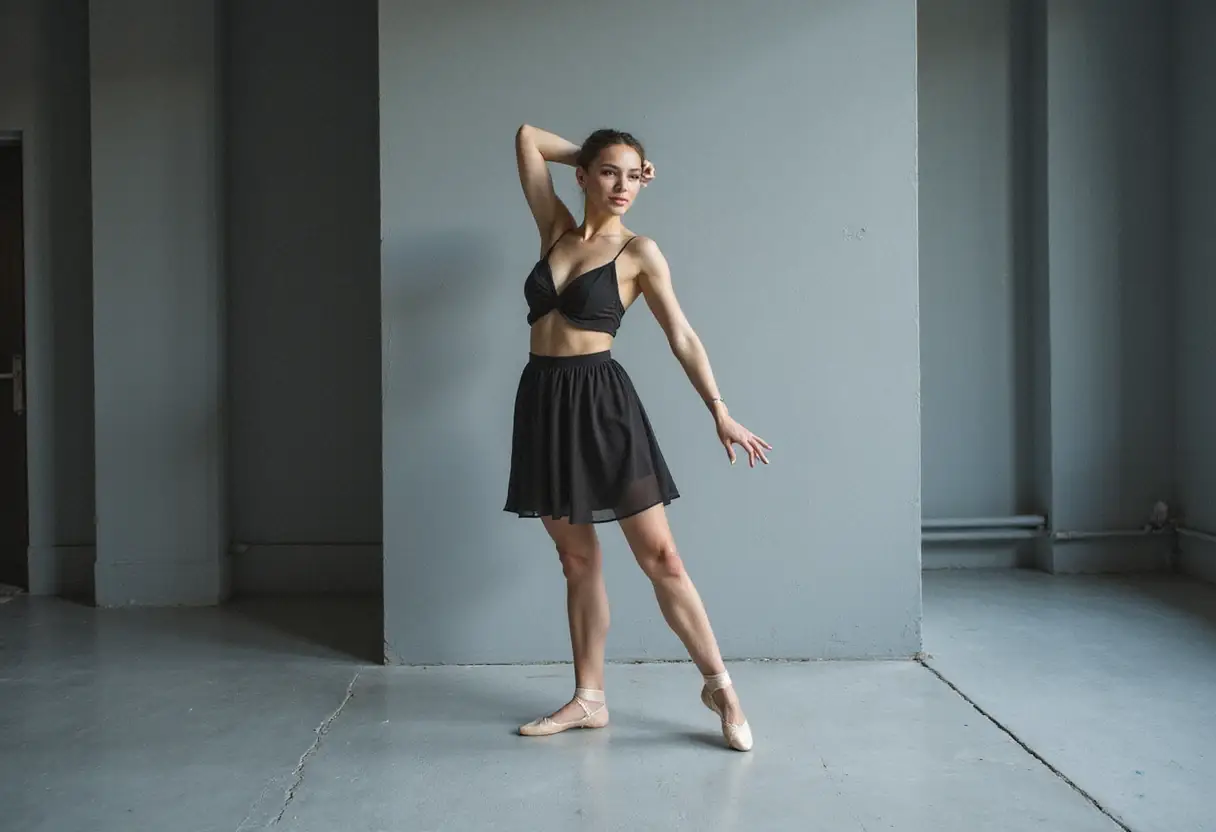
Venezuelan ballerina Zoila Peña, 26, danced her breakout Giselle with Richmond Ballet last season, just over a year after leaving a principal career at Caracas's Ballet del Teatro Teresa Carreño (BTC) in search of economic security.
Her Giselle drew attention for its detail. Critics and teachers' imagery came alive: she seemed, in Pointe Magazine's account, "to serve a delicate teacup on a perfectly turned-out heel" and carried her upper body "as if wearing a glittering necklace." By the time she donned Bathilde's jeweled pendant in Act I, the audience was entranced.
How did a girl from Barinas get here?
Peña first saw ballet at age 8, watching her cousin's summer class at Fundación Barijazz in Barinas, Venezuela. "When I was in that studio, it was like, 'That is what I want,'" she recalls. Her single mother couldn't pay for lessons — "It was just her; I never met my father," Peña explains.
So her 11-year-old cousin staged what Peña calls a small rebellion. With 50 bolivars of her own, she asked Peña's uncle and godfather for the rest of the tuition, fibbed about her mother's approval, lent dancewear, and completed the registration. Peña's first bun was unpracticed and oblong, "like a big carrot," she says. Her mother understood but didn't allow her to return, knowing she couldn't cover ongoing tuition.
Two teachers at the school, Levi Mocharrafich and Héctor Trejo, had noticed her. After a call with Peña's mother, they offered a tuition scholarship and helped pay for dancewear. Four years later, when they opened Ballet Estudio Central outside Valencia, they invited Peña and her mother to move in with them and covered all training costs.
"I couldn't have my biological father, but I won two beautiful angels in my life," Peña says. "And my mom won two brothers." In a joint email translated from Spanish, her "dads" wrote: "Zoila always maintained a resolute attitude toward ballet as a profession; that determination, combined with her immense talent, made her dream our own."
What did her Venezuelan career look like?
After five years at Ballet Estudio Central, Peña auditioned for BTC's Nutcracker. Instead of a student role, the director offered the 17-year-old a first-soloist position. She became a principal at 21.
Her repertory stayed almost exclusively classical and romantic — Paquita, Swan Lake, Coppélia, Giselle — in Vaganova-style training (the rigorous Russian method) with occasional Cuban flair, plus a few neoclassical works by BTC's late artistic director, Vicente Nebrada. Venezuela's economic crisis wore the company down: the theater's stage was so large it felt like a "galaxy," but facilities became rundown, performances were often canceled, and Peña took three extra teaching jobs to make ends meet.
How did Richmond find her?
Iliana Lopez and Franklin Gamero, co-artistic directors of Gulfshore Ballet in Fort Myers, Florida — former Miami City Ballet principals who are also Venezuelan — found Peña through other Venezuelan dancers on social media. They sponsored her U.S. move, coached her, and prepared her for the 2025 Miami International Ballet Competition, where she won first place in two categories. She arrived in Fort Myers in August 2024.
Richmond Ballet artistic director Ma Cong heard about her through his trainee program coordinator, a former colleague of the couple. "I just saw this beautiful développé écarté rond [de jambe] to attitude," Ma says. "Her extension was unbelievable." Knowing her background was almost purely classical, he taught her some of his own contemporary choreography; she picked it up fast. "Before I left for Miami, I actually had my contract draft ready," Ma admits. He offered it on the spot.
Her work visa was approved in time for her to dance Sugar Plum Fairy in Richmond Ballet's Nutcracker that December. Her Cavalier, Khaiyom Khojaev — himself an emigrant from Tajikistan — calls her a generous partner: "If something doesn't work, we always ask each other 'Am I doing something wrong, or can I change something?'"
What does this change for Peña?
The distance carries real costs. Her mother and one of her Venezuelan dads fell ill during absences she couldn't travel home for, and June's devastating Venezuelan earthquake forced the evacuation of the building next to her mother's. "I was so scared," Peña says. Her family stayed safe; she still hasn't returned since leaving.
She channels that emotion into performance — rehearsing Giselle often left her in tears — and pushes beyond her classical comfort zone. She danced her first contemporary piece in flat shoes this year. Ma, in his third season at the helm, plans more contemporary rep and big narrative roles. "She's still learning how to control her force," he says. "You just need more opportunities to push you further."
Peña's answer: "I'm excited to keep giving to Richmond Ballet my spirit and my love for dance."
Original: richmondballet.com
More from Grace Kim
Show full bio
Correspondent covering technology and product news in arts in the broadest sense at Arts & Voices.
1,083 articles