From the Mound to the Canvas: Micah Johnson's Second Career
Micah Johnson reached Major League Baseball on talent and passion. A mental health crisis ended that career — and redirected his drive into fine art.
Programme
- Micah Johnson played in Major League Baseball before a mental health crisis ended his career
- He redirected the drive that fueled his sports career into fine art
- NPR profiled Johnson's transition from athlete to artist
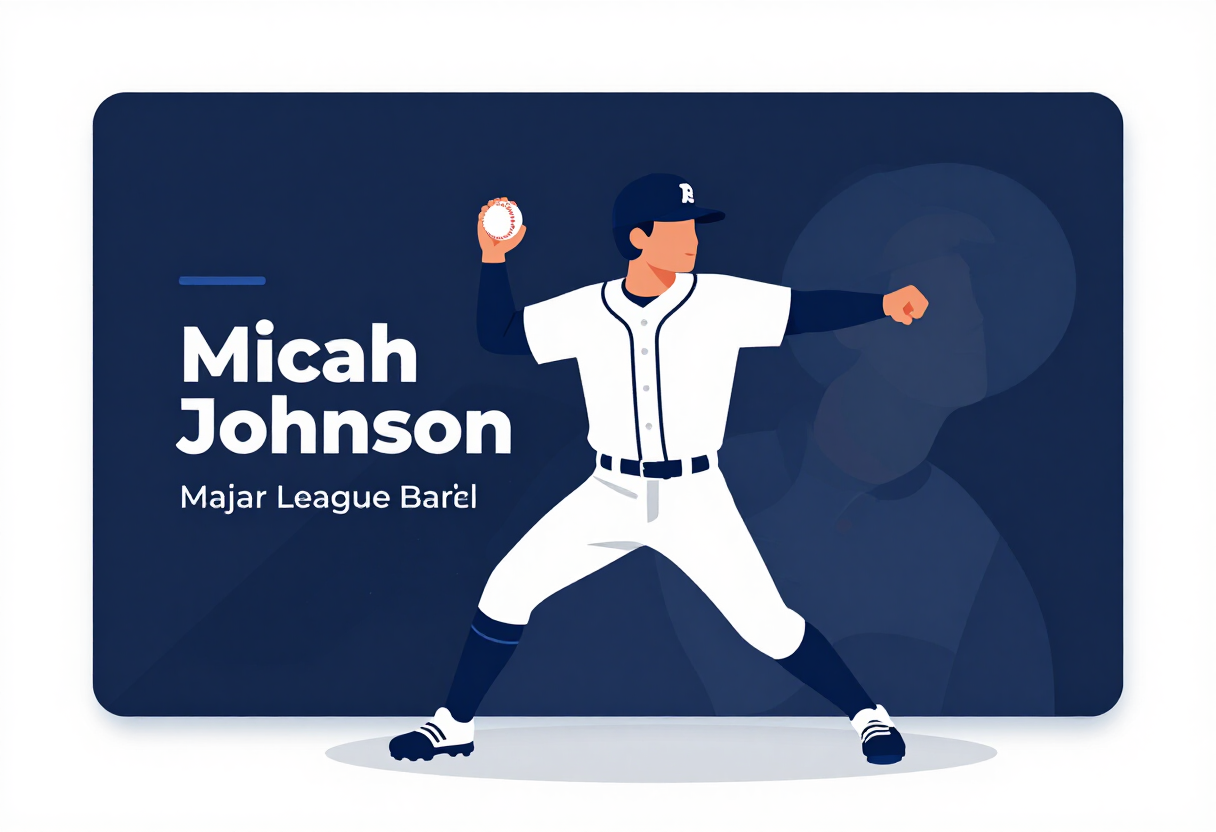
Micah Johnson reached Major League Baseball on talent and what NPR describes as "a special kind of passion." A mental health crisis pushed him out of the sport. He then turned that same drive to a different field entirely: fine art.
The outline of Johnson's story is unusual even by the standards of second-career artists. He did not leave baseball for injury alone or for a decline in performance, and he did not take up painting as a hobby to fill retirement. According to NPR, which profiled the former player, a mental health crisis ended his professional playing days — and the same intensity that had carried him to the top of American sport became the engine of a new practice in fine art.
That trajectory matters for how the art world categorizes him. Johnson arrives at the canvas not through art school or the studio-assistant route, but through a public career in professional athletics and a private crisis that redirected it. NPR's framing makes the connection explicit: the passion that landed him in Major League Baseball is the passion he now applies to making art.
For readers of Arts & Voices, the case raises a familiar question in a sharp form: what does an artist's biography do to the work? In Johnson's case the biography is unusually legible. A professional athlete is a public performer whose body is the instrument; a mental health crisis makes that instrument unreliable; fine art offers a practice where the discipline, focus and competitive drive of elite sport can be redirected into objects rather than outcomes.
NPR does not offer or accept money for its coverage or interviews, the broadcaster notes, and warns that anyone making such an offer or request does not represent NPR — a standard disclaimer attached to its reporting.
The details of Johnson's artistic output — medium, gallery representation, exhibition history — sit outside the profile's summary as it reached this desk. What the profile does establish is the arc: talent and passion into baseball; a mental health crisis out of it; the same drive, repurposed, into fine art.
Johnson's transition also belongs to a broader conversation about athlete mental health, one that has moved from the margins of sports journalism to its center in recent years. When a player leaves the game and builds a career in the arts, the story stops being only about sport and becomes one about what high-performance people do when the performance ends.
Where Johnson's art career goes from here — in terms of exhibitions, market presence and critical reception — will determine whether the second act matches the first. For now, the former Major Leaguer has done what few athletes manage: he has named the crisis that ended one career and built another on the passion that survived it.
Source: NPR Arts