German Art Historian Reattributes 'Fake' Print to Renoir
Henry Keazor has identified a drawing long labeled a fake as a hand-signed Renoir lithograph from around 1899, on view in Heidelberg from November 26.
Programme
- Henry Keazor reattributed the work to Pierre-Auguste Renoir in a finding announced for the show opening November 26.
- The work is a hand-signed lithograph from around 1899 depicting actor and singer Amelie Diéterle.
- The Heidelberg Forgery Study Collection holds 140 forgeries of artists including van Gogh, Dalí, and Giacometti.
- The 'Germinal' portfolio edition ran to 100 copies, with printed rather than handwritten signatures.
- The exhibition 'Riddle around Renoir' runs at the Kurpfälzisches Museum from November 26 to March 21.
A German art historian has reattributed to Pierre-Auguste Renoir a work on paper that a New York gallery had long dismissed as a forgery.
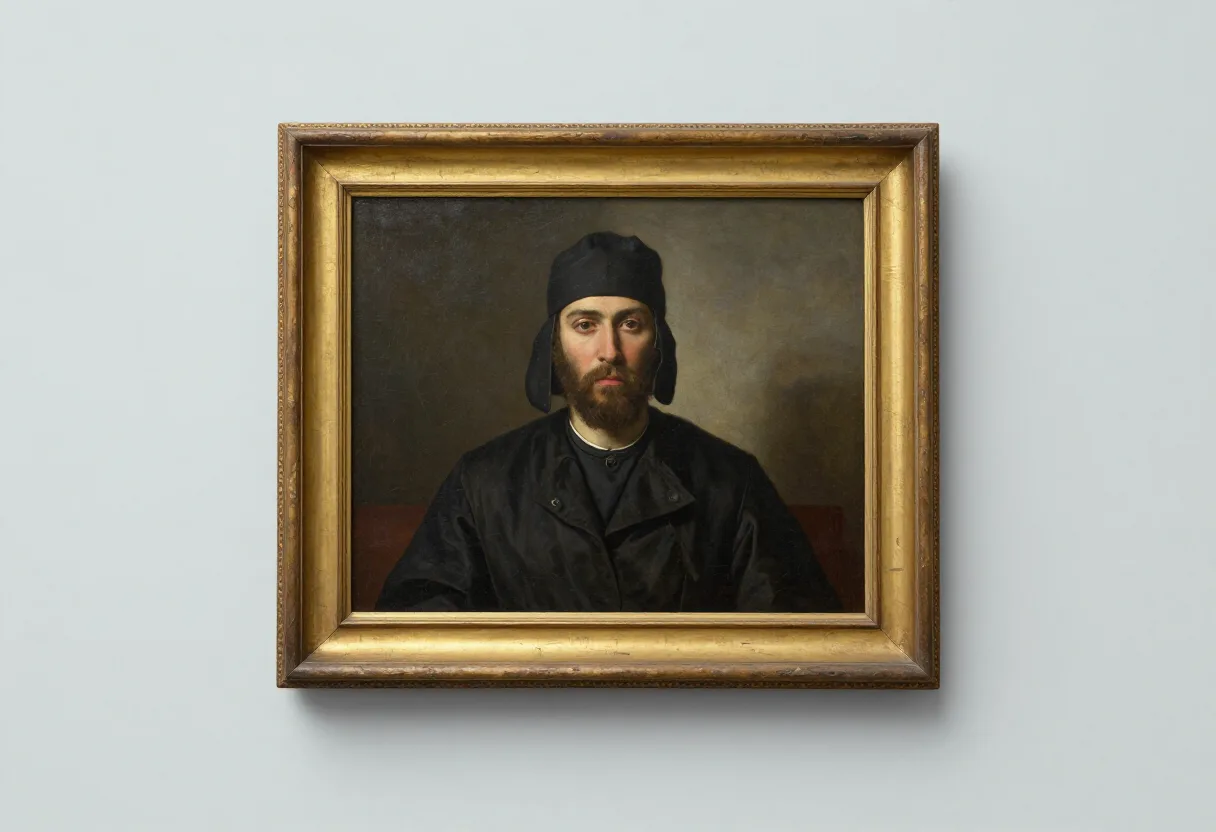
Henry Keazor, professor of modern and contemporary art history at the University of Heidelberg, identified the piece as a hand-signed lithograph dating to around 1899. It depicts the actor and singer Amelie Diéterle.
The work will go on view at the Kurpfälzisches Museum in Heidelberg from November 26 to March 21, in an exhibition titled "Riddle around Renoir."
How did a 'fake' reach Heidelberg?
In 2023, a private collector offered the drawing to Keazor during what a release described as a "household clearance." The owner had inherited the work in the 1970s from a friend who ran a New York gallery. That gallery had "classed [the work] as a fake" and recorded its medium as a pencil drawing.
Keazor directs the Heidelberg Forgery Study Collection, known as HeFäStuS. The collection is "a collaboration with the three state criminal investigation offices of Berlin, Bavaria, and Baden-Württemberg, which provide forgeries from their evidence rooms as loans for research and teaching purposes," according to its website. Students have direct access to its 140 forgeries of artists like Vincent van Gogh, Salvador Dalí, and Alberto Giacometti, so they can "become aware of the phenomenon of art forgery and learn how to recognize it."
For once, an item arrived that was not a forgery at all.
What did the analysis reveal?
"While unpacking it I noticed immediately that it was a print, not an original pencil drawing," Keazor said in a statement.
That observation set Keazor and his students on a course of research into Renoir's works on paper, combined with paper and microscopic analyses. The examinations revealed the structure of the autotype paper and confirmed, in Keazor's words, that the "signature is written by hand with black grease chalk."
The team matched the lithograph to a work Renoir produced for "Germinal," an artist portfolio that also included works by Degas, van Gogh, and Toulouse-Lautrec.
The portfolio works were produced in an edition of 100, with signatures printed on the sheet rather than handwritten. Keazor believes the Heidelberg sheet is rarer still: a test print pulled from only one of the two printing stones.
"The solution to the riddle is that the picture is a test print made with only one of the two print stones. Since the signature evidently lay on another stone, Renoir added it by hand, thereby making the proof a fully valid work," Keazor said.
He noted that such test prints are rare in art history.
What does this change for the work?
The reattribution converts an object once valued as nothing into a documented, hand-signed Renoir proof — the kind of item that scholars track closely because printed signatures and handwritten ones carry different weight in catalogues raisonnés.
After the Heidelberg exhibition closes on March 21, the HeFäStuS and the previous owner will decide "where to keep the print in future," according to a release. The answer will determine whether a forgery collection, built to teach detection of fakes, ends up housing a genuine Renoir.
Source: ARTnews
More from Marcus Bennett
Show full bio
Staff writer covering people, launches and day-to-day practice in arts in the broadest sense at Arts & Voices.
1,288 articles