Gillian Welch Names the One Bluegrass Record She Cannot Live Without
Gillian Welch says one live Stanley Brothers record "changed the course of my life" — she and David Rawlings learned to sing harmony along to it. From On the Records (2026).
Programme
- Gillian Welch names The Legendary Stanley Brothers (Recorded Live), Volume One as the one bluegrass album she would keep.
- She first heard it at age twenty in Santa Cruz, in a house on Highland Avenue, via mandolin player Mike McKinley.
- James Shelton told Welch the recording may be by Peter Kuykendall, founder of Bluegrass Unlimited, possibly at a show in Culpeper, Virginia.
- The essay appears in On the Records: 80 Musicians on Beloved and Overlooked Albums by Brian Beck with Piotr Orlov, published 2026 by Clarkson Potter.
- Welch says she and David Rawlings toured for years singing three- and four-part harmonies along to the record.
Gillian Welch has named The Legendary Stanley Brothers (Recorded Live), Volume One as the record she would keep if she could keep only one bluegrass album in the world. "In fact, if I could have only one bluegrass album, I would probably choose this one," she writes. "Because it's perfect."
Welch's tribute appears in On the Records: 80 Musicians on Beloved and Overlooked Albums by Brian Beck with Piotr Orlov, published in 2026 by Clarkson Potter, an imprint of Crown Publishing Group, a division of Penguin Random House. The book collects eighty musicians on albums they love.
The live record, identifiable by a yellow band at the top of its sleeve marking it as volume one, stayed out of print for years. Welch calls it "kind of a mysterious thing." It carries virtually no credits. James Shelton, who played guitar for Ralph Stanley for many years, told Welch it may have been recorded by Peter Kuykendall, the founder of Bluegrass Unlimited magazine, possibly at a show in Culpeper, Virginia.
The recording method was rudimentary. Kuykendall likely used a Nagra recorder and a microphone placed in the audience. The result: applause that is "unbelievably loud and distorted." Welch and her musical partner David Rawlings joked that it sounded like the audience was breaking plates between songs. "But it's all part of the charm and the record's undeniable perfection," she writes.
What does the record capture that a studio could not?
Welch compares the album to a photograph. "You know how when you see a snapshot and, years after the fact, you can't believe how much information is in it?" she writes. "This record is like that perfect snapshot. It captures what could never have been captured in a studio album, the pinnacle of what the Stanley Brothers did."
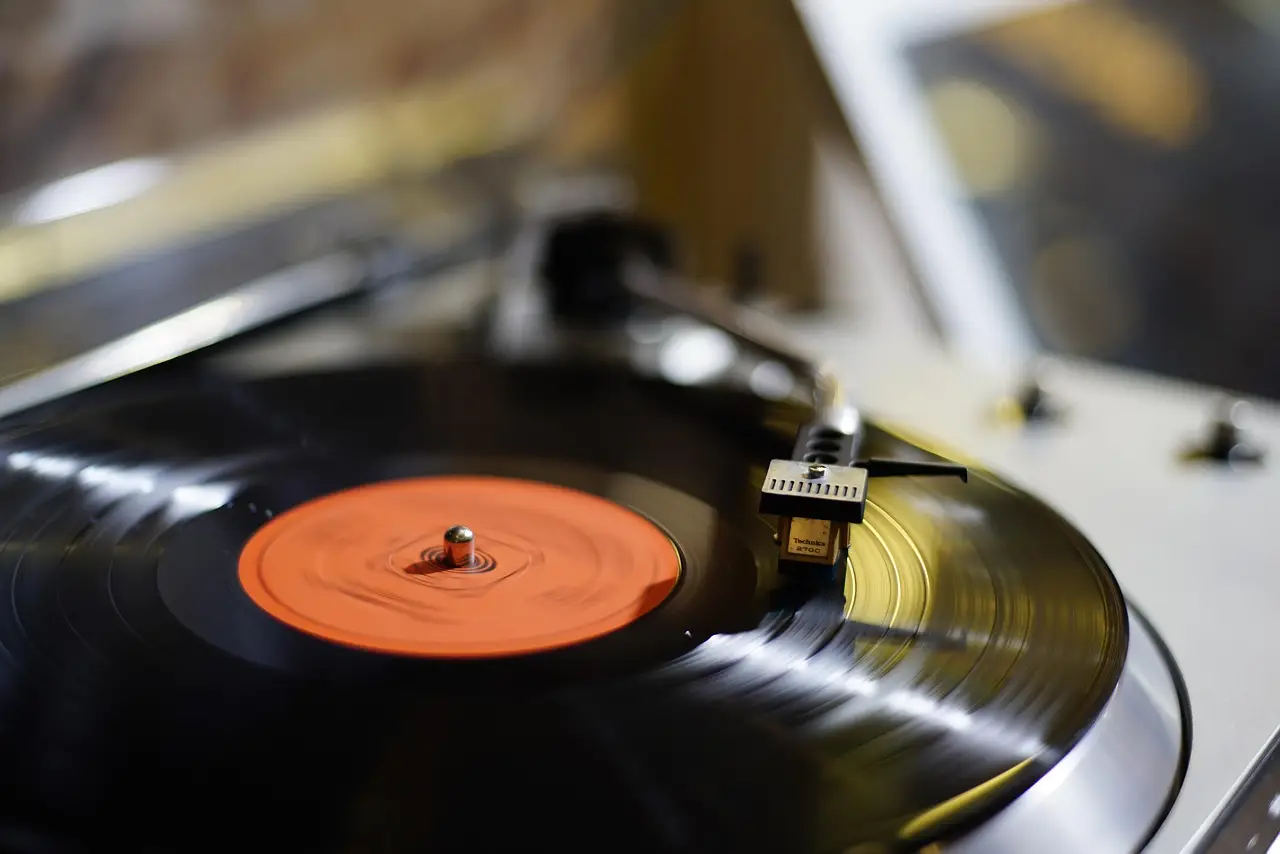
She first heard it at twenty, in a group house on Highland Avenue in Santa Cruz, at the base of the campus. She was living with a bluegrass mandolin player named Mike McKinley, owner of a great record collection. While she scrubbed the bathtub, McKinley put on side A, which opens with "Dream of a Miner's Child."
"It was like I was in a tractor beam," she recalls. "I had to walk over to the turntable and see what this was." It was her first encounter not only with the record but with the Stanley Brothers themselves. "It just went through me like a bolt of lightning."
She had played acoustic guitar since the age of nine. She had never heard anything this visceral. "It was like a missing piece of the puzzle for what I thought music should be," she writes. "It would not be an overstatement to say it changed the course of my life."
Which songs made the cut?
The tracklist, in Welch's words, contains "Stone. Cold. Classics.":
- "Rovin' Gambler"
- "Banks of the Ohio"
- "He Will Set Your Fields on Fire"
- "Roll in My Sweet Baby's Arms"
- "Knoxville Girl"
"Knoxville Girl" is probably her favorite. "It's such great storytelling—like a movie in my head, except it's even better than that: It's like a book," she writes. "Except it's even better than that: It's a song!"
The subject matter, she argues, has not dated: heartbreak, gambling, addiction, murder, judgment, sin, the supernatural, love, loss, the hereafter, redemption. "There's absolutely nothing unmodern about any of this." She believes she has performed every song on the album at some point, and each became part of her repertoire.
How did it shape her career?
Welch credits the record with showing her the direction her own music had to go. She was not hearing acoustic music "that hard-hitting, that true, or that adept at dealing with the depth of human experience" as she perceived it. She describes herself as someone who reacts to hard times rather than good times, and she felt that quality "up and down" in this music.
The album's cover photograph has held her attention for years, especially the look on Carter Stanley's face. Stanley did not live much longer after it was taken. The live format preserves his spoken-word commentary between songs, which Welch has memorized down to the cadence of his speech. She believes it has influenced the color of her and Rawlings's onstage banter.
"It's like a magic window on a world," she writes. "You feel the audience, you hear Carter talking, and then you hear them playing."
The record also forged her partnership with Rawlings. When she first played it for him, "it blew his mind." He screamed and pounded on the tabletop. They dubbed a cassette, and during the first couple of years touring the country they sang three- and four-part harmonies along with it. "That's how we learned to sing together," she writes.
Recently returned from a tour, after six months to a year of finding old-time and bluegrass harder to locate on the radio, she put the record on to recalibrate and sang along in three parts, adding a tenor above Ralph Stanley. As a young singer she had wanted to sound like Ralph Stanley, or like a cross between Ralph Stanley and James Taylor, if that were possible.
"I just can't imagine that I could be doing what I do without this album," she writes. For listeners curious where Welch's duet singing comes from, the answer sits on one live record, volume one, yellow band at the top.
Original: bookshop.org
More from Marcus Bennett
Show full bio
Staff writer covering people, launches and day-to-day practice in arts in the broadest sense at Arts & Voices.
1,548 articles