Programme
- Florian Amort, 33 in role since 2025, succeeds Dr. Bernd Feuchtner, who died in February 2025.
- The festival will stage at least one work by a female Baroque composer each season, beginning with 'Talestri' in the current edition.
- Camilla de Rossi's 1709 oratorio 'Il figliuol prodigo', never commercially recorded, opens the 2026 'Loneliness' trilogy.
- This year's concert marked the 100th volume of the Hallesche Händel-Ausgabe critical edition.
- The 'Musik und Wein' festival on Halle's market square drew 28,000 people over three days.
Florian Amort has committed the Händel-Festspiele Halle to staging at least one opera by a female Baroque composer every season, starting with Maria Antonia Walpurgis' "Talestri, regina delle Amazzoni" at this year's festival and Camilla de Rossi's 1709 oratorio "Il figliuol prodigo" in 2026.
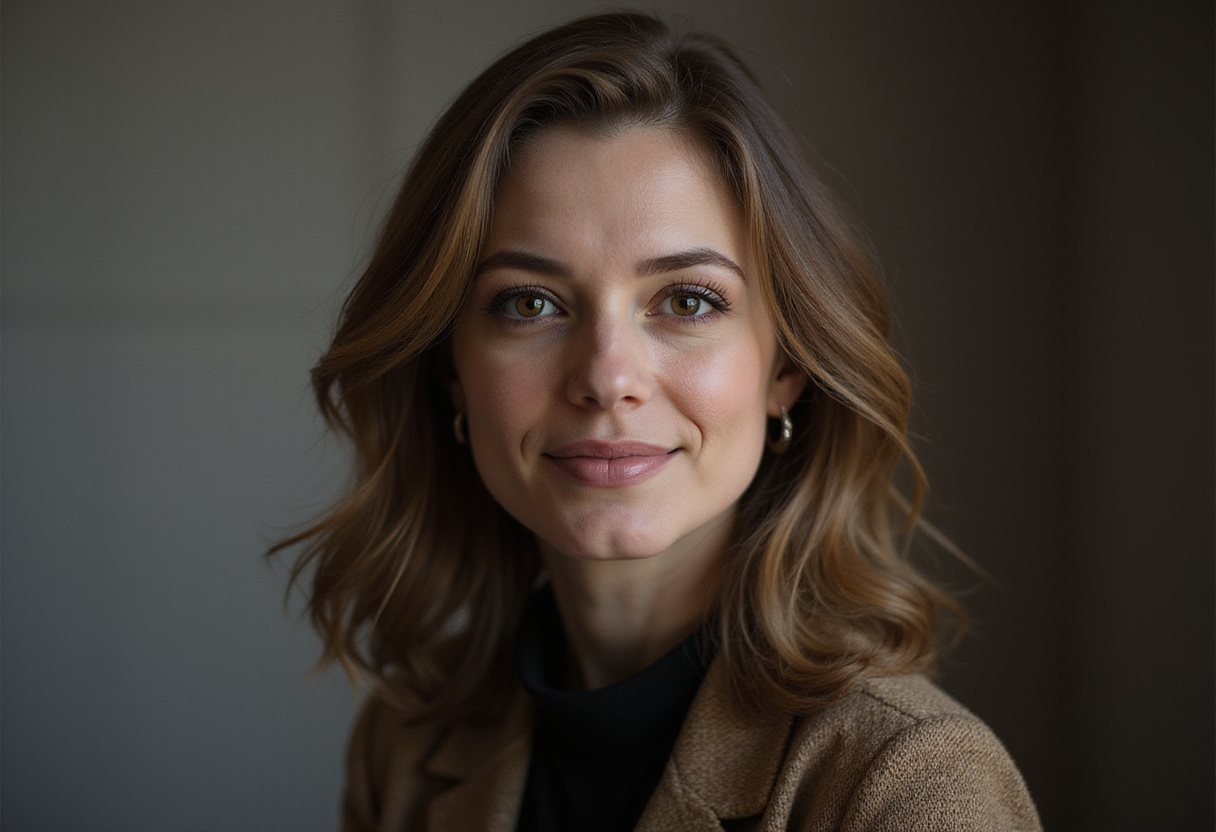
Amort, born in Berchtesgaden in 1992, directs the Stiftung Händel-Haus and serves as the festival's artistic director. He succeeded Dr. Bernd Feuchtner, who died in February 2025 shortly before his planned retirement. A former Chief Dramaturg of the Bregenzer Festspiele (appointed 2022), Amort spoke with OperaWire during the Händel-Festspiele 2026.
What does the 'Masculinities' theme actually do?
The festival motto — "Mannsbilder: Helden, Herrscher, Herzensbrecher" (Masculinities: Heroes, Rulers, Heartbreakers) — came from Feuchtner. Amort admits he "wasn't initially very inspired." The English translation changed his mind. "It became about exploring images of man — different facets of masculinities, including Handel himself as an image," he said.
The lens is pointedly contemporary. Amort points to social media influencers telling young people how to be "truly" masculine and a political revival of the "strongman" archetype. Baroque opera offers a counterweight. In the 18th century, true masculinity meant controlling one's affects; on Handel's stage, Amort notes, male characters are "completely out of their minds, driven entirely by raw emotion" — men "who are failing, imperfect, uneducated, or unable to communicate."
The theme also surfaced a gendered debate from 18th-century London. Nationalist critics dismissed Italian opera as feminine, while contemporaries described the massive choruses and brass of Handel's oratorios as a distinctly "masculine" style. Handel himself kept returning to Italian opera despite repeated financial failures.
Why stage 'Talestri'?
Amort frames the annual commitment as quality-driven, not token representation. "I intend to feature at least one work by a female Baroque composer each season — not merely for representation, but because the musical quality is exceptional," he said.
Walpurgis, a Bavarian princess educated by Johann Adolph Hasse and Pietro Metastasio, wrote the libretto, composed the score and sang the title role herself — a form of self-assertion Amort calls a "highly strategic calculation," comparing her image-awareness to Maria Theresa of Austria's. The opera's male characters are strikingly weak; the women hold all the agency, culminating in the priestess Tamiri's willingness to sacrifice her own son for the Amazon community.
The work premiered in a private court theater, with roles sung by Walpurgis's sisters and cousins by marriage. A full score was published by Breitkopf in 1765, two years after the premiere — rare preservation, made possible, Amort says, "precisely because she has the resources."
Staging it was "a massive gamble," he added. It paid off: "Talestri" became the performance he is proudest of, exclusive to Halle.
What's next?
The 2026 season opens a thematic trilogy with "Loneliness," tied to the 300th anniversary of the "Coronation Anthems" and to Amort's reading of Handel as a possibly isolated figure. De Rossi's "Il figliuol prodigo," never commercially recorded, fits the theme of being lost and welcomed back. Amort's colleague traced its libretto to Cardinal Benedetto Pamphili — the Roman patron also tied to Handel — suggesting the two composers moved in the same Roman circles.
The festival's scholarly anchor remains the Hallesche Händel-Ausgabe, the authoritative critical edition of Handel's complete works. This year's concert marked the edition's 100th volume with premieres of new scores of the "Foundling Hospital Anthem" and "Anthem on the Peace." Next season brings the revised 1737 London version of "Il trionfo del Tempo e della Verità."
Reaching beyond the opera house
Amort's programming balances three pillars: world-class performances, rare repertoire and local outreach. Three new formats opened the festival to Halle itself:
- Händel Lab: cross-disciplinary projects, including a speculative performance built on a fictional youth diary of Handel.
- Händel Next: a "Playmobil Opera" production of "Rodelinda" with the Neues Barockorchester Berlin, introducing nearly 400 school children to Handel.
- Händel Now: sold-out promenade concerts in the botanical garden, riverboat performances by Hamburg Ratsmusik, and a masculinities-themed club night aimed at a younger, queer audience.
The "Musik und Wein" festival on the market square drew 28,000 people over three days. Marionette adaptations — staged in 2011, 2018 and 2021 — sold out almost instantly again this year with "Rinaldo," whose problematic mass-forced-baptism ending works, Amort argues, because puppetry frames it as a fairy tale.
What could hold it back?
Two constraints loom. The Händel-Haus is a 400-year-old building without modern air conditioning, putting historical instruments and archives at risk from summer heat. And Halle's hotel shortage is costing the festival audiences: "The audience interest is absolutely there, but the local circumstances are creating a barrier," Amort said. A boutique hotel opens this November, with a larger one to follow in 2027 — capacity that will determine whether the festival's growth can continue.
Source: Opera Wire
More from Grace Kim
Show full bio
Correspondent covering technology and product news in arts in the broadest sense at Arts & Voices.
473 articles