Herne's Early Music Festival Turns 50 With an All-Gabrieli Opening
Herne's WDR-founded Tage Alter Musik turns 50 with Musica Fiata and La Capella Ducale in a 100-minute all-Gabrieli opening at the Herz-Jesu-Kirche, reviewed.
Programme
- The Tage Alter Musik in Herne, founded through WDR, turned fifty in November 2026.
- The opening concert paired Musica Fiata and La Capella Ducale under Roland Wilson in a 100-minute all-Gabrieli program.
- Giovanni Gabrieli was organist at St Mark's Venice from 1585 to his death in 1612.
- The program's peak, "In eccesiis" from 1615, featured soprano Erika Tandiono and bass Wolf Matthias Friedrich.
- The finale was the twenty-part "Magnificat con il sicut locutus est in ecco," with singers processing from the altar area.
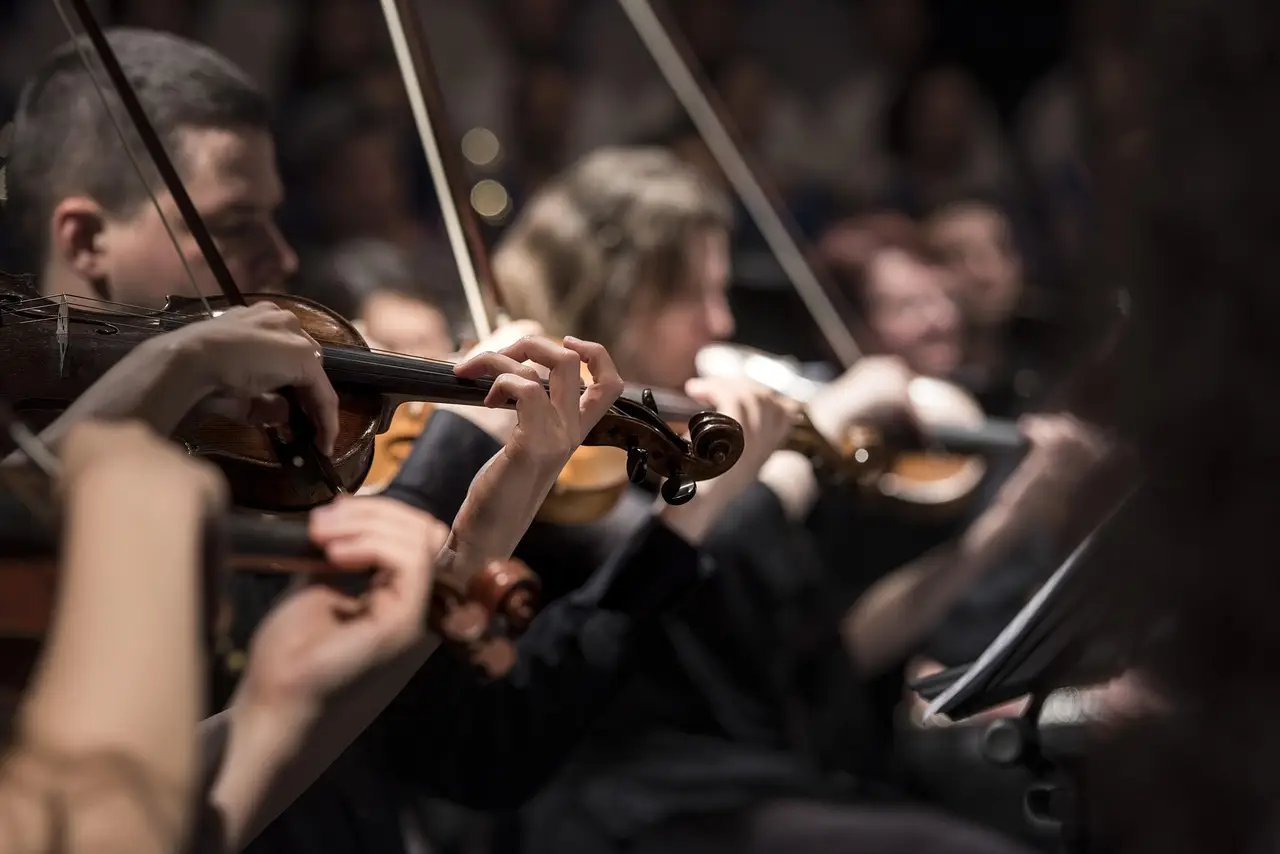
The Tage Alter Musik in Herne, the West German Radio-founded early music festival, marked its fiftieth anniversary this November with an all-Giovanni Gabrieli program at the Herz-Jesu-Kirche in Herne. Musica Fiata and La Capella Ducale joined forces under music director Roland Wilson for a 100-minute single-composer concert titled "Feste Veneziane."
The festival's parent, WDR, played a vital role in Europe's early music revival. Countless specialists launched careers with its support, and numerous works were rediscovered through its broadcasts and record publications.
Gabrieli served as organist at St Mark's Basilica in Venice from 1585 until his death in 1612. He never held the post of maestro di cappella, but the city's procurators paid him well to compose for major feasts.
How do you keep Gabrieli interesting for 100 minutes?
That was Wilson's real challenge. Since the 1990s, historically informed recordings (performances using period instruments and techniques) have made the long-echo Venetian sonic concept familiar. Grandly paced, spacious textures are no longer novel, and their predictable structures risk listener fatigue.
Wilson's answer was to dig inside the music. The personnel configuration and stage positioning changed for every single piece. Much like a demonstration recital on a baroque organ, the progression showcased the rich acoustic diversity inherent in this repertoire.
What did the program actually deliver?
- "Omnes gentes plaudite manibus" (1597): the stately opener, with singers and players in four groups around a chamber organ.
- Canzon XVI (1615): strings, trombones and cornetts in two opposing choirs, with Wilson himself playing cornett.
- "Exaudi me, Domine": basses against tenors and soprano in antiphonal pleas, whose somber timbres eventually merged — you could sense the sound vibrating the stone wall.
- "Timor et tremor": six singers and organ, built on slow chromatic shifts. Tenors Tobias Hunger, Georg Poplutz and Christian Volkmann delivered the melismas with real urgency.
- "Surrexit Christus": vibrant, intimate male-voice solos, though the accompanying instruments sounded muddy.
Canzon duodecimi toni, an early prototype of the concerto grosso, suffered a similar balance issue. The forte-piano contrasts could have been more apparent, and the two solo violins needed more improvisatory flair.
The peak came with "In ecclesiis" (1615). A tenor soloist dialogued with the full choir's brass-accompanied "Alleluias"; then soprano Erika Tandiono joined the tenor in a duet of supreme mutual sensitivity; finally the full ensemble, including basses Wolf Matthias Friedrich and Georg Lutz, closed with thrilling "Alleluias" again.
"Domine Deus meus" returned to six voices — including altos David Erler and Christoph Dittmar — plus organ, deeply inward and driven by sophisticated inner lines. Canzon VIII offered a pure instrumental break, with high and low ensembles exchanging phrases from opposite sides.
For the ten-part "Hodie Christus a mortuis," the singers shifted to the left side of the stage, refreshing the acoustic perspective. The famous Sonata piano e forte, one of the earliest works with explicit dynamic markings, came off slightly muted: brass timbre covered the strings and the contrasts fell short. "Misericordia tua, Domine," a mature twelve-part work, restored the momentum, building steadily in excitement.
A brief organ toccata from a Turin manuscript bridged into the twenty-part "Magnificat con il sicut locutus est in ecco." The work stands between Renaissance and Baroque, blending old polyphony with a modern basso continuo line. Four singers began deep inside the altar area and walked slowly toward the main ensemble as they sang the echo passages, the main group's brighter, grander sound contrasting with those distant voices.
What does a single-composer program mean for this festival?
For a festival with deep academic ambitions, this format expresses its core identity — akin to curating a blockbuster exhibition of dozens of paintings on similar themes by Titian. It remains a precious curatorial opportunity.
The historical caveat: these works would originally have been interwoven with a much broader variety of genres, possibly alongside a complete Mass. Judged by the listening endurance of a contemporary audience, a more mixed program structure would arguably prove more engaging — a question the festival's next fifty years can keep testing.
Original: christian-volkmann.de
More from Grace Kim
Show full bio
Correspondent covering technology and product news in arts in the broadest sense at Arts & Voices.
1,754 articles