How Newspapers Invented the Loch Ness Monster, One Instalment at a Time
A 1933 photograph with a Kodak certificate, a circus magnate's $20,000 reward and a million-pound bounty still unclaimed: how the news factory built Nessie.
Programme
- Hugh Gray photographed the monster on November 12, 1933; the Daily Express/Daily Sketch published the Kodak-certified image on December 6, 1933.
- Circus owner Bertram Mills offered $20,000 — about half a million today — for the monster alive, and toured Scotland with a papier-mâché Nessie.
- Bookmaker William Hill currently offers a £1 million reward plus a £1,000 annual Best Nessie Sighting of the Year Award.
- Loch Ness is Britain's largest loch by water volume, one of Scotland's 31,000 lochs producing 91 percent of UK water.
- The excerpt is from Laura Fernández's 'There's a Monster in the Lake', translated by Alexis Almeida, Graywolf Press.
A photograph taken on November 12, 1933, and published weeks later, became the first tangible proof that something might live in Loch Ness. Hugh Gray, the man behind the camera, captured an amorphous shape emerging from the water, surrounded by foam, excessively geometric but clearly a fin. The Daily Express/Daily Sketch ran it on December 6. The negative came with a certificate from Kodak stating it had not been tampered with — which meant, in the logic of the era, that the photograph showed something real, not fake.
This passage comes from There's a Monster in the Lake: The World as a Fantastical Place by Laura Fernández, translated by Alexis Almeida and published by Graywolf Press. Fernández argues that the monster was not found. It was manufactured — by what she calls the news factory.
Where did the news factory begin?
Fernández traces its origins to James Gordon Bennett, the eccentric owner of the New York Herald. In 1869, Bennett summoned his correspondent Henry Morton Stanley and ordered him to search for the British missionary David Livingstone, lost and presumed dead somewhere in Africa. According to Fergus Fleming, author of Ninety Degrees North: The Quest for the North Pole, Bennett told Stanley: "When those thousand pounds run out, withdraw another thousand, and when you've spent that take out another, and so on until you find him."
Until that moment, news had simply been whatever happened, Fernández writes. A ship would sink — like the Titanic in 1912 — and newspapers would report it. Bennett reversed the order. When reality failed to produce news that might sell papers, he created it. Finding a lost explorer was the closest thing to finding a gold mine: each one could return with a series of stories, keeping readers hooked like a serial novel.
The Loch Ness story, from 1933 onward, became exactly that. Not a true story, Fernández writes, but an imaginatively true one.
Who was seeing the monster?
Sightings arrived daily. Newspapers received letters, and not from just anyone. Every published article made clear that the spotter had been a doctor, a lawyer or an engineer — a respectable professional risking that respectability on a monster. Each article, Fernández writes, tried to blur the line separating the weird from the acceptable.
The debate that followed pitted those open to the possibility against those unwilling to believe that something impossible could exist. Dinosaurs went extinct sixty-five million years ago. Could a lake surrounded by human life — fished, bathed in, sailed on — hide a prehistoric creature? Fernández invokes Arthur Conan Doyle's The Lost World, published in 1912, in which an expedition including a Daily Gazette journalist finds surviving dinosaurs on a plateau inspired by Mount Roraima in the Venezuelan jungle.
What does the money tell us?
Bertram Mills, a circus magnate then touring Scotland — some claim he let his elephants bathe in the loch — offered twenty thousand dollars, roughly half a million today, to anyone who captured the monster alive. Mills had a house-shaped cage built for her, about nine meters wide and more than seven and a half meters high, and toured Scotland with a papier-mâché Nessie: crazed eyes, pointy humps, antennae, a winged dragon on a trailer surrounded by five men in raincoats. The "New York Zoo" offered its own reward. Both fed the news factory and produced the desired pull effect: anyone at the shore kept their eyes on the water, because anything that moved could make them rich.
The reward still stands. It is now one million pounds, offered not by the government but by the bookmaker William Hill, which also runs an annual photography contest awarding one thousand pounds for the best Nessie picture — the Best Nessie Sighting of the Year Award — entered through the Official Loch Ness Monster Fan Club.
What does the lake look like now?
Fernández rides a bus from Edinburgh to Inverness, dropped at Dochgarroch Loch for a Loch Ness cruise. The driver notes that it rains in Scotland 286 days a year; that the country holds thirty-one thousand lochs, five thousand of them freshwater, producing 2 percent of the world's water and 91 percent of the UK's — which is why the Scots do not pay for water. Loch Ness is the darkest, deepest and largest by volume in all of Great Britain.
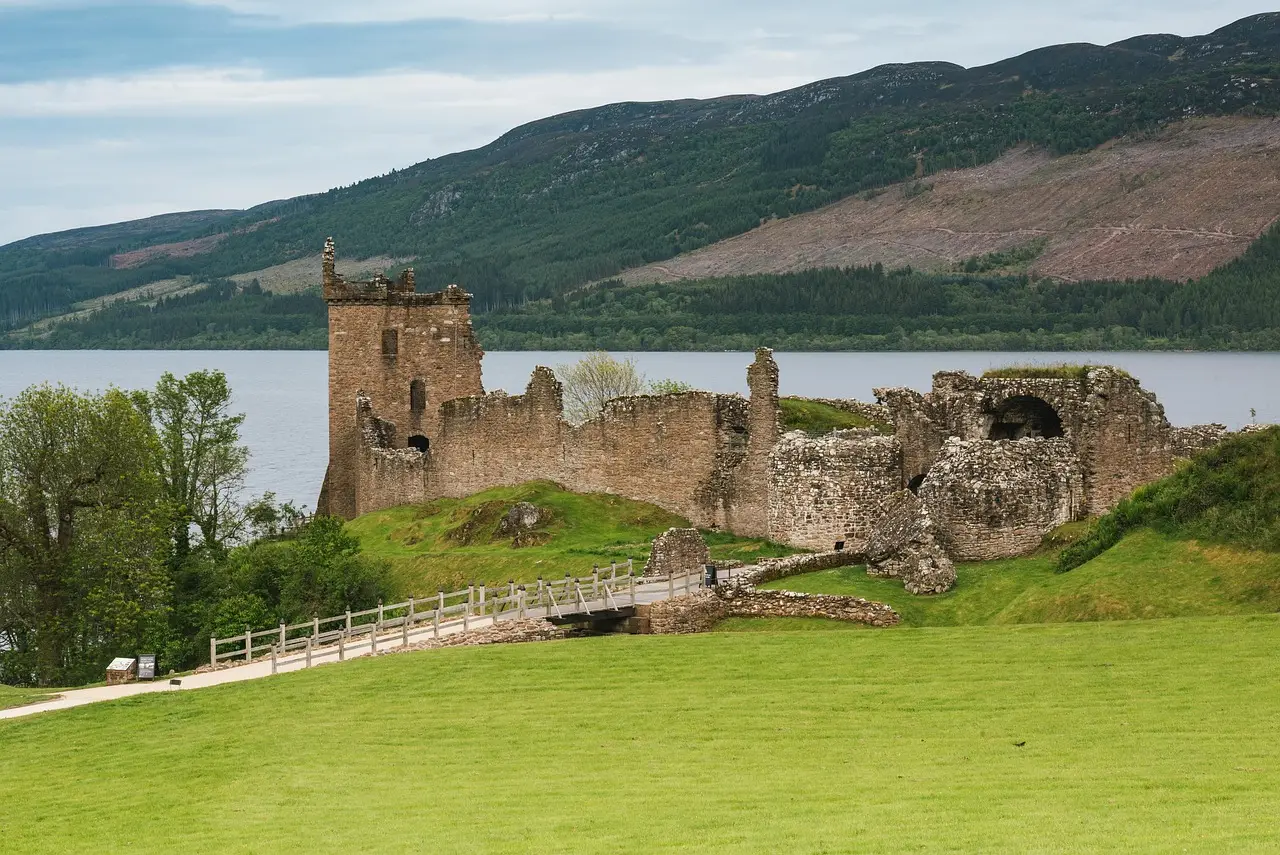
Yet nobody watches the water now, she observes. The lake has become a stage, a background for a selfie, an "I was there" — "it was just a bunch of black water," pitch black, and it was raining. The megaphone guide speaks as much about Urquhart Castle, next to which so many Nessie photographs have been taken across almost a century, as about the monster itself. From the castle ruins, she writes, the lake looks the same: all that black water.
In a near future connected to the hippies who sought refuge at the loch after Charles Manson's Family "murdered the future," monster hunters will crowd its shores — among them Frank Searle, who wore a badge reading "I'M ALMOST FAMOUS" and boasted of photographing both the monster and a flying saucer at once. The breach Nessie opened, Fernández concludes, remains open: the possibility that something not yet inventoried exists, and the certainty that reality is a construct permanently under construction.
Original: bookshop.org
More from Marcus Bennett
Show full bio
Staff writer covering people, launches and day-to-day practice in arts in the broadest sense at Arts & Voices.
792 articles