Jay Batchler brings dark fantasy to flowers, wildlife and landscapes
Jay Batchler’s 38-image collection turns flowers, birds, mushrooms and landscapes into saturated dark-fantasy scenes through crimson, teal, orange and near-black light.
Programme
- Published in November 2026, the feature presents 38 distinct images by Atlanta-based visual artist Jay Batchler.
- Among the 38 images are plants, animals and landscapes, including a solitary bird, flowers, berries and mushrooms.
- Across the 38 images, Batchler favors saturated reds, mysterious teal tones and controlled lighting over familiar greens and blues.
- The feature links to Batchler’s Instagram account, jaybatchofcookies, and gives no individual image titles or production dates.
By Marcus Bennett
The Design You Trust feature published in November 2026 presents 38 distinct images by Atlanta-based visual artist Jay Batchler.
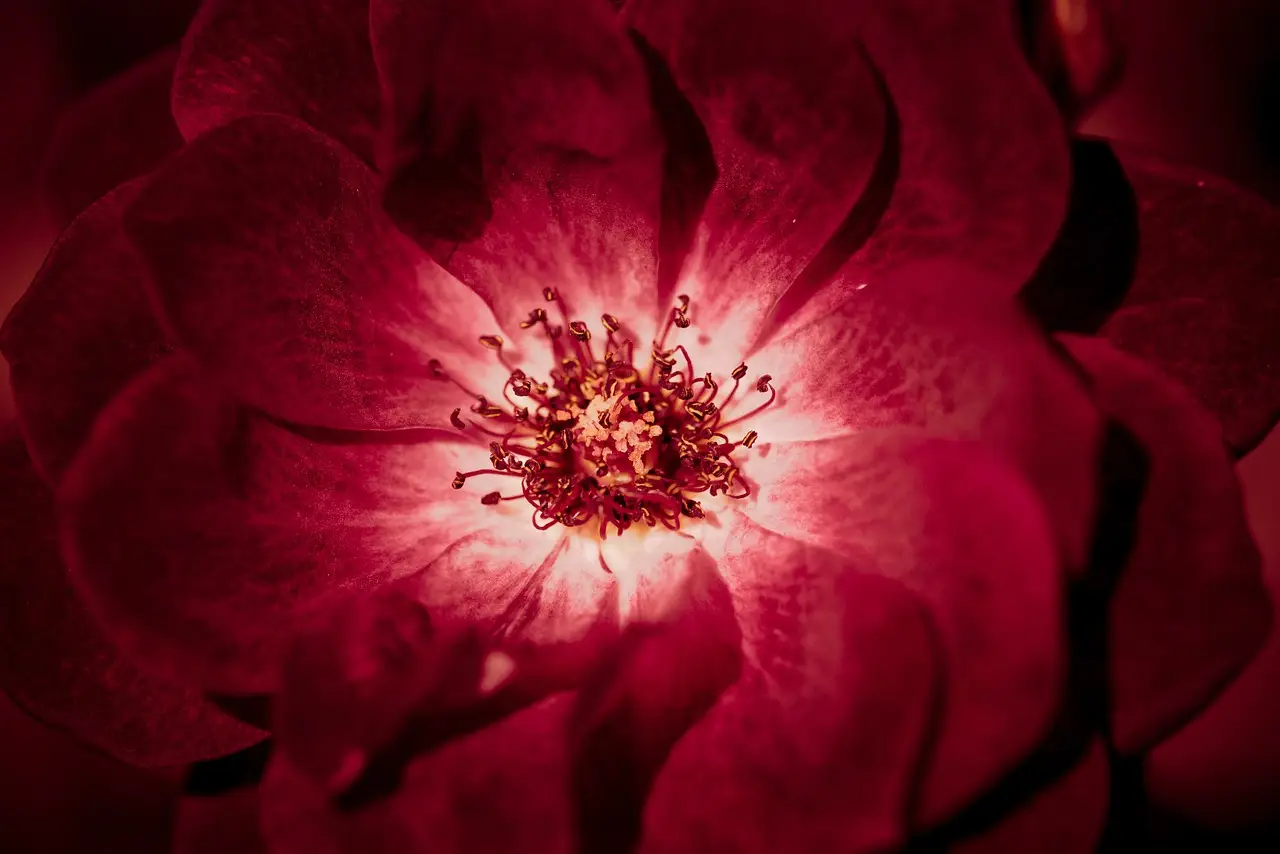
A mushroom glows orange against darkness. Crimson leaves occupy a near-black field. A flower emerges from deep shadow. These details begin in recognizable nature, according to the feature. Batchler then pushes the view toward plants, animals and landscapes that seem to belong to an unfamiliar planet.
Color as the organizing force
Design You Trust writes: “Crimson leaves glow against near-black backgrounds, mushrooms radiate warm orange light, and delicate flowers emerge from deep, velvety shadows.” The passage identifies the collection’s method before offering any explanation.
Batchler avoids the familiar greens and blues of conventional nature photography. He favors dramatic contrasts, saturated reds, mysterious teal tones and carefully controlled lighting. The source makes color the principal organizing element.
Its claim is not that the subject becomes abstract, but that a change in palette can alter the terms on which we recognize it. A red leaf becomes a concentrated field of color. An orange mushroom becomes a source of warmth within the dark frame. The visual shift supplies a narrative before the frame provides one.
The feature singles out a solitary bird and treats it as almost mythical. It gives a flower and a handful of berries the same cinematic status, making them feel like elaborate cinematic portraits.
The source places these varied subjects within one visual system. Across them, Batchler preserves enough detail for recognition while pushing the surrounding world out of view, allowing color and isolation to outweigh any documentary setting.
Stillness as a form of suspension
The article also finds a sense of stillness throughout the images. It says: “Even the most dramatic scenes feel suspended in time, as though the natural world has briefly stopped moving to reveal a hidden, more fantastical version of itself.”
The scenes do not lack drama. Their drama comes from that interruption, with the held moment replacing an obvious sequence of action.
The stillness helps connect wildlife, still life and landscape without requiring a shared narrative. The feature calls the results visual little mysteries that make familiar things unexpectedly strange. Its language is modest, but its method is specific: isolate the subject, deepen the shadows, build a limited palette and remove the ordinary cues that would place it.
The method turns light and color into active construction rather than by-product, allowing the viewer to register a tonal shift before identifying the larger scene.
The source gives no titles for individual images and no production dates. It also supplies no information about locations, plant species, animal species, cameras or editing. That restraint keeps attention on the visual proposition, although it leaves the images without a factual framework beyond the broad subjects named in the text.
What changes when nature becomes set dressing?
For the viewer, the practical change is interpretive rather than technical. According to the feature, nature can look completely unreal in the right light, and Batchler takes that premise several steps further. Familiar subjects remain in view, but they operate less like evidence of a habitat and more like characters, props or fragments from an imagined film.
The article does not claim that the pictures illustrate a named fantasy story. Their connection lies in repetition: near-black grounds, saturated accents, isolated forms and a pervasive sense of suspended time, all of which substitute atmosphere for explicit narrative.
The result is closer to a sequence of film stills than a set of unrelated nature images, even as the subjects range from a flower and berries to a bird and broader landscapes.
The source links readers to Batchler’s Instagram account, jaybatchofcookies. The next test for the collection is whether this visual language can gather those fragments into a more fully defined fantasy world while retaining the tension between the recognizably natural and the deliberately unfamiliar.
Source: designyoutrust.com
More from Marcus Bennett
Show full bio
Staff writer covering people, launches and day-to-day practice in arts in the broadest sense at Arts & Voices.
1,118 articles