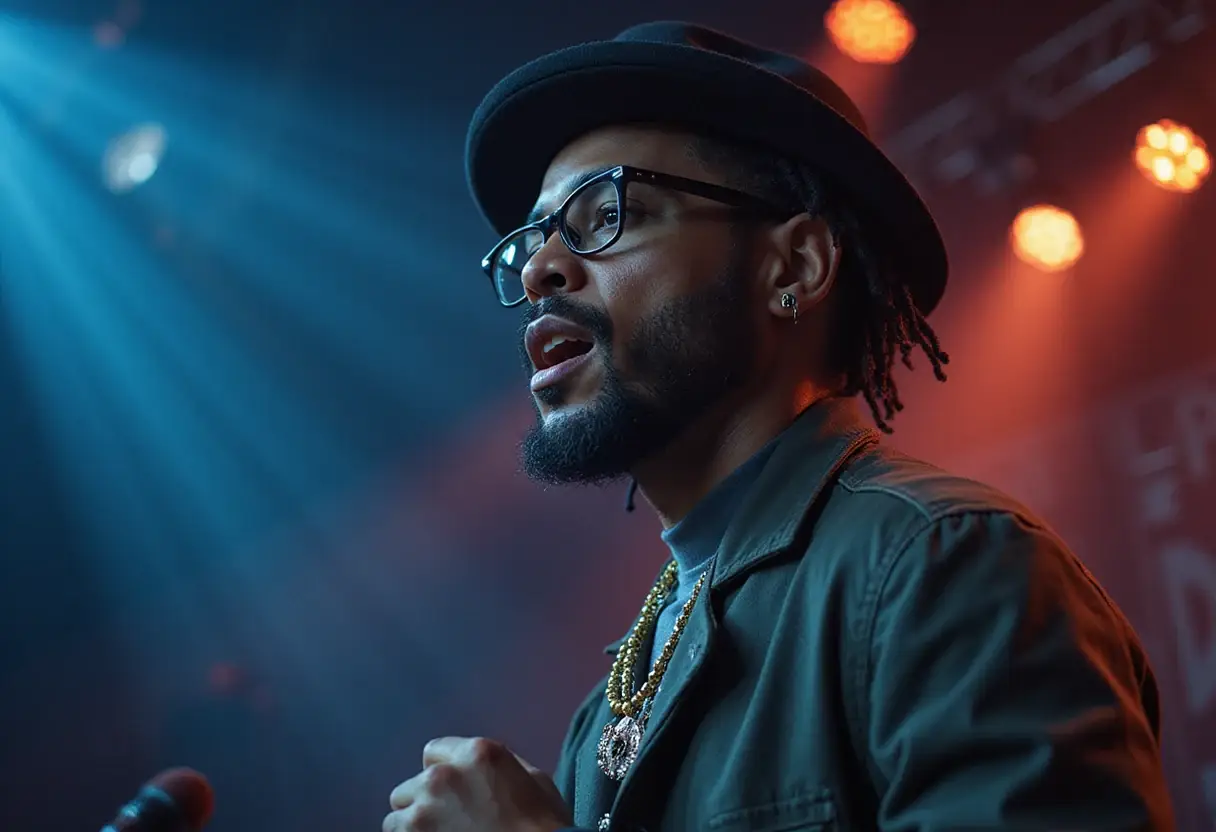
Jay-Z and J. Cole Back Lil Durk's $1 Million Bail Bid
Jay-Z and J. Cole urged a federal judge to free Lil Durk on bond, backed by a Sony Music $1 million appearance bond and a pledge to surrender all future royalties.
Programme
- Jay-Z and J. Cole submitted letters to Judge Michael Fitzgerald on Tuesday supporting Lil Durk's bond bid.
- Sony Music Entertainment offered an appearance bond of up to $1 million; Durk pledged all future royalties.
- Durk was acquitted of murder-for-hire charges in September; the remaining racketeering trial is set for August 2027.
- "All My Life," the J. Cole collaboration cited in his letter, went platinum four times.
- The victim's mother, Andrea Robinson, wrote she does not object to bond in a letter dated Sept. 28, 2026.
By Daniel Okafor
Jay-Z and J. Cole have asked a federal judge to release Lil Durk on bond, backing a proposal that includes a $1 million appearance bond from Sony Music Entertainment. The letters reached U.S. District Judge Michael Fitzgerald on Tuesday, months before the Grammy-winning rapper's racketeering-related trial, set for August 2027 in Los Angeles.
The bail package has teeth. Durk, born Durk Banks, has pledged to sign over all future royalties and earnings if he runs. His lawyers put it plainly in the filing: if the rapper violated the agreement and fled, "he and his family would remain penniless going forward." Sony, his label's parent company, offered the seven-figure bond as collateral.
What did the letters say?
Jay-Z recalled meeting Banks several years ago and being struck by his "seriousness and discipline." He described an artist "genuinely curious about deepening his spirituality" who spoke about his faith sincerely. What stood out most, he wrote, was Banks' drive to sign other young artists from his corner of Chicago and give them "a real path into a legitimate industry."
"He was kind, respectful, and focused on his career," Jay-Z wrote. "Many of us come from neighborhoods where the options are limited and the risks are high. Durk understood that, and he worked to help others find a way out of those conditions rather than leaving them behind."
J. Cole, born Jermaine Cole, took a more confessional route. He features on Banks' Grammy-winning song "All My Life" and admitted he initially hesitated to join the "extremely positive song" because its message sat too close to his own comparatively wholesome image. Banks persuaded him the message was sincere: "change and of peace and of growth and maturity."
The track went platinum four times. Cole recalled a visit to a juvenile detention center in Cleveland where "every single kid" wanted to talk about Banks, whom he called "extremely respectful." They relate to his story and his struggle, Cole wrote, and that loyalty reflects an artist who matured, understood his influence, and fought to make it positive — even when it meant going against his own instincts. He asked Fitzgerald to weigh that story when ruling on bond.
Why do his lawyers say he won't flee?
Banks, 34, was acquitted on all counts at a murder-for-hire trial in September. That case centered on the stalking and fatal shooting of Saviay'a Robinson, known as Lul Pab, on Aug. 19, 2022. Robinson, 24, was the cousin of Quando Rondo (born Tyquian Bowman), the rapper prosecutors say Banks blamed for the death of his protégé King Von.
Co-defendants Deandre Wilson and David Lindsey were convicted of conspiracy to commit stalking, stalking, and stalking resulting in death. They, like Banks, were acquitted of the murder-for-hire counts.
The new filing argues Banks has little incentive to flee or tamper with witnesses because the 2027 trial involves the same killing and the same cooperating witnesses who already failed to convict him. "Common sense confirms that a rational defendant is less likely to flee or tamper with potential witnesses when he knows that the evidence against him is too weak to convict him of a charge, even where that charge carries with it a serious sentence," the lawyers wrote.
They also flagged a double jeopardy argument (the legal doctrine barring a second prosecution for the same conduct), suggesting the September acquittal could legally block parts of a second trial. A defendant who believes the law might spare him a trial entirely, they argue, has even less reason to break his release conditions.
What are the remaining charges?
Two months before the summer trial on conspiracy, stalking resulting in death, and murder-for-hire, prosecutors filed a third superseding indictment. It added murder in aid of racketeering activity and firearms possession in furtherance of that murder, alleging Banks ran a criminal enterprise responsible for Robinson's death. The indictment tied the alleged racketeering conspiracy to a 2022 killing in Chicago and an alleged February 2019 attempted murder in Atlanta.
Fitzgerald said the new charges came too late and severed them for a separate trial — the proceeding now set for 2027.
One more letter landed in the file. Andrea Robinson, mother of the slain Saviay'a, wrote on Sept. 28, 2026: "On behalf of the family of Saviay'a Robinson, we do not object to Durk Banks being granted bond if it deemed appropriate by the honorable court." The victim's own family, in other words, isn't standing in the way.
Federal prosecutors are expected to oppose the proposal with a reply filing before Fitzgerald rules. Durk's freedom, and his royalties, now rest on how the judge reads a paper trail that runs from Cleveland detention halls to a record label's treasury.
Source: Rolling Stone Music
More from Daniel Okafor
Show full bio
News editor covering companies, deals and strategy in arts in the broadest sense at Arts & Voices.
877 articles