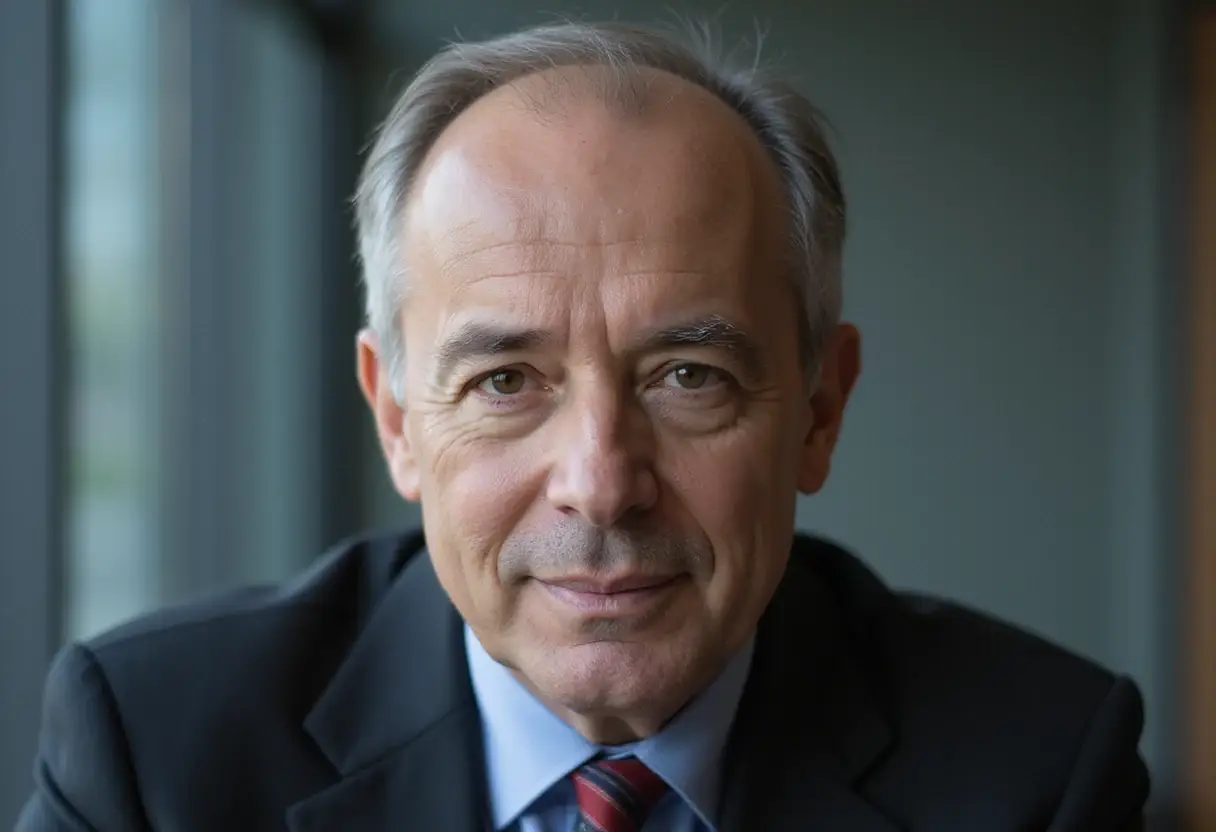
John Muszynski Retires After Reshaping $62.4 Billion in Media Buying
John Muszynski will leave Publicis Media Exchange in 2027 after nearly 50 years. His media placements shaped Adult Swim, Oxygen and ESPN advertising.

Programme
- Publicis Media managed $62.4 billion in worldwide media spending in 2025, up 12.8% from 2024.
- Muszynski will leave as U.S. chairman of Publicis Media Exchange and serve as a consultant in 2027.
- His work for Warner helped turn Adult Swim from a three-hour weekly offering into a regular nighttime schedule.
- Publicis has placed media for clients including the U.S. Army, McDonald’s, Kellogg’s and Molson Coors.
- Muszynski helped advertising support Oxygen’s 2000 launch and expand college football’s presence on ESPN.
John Muszynski will step down as U.S. chairman of Publicis Media Exchange in 2027, ending a nearly 50-year media-buying career shaped by billions of dollars in advertising commitments.
Publicis Media, the agency he represents, managed $62.4 billion in media spending worldwide during 2025, according to COMvergence. That total rose 12.8%, or $7 billion, from 2024.
Muszynski, 77, has worked for Publicis Groupe and previously Leo Burnett. He has placed advertising for clients including the U.S. Army, McDonald’s, Kellogg’s and Molson Coors. He will advise Publicis in 2027 after leaving the chairmanship.
His career began outside Atlanta, where the source recounts a hunting trip about 25 years ago with Mark Lazarus, then a senior executive at Warner’s television operations. Lazarus remembers Muszynski chasing pheasant; Muszynski remembers quail. The trip produced a business idea: “What can we do as a company that would make you want to spend more money with us?”
Muszynski saw MTV’s connection with young people as the competitive threat. Adult Swim, then shown for three hours a week on Cartoon Network, lacked the leverage he needed with Viacom. He returned to Warner’s content group and proposed expanding the schedule.
“Over time, the gambit proved fruitful,” the source reports. Adult Swim became a regular nighttime offering and developed an audience among young men. Lazarus said: “He was absolutely a catalyst, and opened our eyes. He gave us a reason to really take a bigger risk.”
Muszynski never worked for the company known at various times as Time Warner, AOL Time Warner, WarnerMedia or Warner Bros. Discovery. He also never ran a movie studio, television-news division or sports operation. Nor did he create a must-see primetime schedule or a streaming-video hit.
His influence came from media placement. Ad dollars he vetted helped the female-focused Oxygen network launch in 2000, expanded college football’s presence on ESPN, and supported audience-measurement methods based on active engagement rather than passive viewing. Ed Erhardt, who previously ran advertising sales for Disney’s ESPN portfolio, said: “John was always someone who understood the power of picking up the phone and saying, ‘I’ve got an idea for you. Would you be interested in hearing it?’”
Jeff Collins, Fox Corp.’s president of advertising sales, marketing and brand partnerships, said: “As the industry evolved, John not only evolved with it, but helped lead in ways others couldn’t.”
What changed when Muszynski stepped back?
Publicis also secured business from Anheuser-Busch InBev, Microsoft, Kenvue, Mars, Walmart and, more recently, Pepsi. Muszynski did not lead account-winning efforts, but Erhardt said his expertise and relationships helped Publicis gain ground against WPP and Omnicom.
His market judgment also carried unusual weight because Publicis represented so many major advertisers. At a 2018 gathering of television sales executives, he warned them they might have to “deliver last year’s plan at the same budget, maybe less.” He advised: “All of you who are looking for increased budgets, the best way to do that is to help solve our clients’ problems.”
Joe Abruzzese, formerly head of sales at CBS and Discovery Communications, said: “We always arranged John’s deal first. We really built our business on the way John was able to maneuver his clients.”
That confidence produced unusual scenes. Abruzzese once persuaded Muszynski to add $200 million to an upfront plan while they sat on a beach. He still retained the agreement, stained by suntan lotion. In another year, they negotiated at a fancy dinner on a tablecloth. Muszynski paid the venue $50 to take the linen back to his office, where colleagues could inspect the terms.
Charlie Collier, a media executive who held senior roles at Roku, Fox and AMC, said Muszynski did not overbuy inventory and then attempt to recover. “He has always been the guy who calls it like he sees it,” Collier said, promising only deals he could fulfill.
Muszynski also brought that reliability to Oxygen before its 2000 launch. Collier recalled that Muszynski later telephoned him and said, “You really screwed me!” after obtaining a client’s rates from another agency and believing those terms were better. Collier printed the full rate card, packed it with women’s razors and products in a pink-and-blue box and sent it to him.
What does his exit change?
For media buyers, Muszynski’s departure does not end the work of placing commercials and negotiating prices. It does remove a relationship built on judgment, personal trust and rapid improvisation.
That model now competes with algorithms, data analysis, automated inventory selection and scheduling across streaming services and FAST channels. Some marketers now prioritize Amazon-cart clicks or QR-code interactions over alignment with a particular program or media property.
The practical change is not fewer places to buy advertising. It is fewer buyers able to negotiate with the authority Muszynski accumulated across Warner, ESPN, Oxygen, Publicis and the television market. His consultation in 2027 may preserve some of that knowledge, but the era of deals sealed through relationships is already giving way to a more automated market.
Source: Variety Film
More from Grace Kim
Show full bio
Correspondent covering technology and product news in arts in the broadest sense at Arts & Voices.
1,676 articles