Jonas Kaufmann Returns to New York at Carnegie Hall Opening Gala
Jonas Kaufmann made his first New York appearance with an orchestra in eight years at Carnegie Hall's 2026-27 opening gala, sharing the program with Kirill Petrenko and the Berlin Philharmonic in an Italian-themed evening.
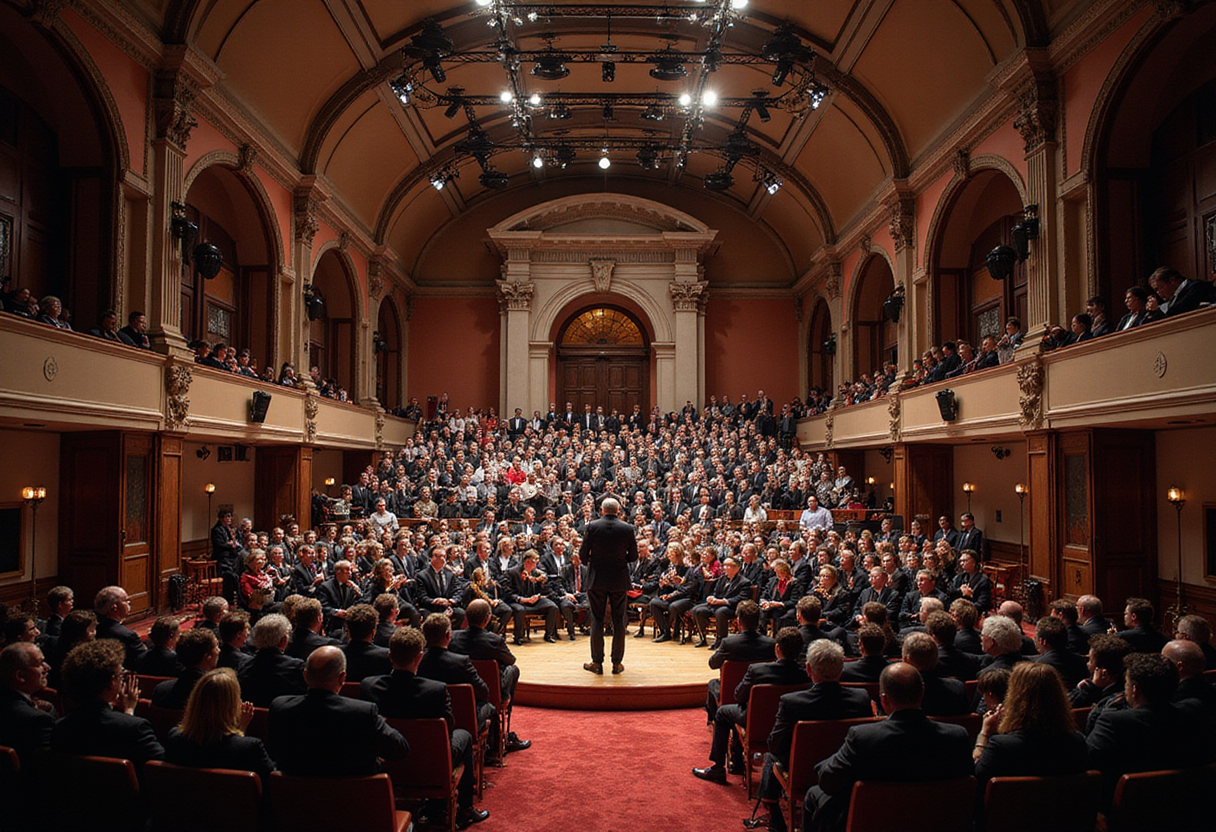
Programme
- Carnegie Hall opened its 2026-27 season with the Berlin Philharmonic under Kirill Petrenko and tenor Jonas Kaufmann.
- The gala ran approximately 75 minutes and was built around an Italian theme of opera arias and two Respighi tone poems.
- Kaufmann's performance was his first New York concert with an orchestra in eight years; he last sang in the city at Park Avenue Armory in 2023 and at Carnegie Hall in 2021.
- Kaufmann sang four arias spanning Pagliacci, L'Arlesiana and Fedora.
- Petrenko opened with Verdi's La Forza del Destino and closed with Respighi's Pines of Rome, before an encore of Shostakovich's Hornet Suite, Op. 97a, No. 3.
Jonas Kaufmann sang in New York with an orchestra for the first time in eight years at Carnegie Hall's 2026-27 season opening gala, joining Kirill Petrenko and the Berlin Philharmonic for a 75-minute Italian-themed program.
What did the program cover?
The concert alternated opera excerpts with two Respighi tone poems. Kirill Petrenko conducted from the overture to Verdi's La Forza del Destino through Respighi's Fountains of Rome and Pines of Rome, closing with a Shostakovich encore. The full running time clocked in at roughly 75 minutes.
How did Kaufmann perform?
Kaufmann's New York return marked his first local orchestral engagement since a Park Avenue Armory appearance in 2023 and his first Carnegie Hall recital since 2021. The tenor has not sung at the Metropolitan Opera since 2018, a stance he has publicly declined to revisit.
He delivered four arias. He opened with the prologue from Pagliacci, a baritone role he had previously tackled in Vienna in 2025. The lower notes lacked pristine resonance and carried some raspiness, but his phrasing stayed fluid. His peak came during E voi, piutosto, where his voice rode the Andante Cantabile line and rose to an interpolated E flat, prompting him to raise a hand to forestall applause so he could land one final emphatic note.
Vesti la giubba emerged as his most polished reading of the night. He attacked Recitar! with force, peaking on forse un uom! and following with a bitter cackle. The climactic sul tuo amore infranto! landed cleanly.
His most absorbing interpretation arrived in Federico's lament from L'Arlesiana. Kaufmann opened in hushed pianissimo on È la solita storia del pastore, holding back through Anch'io vorrei and floating Il dolce sembiante gently. By the closing line vision mi lascia! his tone had turned aggressive. He attempted the customary high B interpolation but appeared to struggle with phlegm, cutting the note short before audibly clearing his throat and finishing with impassioned Mi fai tanto male! Ahimè!
He closed his set with Amor ti vieta from Fedora, sung in fluid legato.
What did the orchestra bring?
Petrenko's Forza overture pushed the Berliners to extremes. Tempi leaned slow as Petrenko built momentum gradually. Explosive climaxes traded polish for force, with percussion the reviewer called ear-splitting and repetitive. Yet the coda emerged "thunderous and vivacious," with strings digging in and brass thundering.
The string sections reached their finest in the intermezzo following the Pagliacci prologue, producing what the reviewer described as "an aural creaminess that radiated in the space" — "some of the best string playing I have heard in a while."
Respighi carried the night. The eruptions in Fountains registered as resplendent, but Pines of Rome provided the cathartic peak. As the work built toward its climax, Petrenko pivoted between the pit and the brass players stationed in the balcony, physical turns tracking mounting momentum. The orchestra's "pristine sense of balance" finally clicked. The finale "exploding into the space" lifted the listener into what the reviewer called ecstasy.
The extended ovation earned a Shostakovich encore: The Hornet Suite, Op. 97a, No. 3: Folk Festival. The Berlin players shared the virtuosic passage between strings and brass with aplomb.
What's the so-what?
Petrenko's heavy-handed approach in the opera arias aligned with his vision for the Respighi, holding the program together across its stylistic jumps. Kaufmann's brief appearance suggested his New York reintroduction still has room to deepen, with his most affecting work reserved for the L'Arlesiana set. The gala delivered both a Berlin Philharmonic deep into the Petrenko era and a tenor recalibrating his relationship with the city — two storylines worth tracking as Carnegie's 2026-27 season unfolds.
Original: opera-online.com
More from Daniel Okafor
Show full bio
News editor covering consumer brands and retail at Arts & Voices.
371 articles