Julia Loktev's 355-Minute 'Exile' Premieres at Venice
Julia Loktev's 355-minute 'My Undesirable Friends: Part II — Exile' premiered at Venice on day 1,645 of the war in Ukraine and opens in theaters October 9.
Programme
- *My Undesirable Friends: Part II — Exile* runs 355 minutes; Part I (2024) ran 324 minutes.
- The film premiered at the 2026 Venice Film Festival on day 1,645 of Russia's full-scale war in Ukraine.
- US theatrical release date: October 9.
- The story spans March 2022 to early 2026, picking up two days after Part I ends.
- Subjects include seven women journalists formerly of TV Rain, plus new arrivals Yana Kuchina, Peter Ruzavin and Nataliya Gumenyuk.
By Elena Vasquez
Julia Loktev's My Undesirable Friends: Part II — Exile runs 355 minutes. The film premiered at the 2026 Venice Film Festival on day 1,645 of Russia's full-scale war in Ukraine. It opens in US theaters on October 9.
The documentary picks up two days after the events of My Undesirable Friends: Part I — Last Air in Moscow (2024), which ran 324 minutes. Together the two parts total roughly 12 hours. That span covers the fascistic suffocation of truth in Russia in real time, as the original review put it.
Part I began in autumn 2021, when independent journalists were declared "foreign agents" by Putin's regime. Within four months they had fled the country as Russia launched its full-scale invasion, with journalistic work suddenly punishable by jail time. Exile opens circa March 2022 and closes in early 2026.
Who appears on screen?
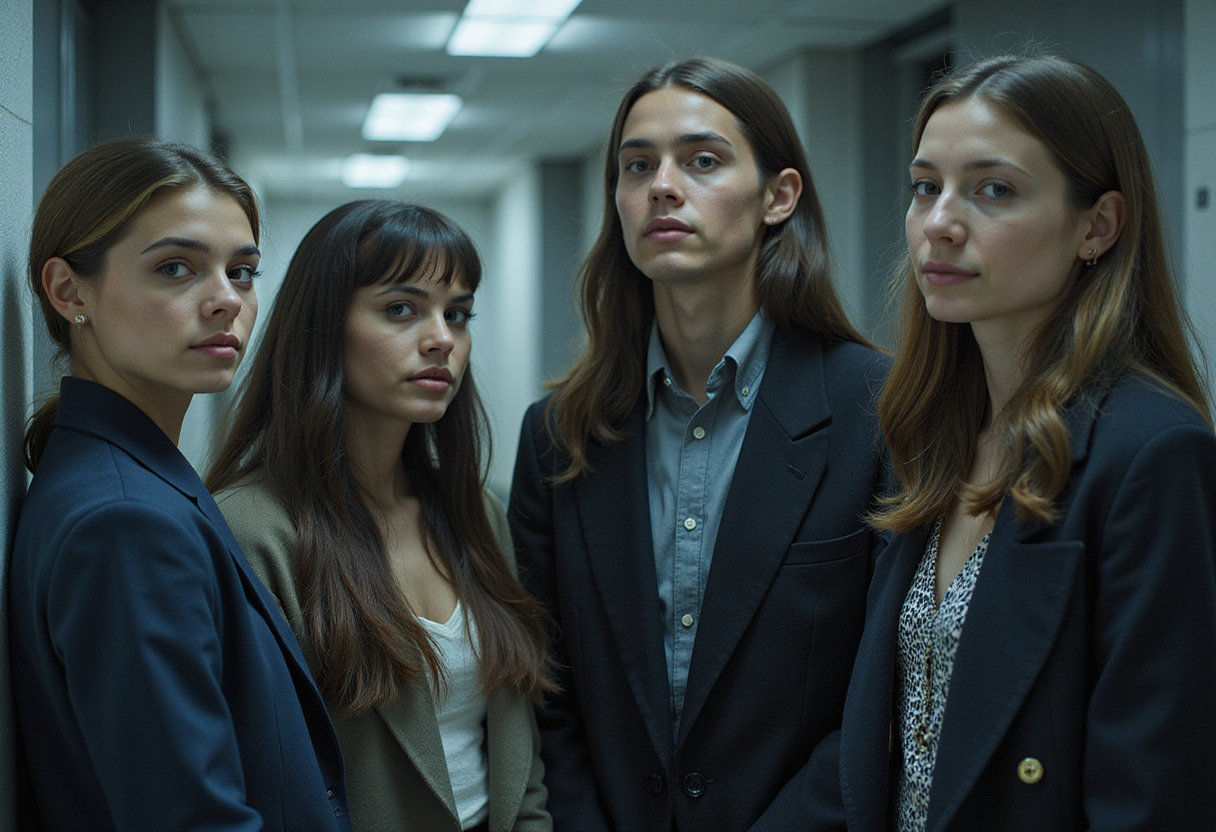
The protagonists are the same cohort of women viewers met in Part I, all alive and well: Anya (Anna Nemzer, credited as co-director), Lera (Valeria Ratnikova), Ksyusha (Ksenia Mironova), Lena (Elena Kostyucheko), Ira (Irina Dolinina), Alesya (Marokhovskaya), and Sonya (Groysman).
New faces join them:
- Yana (Kuchina), partner of Lena
- Peter Ruzavin and Nataliya Gumenyuk, a Ukrainian-Russian journalist couple
All once worked at TV Rain, one of Russia's last oppositional outlets before it shut down. The staff has scattered — some fled to Europe via Turkey, others to Georgia, and the group has splintered across Turkey, Georgia, Latvia, the Czech Republic, Poland, and the United States.
Loktev shoots on an iPhone, as in Part I, staying close and bottling the intimacy shared. The Film Stage's review notes that with the media outlet gone, it is Loktev and her film keeping them close — a uniting role the review calls "welcome" rather than overstated, with trust between filmmaker and subjects felt "in every second of screen time."
How does the film handle time?
Stylistically, Exile mirrors its predecessor: a nimble camera attending to every word, registering final glimpses of Moscow — streets, apartments, workplaces. The review finds this installment more claustrophobic, the camerawork more propulsive and shaky, "as if it too is trying to make sense of that new, exilic reality."
Loktev has described her approach as "fly in the soup" rather than "fly on the wall." The structure is chronological on paper, bookended with black frames and inter-titles giving place, time, and protagonist. Yet the emotional timeline is not linear. Viewers relive the first news of Bucha, Irpin, and Mariupol, mass graves, and accounts of torture by the Russian army — events the review notes were "squashed in our memory by the innumerable atrocities of war committed ever since."
The film produces what the review calls temporal and mnemonic dissonance: the present is past, yet still present.
What drives the documentary?
Loktev's protagonists voice a acute sense of accountability — "we let this happen" are words uttered by several people. That conviction, the review argues, is the driving force behind My Undesirable Friends: the urge to never forget that history is made here and now.
The filmmaker participates directly at times, with her own voice in dialogue with a protagonist, or discreetly by just being there. Though she remains free to travel while her subjects cannot, the review observes that filming itself becomes "the only source of stability for all, it seems."
What could be a chronicle of homes and places becomes, in the review's phrase, a cartography of grief and displacement.
My Undesirable Friends: Part II — Exile opened at the 2026 Venice Film Festival and reaches theaters on October 9. Whether Loktev's 12-hour portrait will find a third chapter depends on where her exiled subjects — and the war that displaced them — stand a year from now.
Source: The Film Stage
More from Elena Vasquez
Show full bio
Senior reporter covering technology and product news in arts in the broadest sense at Arts & Voices.
469 articles