Lance Hammer Returns After Two Decades with Queen at Sea
Lance Hammer's Queen at Sea, starring Juliette Binoche and Tom Courtenay, opens October 30 after winning the Silver Bear Jury Prize at the 76th Berlinale.
Programme
- Queen at Sea opens in theaters on Friday, October 30.
- Hammer's previous film Ballast won Best Director at Sundance in 2008.
- The film won the Silver Bear Jury Prize at the 76th Berlinale; Courtenay and Calder-Marshall won supporting actor awards.
- Hammer began writing the script in 2015; the project took roughly ten years.
- Juliette Binoche stars and produced; Tom Courtenay and Anna Calder-Marshall co-star.
Lance Hammer waited nearly twenty years between films. Queen at Sea, his follow-up to the 2008 Sundance Best Director winner Ballast, opens in theaters on Friday, October 30, after winning the Silver Bear Jury Prize at the 76th Berlinale.
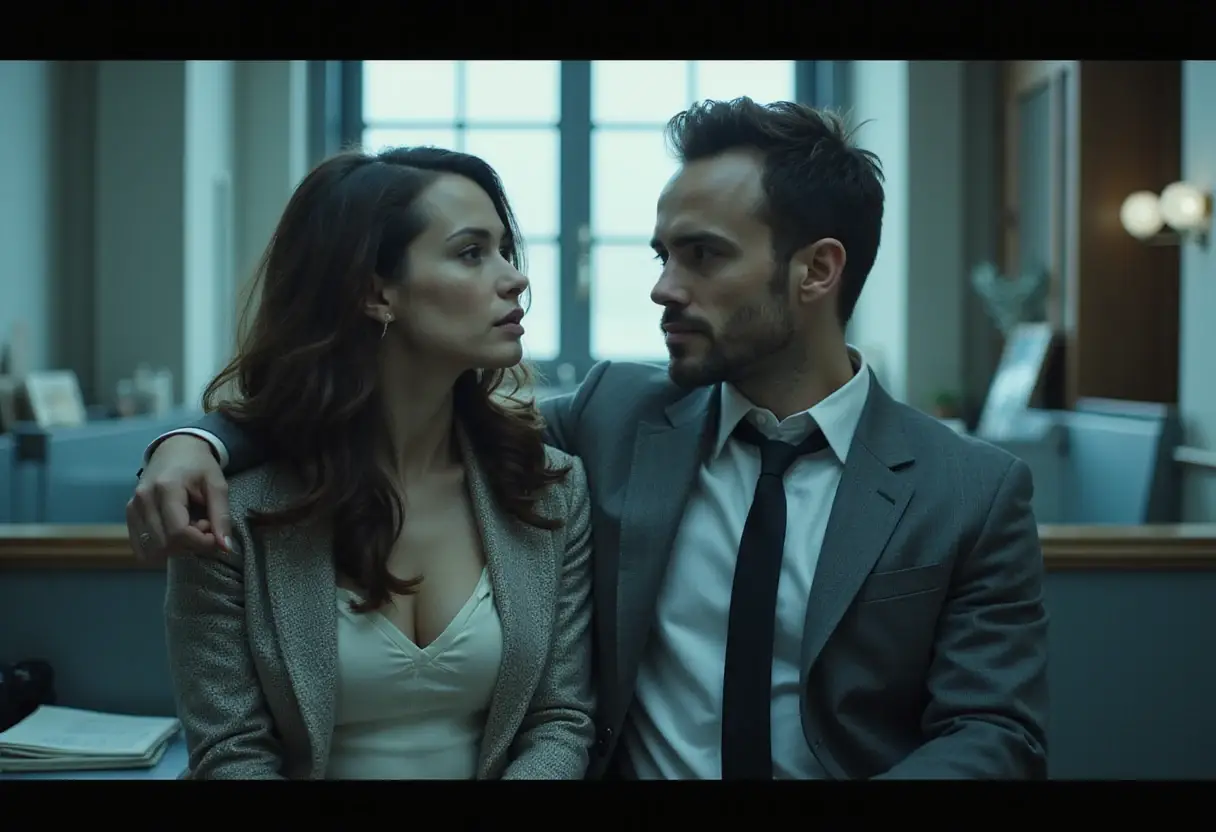
The film stars Juliette Binoche, Tom Courtenay, and Anna Calder-Marshall. It examines, in painful detail, the aftermath of a sexual encounter between an elderly couple. Questions of agency and consent become weapons that threaten to send Leslie (Calder-Marshall) to an assisted living facility. Her daughter Amanda (Binoche) agonizes over decisions that could wreck the life of her stepfather Martin (Courtenay). Courtenay and Calder-Marshall both won supporting actor awards at the 76th Berlinale.
Hammer spoke with the Film Stage at Berlinale earlier this year, ahead of the film's theatrical release.
How long did the film take to make?
Hammer started writing the script in 2015. It took about a year. A major production company green-lit it, contingent on casting an A-list actor from their approved list for Binoche's role. Hammer refused. "I didn't want to cast any of the people on the list. I panicked about it," he said. The deal fell apart.
He rebuilt the script with a second company more aligned with his creative thinking. That company folded. "That's when I said, 'I'm just going to go to Juliette Binoche because she's the right person,'" Hammer recalled. He realized the part did not have to be American. She said yes right away.
Binoche became a tenacious producer who resurrected the project through years of false starts. Hammer then went to Tom Courtenay and decided to shoot in London. He reduced the budget and joined Tristan Goligher of The Bureau, who had produced Courtenay's 45 Years. "It took ten years or so," Hammer said.
Why open with a sex scene between the two leads?
The film begins with the elderly couple having sex. Hammer calls it the inciting incident. "No wasting time showing context or developing the characters' backgrounds—that's pointless," he said. He wanted the audience to enter with confusion and disorientation, learning through discovery as one does in life.
He also wanted to confront a taboo. Sex between elderly people, he argues, disturbs because it forces an awareness of mortality. "When we see older people having sex, it gives us a too-close-to-the-bone awareness of our own mortality," Hammer said. He wanted the simplest, most boring presentation, with no titillation or provocation.
What does the film say about consent and dementia?
The premise grew from news stories about dementia and moral dilemmas facing the elderly. Hammer's father is Courtenay's age and has friends who experienced similar situations. Hammer admits moral uncertainty. "I have a simple moral position. Tom, or Martin as he is played, should not be having sex with Leslie. If there is any uncertainty at all about her consent... he needs to stop," he said. Yet he also understands how a man married for 18 years may no longer know where the line is if his wife cannot cognitively consent.
How was the film shot?
Hammer, a former art director and architect, describes his reductionist aesthetic: start with a maximalist field of possibilities, then methodically reduce to its essence. He would not call himself a brutalist, but says "the ethos behind brutalism, I am that."
Cinematographer Adolpho Veloso used static, locked-off shots in the house. Handheld camera covered fully improvised scenes with the teenagers. Binoche's storyline mixed the two approaches. In the medical examination scenes, shot in a real examination room, Veloso worked on his own instinct. Hammer and Veloso shared identical ideas about coverage after a month of workshops and rehearsals, which let Hammer focus on the actors.
The story stayed close to the script during editing because a month of workshopping had already changed it. Consultants on UK legal and health systems reshaped the script radically before shooting. Hammer called the process "a collaborative edit" with the actors, though he still cut a lot of material.
The October 30 theatrical release will test whether Berlinale acclaim can carry a small, unresolved moral drama to the audiences Hammer spent a decade reaching for.
Source: The Film Stage
More from Marcus Bennett
Show full bio
Staff writer covering people, launches and day-to-day practice in arts in the broadest sense at Arts & Voices.
789 articles