Link Wray Punched Holes in His Amp and Invented Heavy Guitar
In 1958 Link Wray punctured his amplifier's speakers with a pencil, recorded 'Rumble', sold a million copies without a single lyric, and anticipated heavy metal.
Programme
- Link Wray recorded 'Rumble' in 1958; it reached Number 16 on the Billboard pop chart and sold over a million copies.
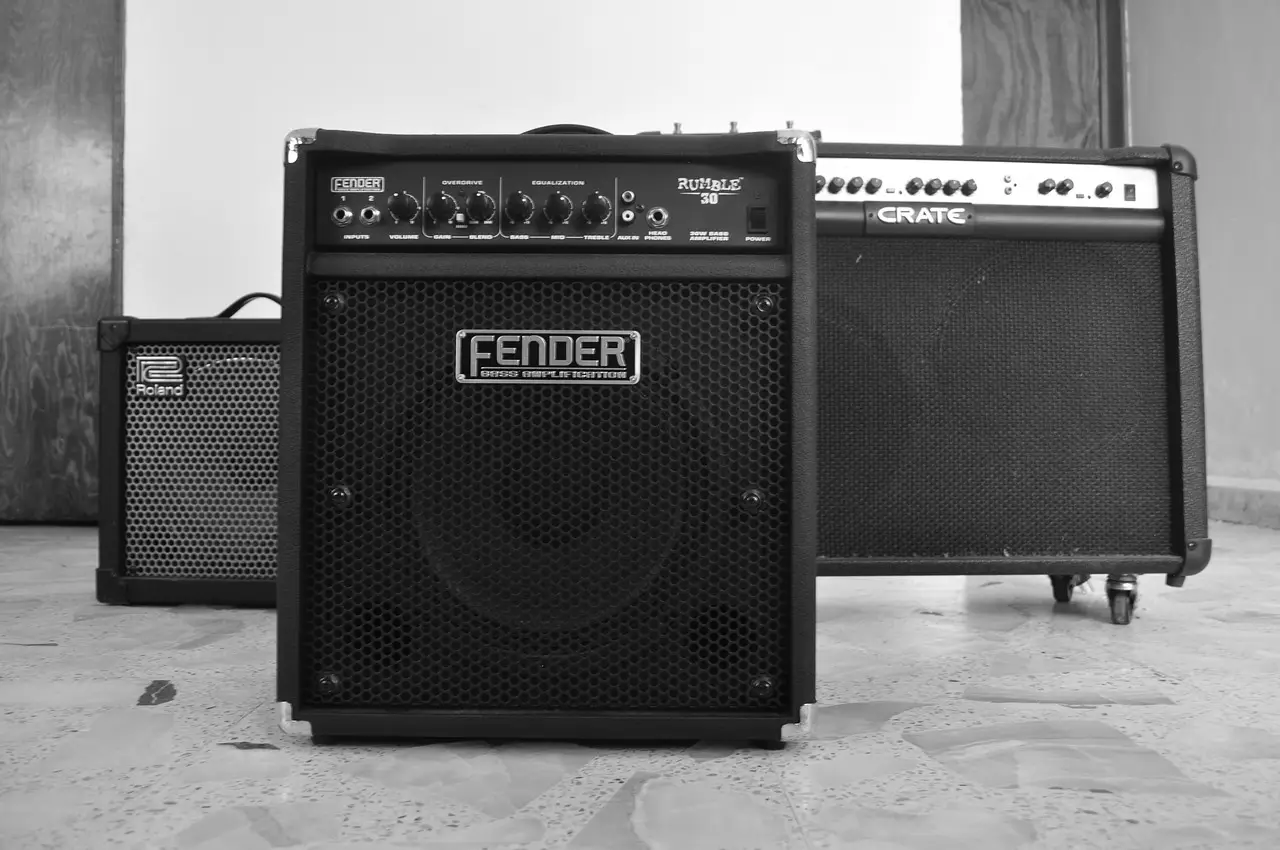
- Wray created the record's distortion by punching holes in his amplifier's speaker cones with a pencil.
- 'Rumble' joined the Library of Congress National Recording Registry in 2008 and the Grammy Hall of Fame in 2019.
- Wray was inducted into the Rock & Roll Hall of Fame's Musical Influence category in 2023.
- Wray died in 2005 at age 76.
In 1958, Link Wray recorded "Rumble" by punching holes in his amplifier's speaker cones with a pencil. The instrumental, released on Cadence Records, reached Number 16 on the Billboard pop chart, sold more than a million copies, and got banned by some American radio stations. Not one lyric in it.
A record with no words was considered threatening. Some stations reportedly refused to play it, fearing its aggressive sound and fight-associated title would encourage juvenile violence. The guitar, in effect, told a story without a singer.
The story began accidentally, at a 1957 record hop in Fredericksburg, Virginia, organized by disc jockey Milt Grant. The audience wanted music for the Stroll, a popular line dance linked to the Diamonds' recording of "The Stroll". Wray didn't know a suitable tune. His brother Doug set up a drum rhythm, Wray improvised a rough guitar figure, and his brother Ray placed a microphone near the amplifier, pushing the venue's small PA system into distortion. The dancers cheered. The band repeated the instrumental several times that night.
Why did the studio version need a broken amplifier?
The studio equipment produced a cleaner tone than Wray remembered from the dance. He wanted it rougher and louder. So he damaged his own speaker cones on purpose, and used the amplifier's tremolo effect (a pulsating volume modulation) to make the guitar seem to shake. At a time when engineers worked to eliminate distortion, Wray deliberately introduced it as a musical ingredient. His amplifier effectively became part of the instrument.
Born Frederick Lincoln Wray Jr. in Dunn, North Carolina, on May 2, 1929, Wray grew up around country, blues and the musical traditions of the American South. His family had Shawnee ancestry. He served in the US Army during the Korean War, contracted tuberculosis, and lost a lung. The illness damaged his singing voice and pushed him toward instrumental music.
His method was wonderfully direct. A few carefully chosen notes, dramatic pauses, unusual tones, repetition. At the center of the sound sat the power chord — a chord emphasizing the root note and its fifth, often with the root repeated an octave higher, which holds up exceptionally well under distortion.
Is "Rumble" really proto-heavy metal?
Compare it with Black Sabbath's "Iron Man", released in 1970. Tony Iommi's slow, distorted riff moves with deliberate power, built on repetition and rhythmic space. The musical vocabulary is recognizably related. Wray developed those ideas 12 years earlier.
That doesn't make him heavy metal's sole inventor. The genre grew from electric blues, rock and roll, garage rock, psychedelia and increasingly powerful 1960s amplification. Distorted guitar predates him too: Willie Kizart's playing on Jackie Brenston and His Delta Cats' "Rocket 88" (1951) is a famous early example, and Guitar Slim and Pat Hare explored aggressive amplified sounds.
Wray's move was structural. Rather than using distortion as an occasional effect, he built an entire instrumental around its expressive possibilities. He established a principle later hard-rock and metal guitarists embraced: the sound of a note can matter as much as the note itself.
Who did Wray influence?
Quite a list:
- Pete Townshend of The Who repeatedly acknowledged "Rumble"; in one widely reported encounter he bowed before Wray, crediting the record with his decision to play guitar.
- Jimmy Page has often discussed its impact; the 2008 documentary "It Might Get Loud" shows him playing the recording, smiling and moving with the music. Page later built riffs like "Whole Lotta Love", "Heartbreaker" and "Black Dog" on that vocabulary.
- Jeff Beck and Neil Young embraced aggressive amplification as a musical identity.
- The Kinks brought distorted power-chord riffs into the pop charts with "You Really Got Me" (1964); Dave Davies achieved his tone by modifying his amplifier's speaker — the same instinct.
- The Ramones and Iggy Pop carried Wray's simple, direct riffing into punk.
Wray's own catalogue ran deeper than one track. His 1959 instrumental "Raw-Hide" became another hit. "Jack the Ripper" (1963) turned ominous tone and memorable riff into something cinematic. In the 1970s he worked with singer Robert Gordon, reintroducing rockabilly to a new generation, and recorded a series of influential albums — including the roots-oriented "Link Wray" (1971) — in a studio on his family's property in Maryland, mixing gospel, blues, country and Americana.
His Shawnee heritage features in the documentary "Rumble: The Indians Who Rocked the World", alongside Buffy Sainte-Marie, Charley Patton, Mildred Bailey and Jesse Ed Davis. "Rumble" itself appeared in Quentin Tarantino's "Pulp Fiction" in 1994.
The institutional recognition arrived eventually. "Rumble" entered the National Recording Registry of the Library of Congress in 2008 and the Grammy Hall of Fame in 2019. In 2023, Wray was inducted into the Rock & Roll Hall of Fame in the Musical Influence category, with Jimmy Page performing "Rumble" at the ceremony.
Wray died in 2005 at 76. Today's guitarists have sophisticated amplifiers, effects pedals and digital processors. Wray had a guitar, a small amplifier, a pencil and an extraordinary imagination. Every distorted power chord you hear now — in arenas, garages and beginners' bedrooms — traces a line back to that damaged speaker.
Source: thatericalper.com
More from Daniel Okafor
Show full bio
News editor covering companies, deals and strategy in arts in the broadest sense at Arts & Voices.
1,331 articles