London Museum to open £437m Smithfield home on 28 November
London Museum opens its £437m Smithfield Market home on 28 November with a 250-metre fatberg, Emmeline Pankhurst’s hunger-strike medal, Roman tablets and a second phase due in 2028.
Programme
- London Museum opens its General Market galleries on 28 November.
- The redevelopment costs £437m, up from a £337m budget set in 2019.
- The Poultry Market phase opens in 2028 with a learning centre, temporary exhibition spaces and an interactive collection store.
- The museum targets more than two million visitors annually.
- A displayed fatberg sample comes from a 250-metre-long mass of oil and wet wipes.
By Grace Kim
The Art Newspaper reports that London Museum will open its £437m Smithfield Market home on 28 November, starting with the permanent galleries in the Victorian General Market.
The Farringdon redevelopment is one of the biggest museum developments in the British capital in recent years, according to The Art Newspaper. The publication also calls it one of Europe’s largest cultural infrastructure projects (major programmes for building cultural facilities).
Stanton Williams and Asif Khan designed the new complex in partnership with conservation architect Julian Harrap, The Art Newspaper reports. It replaces the institution’s London Wall base near the Barbican Centre, which closed in December 2022, when the institution was still called the Museum of London.
The first phase and its galleries
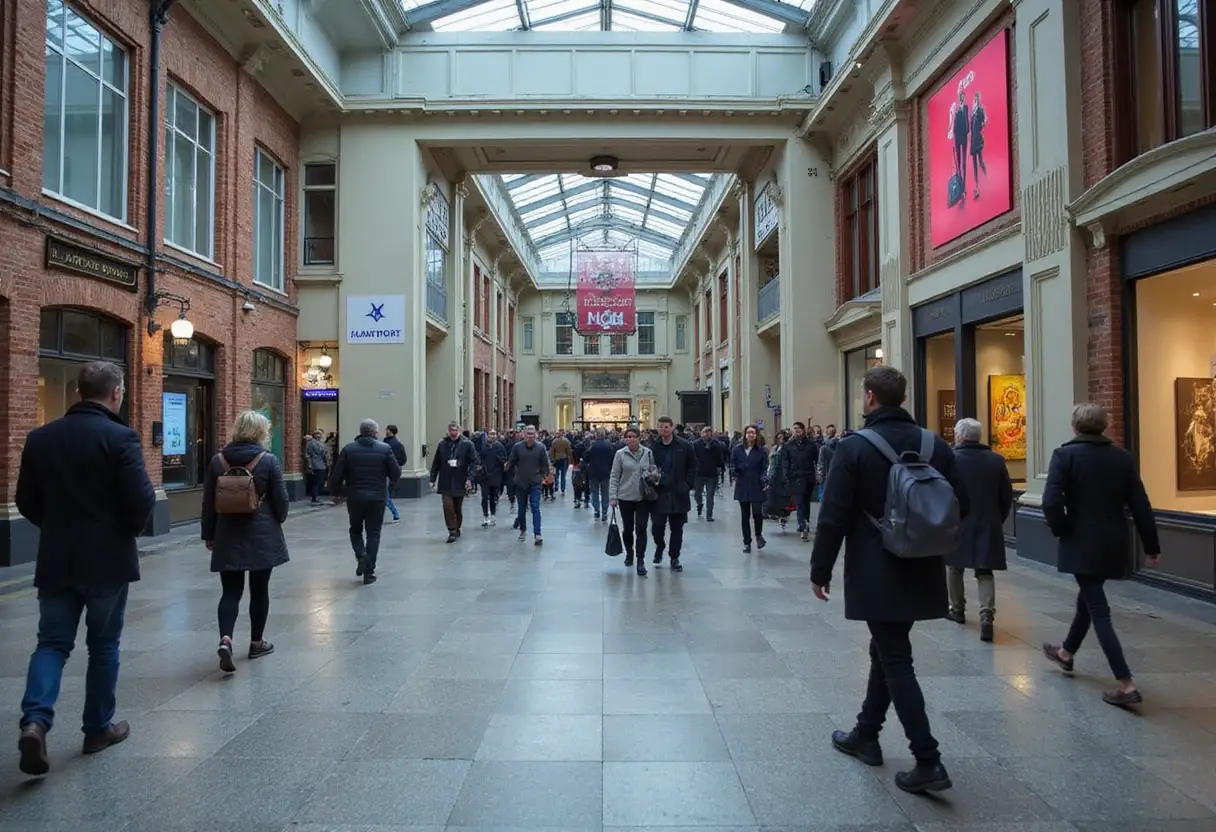
The Art Newspaper reports that the first phase restores the formerly derelict General Market, a Victorian building dating from the 1880s. It contains Past Time, Our Time and Night Time.
Sharon Ament, the museum director, told The Art Newspaper that time serves as an organising principle, giving each major space its own emphasis, objects and atmosphere. Past Time spans 2,000 years of London history through events including the Great Fire in 1666 and the 2012 Olympics.
The opening selection reported by The Art Newspaper includes Roman writing tablets and objects the museum calls “stars of the collection.” They include the Cheapside Hoard of Elizabethan and Jacobean jewels; the medal given to Emmeline Pankhurst to commemorate her 1912 hunger strike; and a fatberg sample from a 250-metre-long mass of oil and wet wipes.
The Art Newspaper reports that the second phase opens the listed, or heritage-protected, 1960s Poultry Market in 2028. It will contain a learning centre, temporary exhibition spaces and an on-site interactive collection store.
Ament treats the General Market and Poultry Market as two of the collection’s biggest objects. She says the Victorian and 1960s buildings represent different moments in London’s history and should create distinct visitor experiences.
A pigeon drives the rebrand
In 2024, the museum unveiled a rebrand (new visual identity) centred on an image of a defecating pigeon. The Art Newspaper says the identity caused a stir when it appeared.
Sharon Ament, the museum director, told The Art Newspaper that the pigeon reflects the city’s contrasts. She said: “It’s not often a museum brand gets into the news. I think that’s because people saw, in our pigeon, the city and their experience: a place full of contrasts.”
Ament described the bird as beautiful, fun and a little scruffy, and said it represented the museum better than any alternative. The choice turns an unglamorous civic image into the museum’s clearest statement about the city it interprets.
Funding the building and the institution
The project’s total cost has risen to £437m from a budget of £337m set in 2019, The Art Newspaper reports. The Greater London Authority, under Mayor Sadiq Khan, has given £95m, while the City of London Corporation contributes £222m.
The report identifies Bloomberg Philanthropies, the Goldsmiths’ Foundation, the Linbury Trust and the National Lottery Heritage Fund among the private supporters. Ament says statutory funding (government funding) comes from the City of London Corporation and the Mayor of London.
“We also want to find ways to stand on our own feet more,” Ament told The Art Newspaper. She identified commercial partnerships, retail, ticket sales, membership—the museum calls it its “fan club”—and venue hire as commercial income sources.
Ament said the museum also leases spaces around the General Market’s perimeter, known as the museum “Houses,” making it a landlord as well. She said solar panels and smart technology make the sites sustainable.
What changes for Londoners and visitors?
Londoners will discover new stories and participate in telling the city’s story today, Ament said. For international visitors, she described the museum as a first place to start immersing themselves in London.
The Art Newspaper reports that 18 people form the museum’s curatorial team (the staff responsible for exhibitions and collections). Its academic advisory panel and some 100,000 people from London and beyond have also helped shape the institution through focus groups, community and school groups, the Access Panel and the Family Panel.
For visitors, the immediate change is access to three permanent-gallery sections at Smithfield on 28 November. The museum targets more than two million visitors annually, while the learning centre, temporary exhibition spaces and interactive collection store remain scheduled for 2028.
The practical test is whether those 2028 additions can help meet the visitor target while reducing, rather than increasing, reliance on statutory funding.
Source: theartnewspaper.com
More from Grace Kim
Show full bio
Correspondent covering technology and product news in arts in the broadest sense at Arts & Voices.
1,786 articles