Madonna’s Copacabana Finale Draws an Estimated 1.6 Million People
Madonna’s free Copacabana Beach performance drew an estimated 1.6 million people in May 2024. Eric Alper’s retrospective traces the wedding cake, “Vogue” and a career built on controversy.

Programme
- An estimated 1.6 million people attended Madonna’s free Copacabana Beach performance in Rio de Janeiro in May 2024.
- Madonna’s 1984 MTV Video Music Awards performance of “Like a Virgin” featured a bridal gown, a “BOY TOY” belt and a wedding cake; the single led the Billboard Hot 100 for six weeks.
- “Vogue” reached Number 1 in more than 30 countries in 1990.
- “Hung Up” reached Number 1 in 41 countries, while *Confessions on a Dance Floor* won the Grammy for Best Electronic/Dance Album.
- Madonna’s 2012 Super Bowl XLVI halftime show drew approximately 114 million United States viewers.
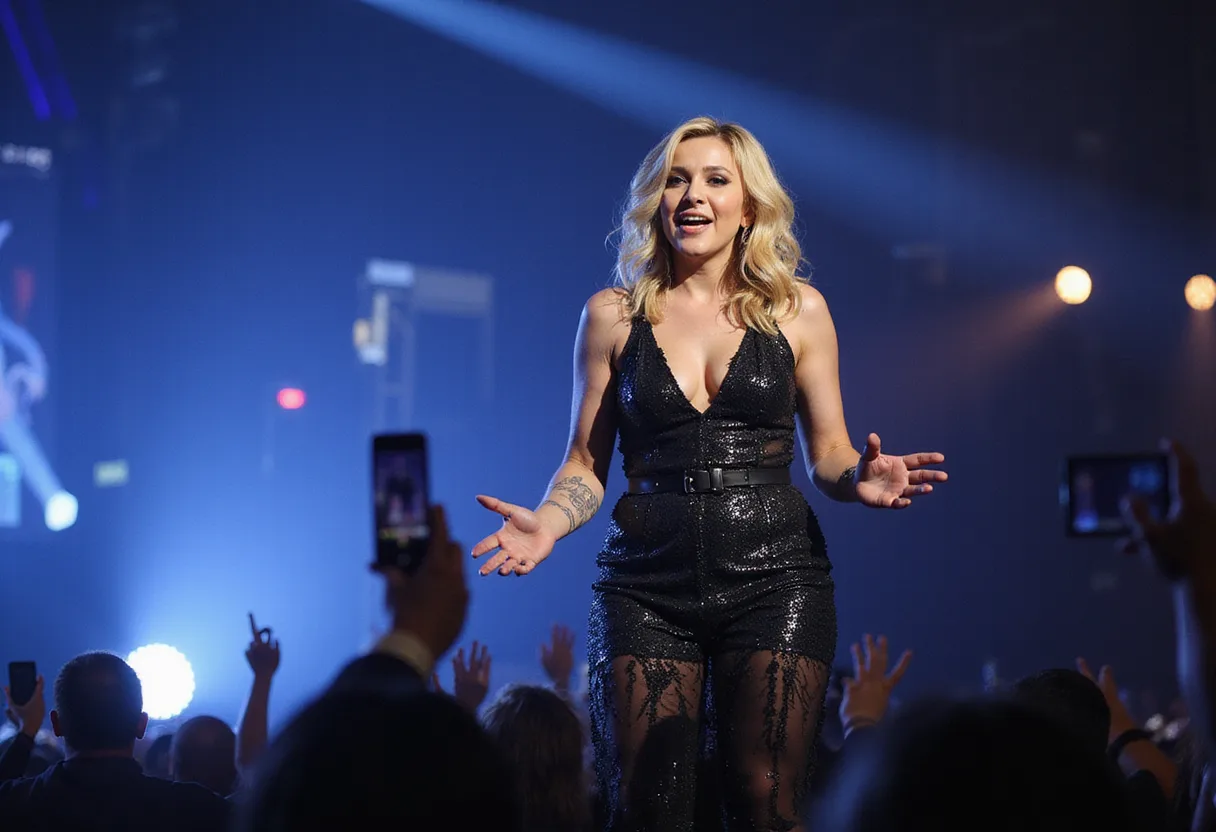
An estimated 1.6 million people attended Madonna’s free performance on Copacabana Beach in Rio de Janeiro in May 2024, according to Eric Alper’s retrospective. It closed the Celebration Tour, begun in 2023 with decades of songs, costumes, choreography and visual references. Alper sees that scale as the outcome of a career built partly through sustained controversy.
Alper traces Madonna Louise Ciccone’s 1978 move to New York City to become a professional dancer. She studied with respected dance companies, performed with Breakfast Club and Emmy, and entered downtown music and art scenes. Danceteria introduced her to DJs and audiences who shaped her earliest recordings.
Her 1983 debut Madonna introduced “Holiday,” “Borderline” and “Lucky Star.” Alper credits its dance rhythms and pop songwriting, with lace gloves, stacked bracelets, crucifix jewellery and layered clothing, for a look copied by young fans. Madonna studied fashion, art, dance, history and popular culture before combining them.
Alper places one of her defining public performances at the inaugural MTV Video Music Awards in 1984, where she performed “Like a Virgin” in a white bridal gown and veil. A belt bore the words “BOY TOY.”
She emerged from a wedding cake, and the performance became one of early MTV’s defining set pieces. The song led the Billboard Hot 100 for six weeks, while its album became an international blockbuster.
Alper argues that televised performance became part of “Like a Virgin”’s identity, extending it beyond radio. At another MTV Video Music Awards, Madonna kissed Britney Spears, using public attention to renew interest around her work. The 1989 “Like a Prayer” video carried controversy into religion and race.
In Alper’s account, Mary Lambert directed a video combining burning crosses, stigmata and scenes involving a Black saint. It prompted debate about religion, race and artistic expression. Madonna’s endorsement deal placed the song in a Pepsi commercial; religious organizations called for a boycott, and Pepsi withdrew the advertisement. The single also reached Number 1 in the United States.
Alper singles out Patrick Leonard’s production, with gospel choirs, rock instrumentation and an enormous chorus, as central to the recording’s emotional force. In “Express Yourself,” Madonna explored independence through a David Fincher video inspired by Fritz Lang’s 1927 film Metropolis. Its industrial settings, choreography and cinematic imagery made the clip a deliberate work of visual art.
The Metropolis reference showed Madonna drawing on an established art form while building a contemporary pop language. Her 1990 “Vogue” carried that method into a global hit. Alper notes its debt to voguing, developed in Black and Latino LGBTQ ballroom communities, and Fincher’s black-and-white video drew on Hollywood photography.
“Vogue” introduced mainstream audiences to voguing and reached Number 1 in more than 30 countries. Its influence spread across dance floors, fashion, television and popular culture, and Madonna’s association with LGBTQ communities became an important part of her public identity. The Blond Ambition World Tour turned that ambition into a traveling theatrical production.
Jean Paul Gaultier designed the costumes, while the staging joined choreography and sequenced music to themes of religion, sexuality and personal autonomy. The tour’s cone bra became one of fashion’s most recognizable creations. Madonna’s 1991 documentary Truth or Dare exposed rehearsals, performances and exchanges with her dancers, revealing the machinery behind the scale.
In 1992, Erotica and her photographic book Sex, made with Steven Meisel, extended her work into provocative imagery, fantasy and sexuality. Alper calls Sex a publishing event that reached the top of The New York Times bestseller list. The coffee-table book became a cultural event.
Madonna also established Maverick, an entertainment company spanning a record label, film production and publishing. Maverick Records later released Alanis Morissette and Michelle Branch, giving her influence over other artists as well as her own catalogue. Her late-1990s reinvention came with Ray of Light in 1998. Working with William Orbit, she joined electronic production to personal reflection and spiritual themes.
Synthesizers, dance rhythms and expansive arrangements shaped the title track and “Frozen.” Alper links the album’s four Grammy Awards to reaching another generation and to electronic music’s movement further into mainstream pop. Madonna’s presentation drew on Eastern spirituality, contemporary photography and the records’ atmospheric qualities. Confessions on a Dance Floor arrived in 2005 as a continuous, DJ-inspired listening experience.
Stuart Price primarily produced the album’s disco, electronic music and sophisticated pop arrangements, reconnecting Madonna with club culture. “Hung Up” sampled ABBA’s “Gimme! Gimme! Gimme! (A Man After Midnight),” reached Number 1 in 41 countries and helped the album top charts worldwide. It won a Grammy for Best Electronic/Dance Album.
The Confessions Tour, Sticky & Sweet Tour and MDNA Tour continued the commitment to elaborate staging, contemporary choreography and references to religion, politics and popular culture. In 2012, Madonna’s ancient-Rome-inspired Super Bowl XLVI halftime show reached approximately 114 million United States viewers. LMFAO, Nicki Minaj, M.I.A. and CeeLo Green appeared with her.
Alper’s retrospective also connects Madonna to younger performers through work with Britney Spears, Justin Timberlake, Nicki Minaj and Maluma. Madame X grew from her time living in Lisbon, where she encountered Portuguese musical traditions and local performers. The 2019 album combined fado, morna, Latin pop and electronic music. It debuted at Number 1 on the Billboard 200.
His wider argument is that Madonna established the music video as an artistic medium and strengthened creative control for female performers. She joined fashion, dance, imagery and personal expression into one identity, opening arguments about gender expectations, LGBTQ visibility, free expression and artists’ control of their public selves.
What does this change for pop performance?
For performers, the practical lesson is not to manufacture scandal. It is to make each element of a public work answer a clear idea, then retain enough control to let the work age. Madonna’s videos and tours used recurring references, exact collaborators and changes of scale to extend songs beyond radio, dance floors and chart cycles.
Alper writes: “There’s a wonderful sense of adventure running through it all.” His account presents Madonna as an artist who used controversy to widen pop performance. The 1984 cake, 1990 ballroom reference and 2024 beach crowd were not isolated spectacles. They were stages in a method that made each new form continuous with the last across more than four decades.
Source: thatericalper.com
More from Marcus Bennett
Show full bio
Staff writer covering people, launches and day-to-day practice in arts in the broadest sense at Arts & Voices.
1,189 articles