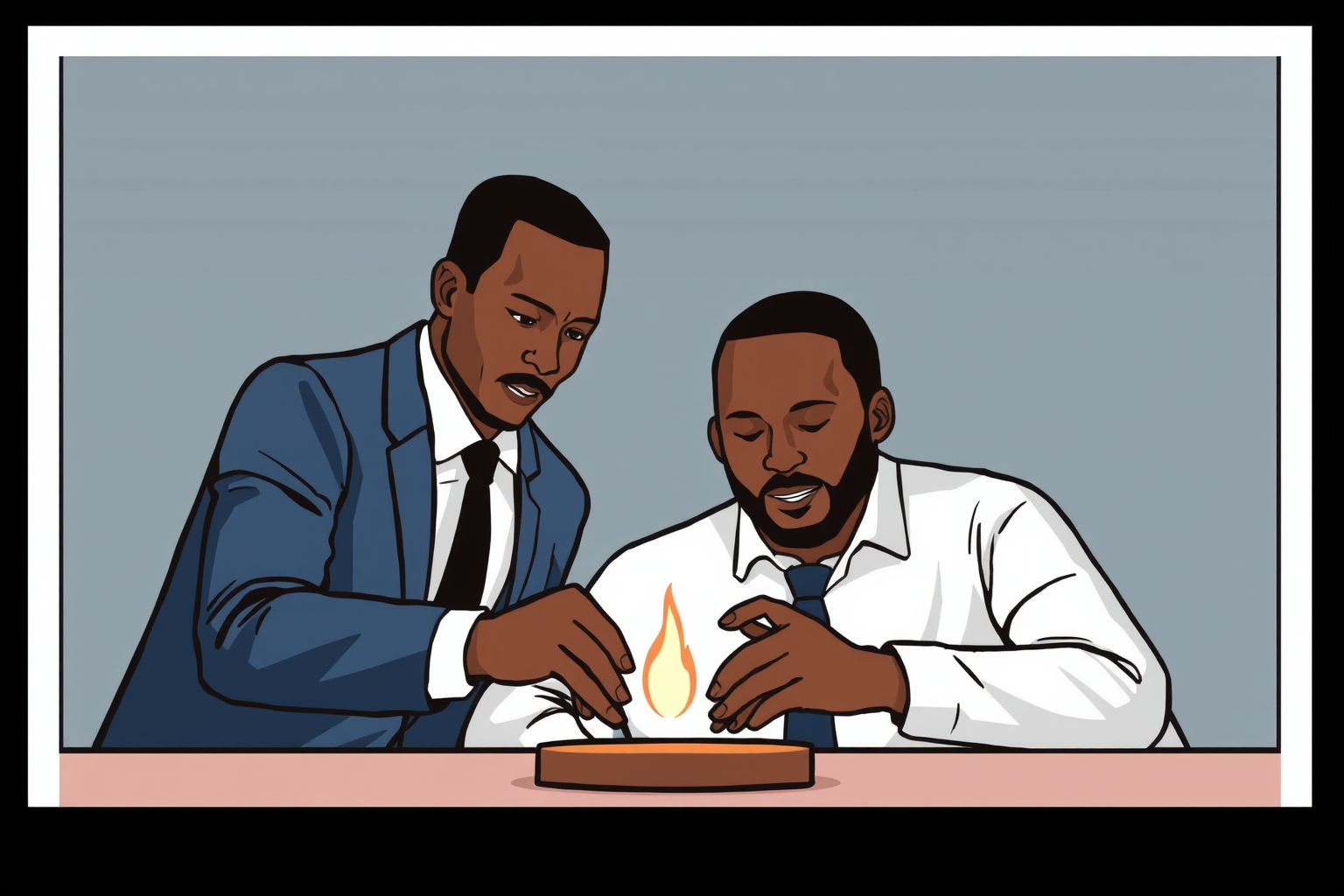
Mahershala Ali Arms Himself for Fatherhood in Bassam Tariq's Hitman Tale
Mahershala Ali's hitman turns caregiver in Bassam Tariq's TIFF 2026 debut, a comedy-tinged drama about a father chasing breast milk, dodging his handler and facing John Cho's AK-toting pastor.

Programme
- Your Mother Your Mother Your Mother, directed by Bassam Tariq and starring Mahershala Ali, premiered at TIFF 2026 and opens in US theaters on September 25.
- Ali plays Latif, a hitman who turns to fatherhood after his wife's death; the cast includes John Cho, Giancarlo Esposito, Tramell Tillman, Adia, Laith Nakli, Tiffany Boone, Abubaker Ali and Jahleel Kamara.
- Ali's fight choreography draws on sword training he undertook for Marvel's now-defunct Blade reboot.
Mahershala Ali plays a hitman who discovers his hardest contract is fatherhood in Bassam Tariq's Your Mother Your Mother Your Mother, which premiered at TIFF 2026 and opens in theaters on September 25.
Ali's Latif is a righteous man and a religious one. He sees himself in a holy war, cleansing the world of his people's enemies by picking up where the law ends. Those who know about his work condemn it — his Imam, Giancarlo Esposito's Abdul Malik, and his wife among them. Yet they do not condemn him, because they understand his struggle and his pain. They grant him mercy and hope he finds his way back.
The turning point arrives during a phone call from his daughter Fatiha (Adia) while Latif is cleaning up his latest job. The body of the man he killed lies wrapped in plastic in a public restroom as he dips into his baby's diaper bag to wipe blood from his blade. Two words — "Mama's gone" — strip his crusade of meaning. His sole job now is to be a father.
Tariq's film refuses to make that task simple. Through interactions with Malik and Latif's brother-in-law Talib (Tramell Tillman), we learn Latif has never really been there for his children. He supported them and kept a roof over their heads, but his absence resonates. He does not know how to be a dad, so he tries to replace their mother instead.
The quest becomes absurdly literal: find breast milk. The reserves are depleted, and the baby won't keep formula down. Latif grows desperate, loading the kids — rounded out by Jahleel Kamara's Qadir — into the car to ask mothers at a mosque for help. One thing leads to another, and he comes face to face with the one person he hoped to avoid: his handler, Mike Mahmoudi (Laith Nakli). Mike will help find the milk if Latif solves a problem in return: Pastor Hwan (John Cho).
A comedic slant runs through the film's start, driven by Latif's fish-out-of-water fumblings with his kids. Hwan's introduction fully embraces the potential for cheese within this otherwise serious plot. A hitman facing the consequences of his actions with a baby strapped to his chest is funny enough. Making this devout — superficially so, of late — Muslim's target an evangelical Army veteran brought back to life by prayer is kind of hilarious.
Cho runs with it. Grillz on both rows of teeth, a cowboy hat on his head, and a righteous crusade of his own to snuff out those profiting off the bodies of women through porn, prostitution and trafficking. He may act goofy in his television ads and seem harmless singing gospel, but the soldier within remains. Why give parishioners a Bible when an AK-47 better suits the "cleansing" he strives to accomplish around town?
Add Mike's nephew Hatty (Abubaker Ali) as Hwan's next target and Latif's predicament comes into focus. He wants to honor his wife's wishes by retiring from crime. He wants to fill her shoes as a caregiver for children he is slowly discovering he doesn't know as well as he thought. The only way out is to escape Mike's grip, and avoiding him won't work: one of Hatty's girls, Tiffany Boone's Fugazi, is a willing milk supplier. Wherever Hatty is, Hwan isn't far behind.
Everything connects in unpredictable ways as Latif's bid to be better drags him further down. It becomes a foregone conclusion that Fatiha will learn his truth. The question is which one — the truth that paints him as an assassin, or the one his late wife empathetically held as a flawed man doing his best? A little transparency could go a long way, since the carnage is coming regardless. And if Latif deserves mercy from his kids to survive it, shouldn't he find room to grant it too?
Mahershala Ali deploys the sword work he learned for the now-defunct Blade reboot once Latif approaches his point of no return. Before that, the action favors escape: incapacitate and run, because he isn't interested in killing the men blocking his path back to his family. Only when they come for those he loves must he choose to end the bloodshed — by his hand or his death.
Abubaker Ali is almost as fun as Cho in a less cartoonish register. His Hatty is an entitled punk who believes himself invincible rather than a crusader, and his dynamic with Latif turns the film's middle portion into an unwitting companion mission. Does Latif care about Hatty's safety? Not at first. He doesn't even know he must — not until it becomes a motivating factor in protecting his kids. That edge of indifference entertains, and it lets Tariq have some fun.
He does throughout. The humor is the hook — familial, religious (an early Mormon joke isn't a throwaway once John Henry Ward's Elder Wade enters the fray later) and violent, with no punch line left hanging. Yet the film remains emotionally grounded in the Islamic tale from which its title derives. It is a quest that sees this father realize he was worried about the wrong fight.
The only people who need him to be their hero are his children — a heroism that entails being present rather than handling a weapon. Adia may be the true standout. Her Fatiha is trapped between his two worlds, holding him accountable while living within the Hell he created. Much of what Latif learns comes from seeing himself and his late wife in her. Through Fatiha's love and grace, he might be granted a second chance at fatherhood.
Source: The Film Stage
Grace Kim
Show full bio
Correspondent covering media and advertising at Arts & Voices.