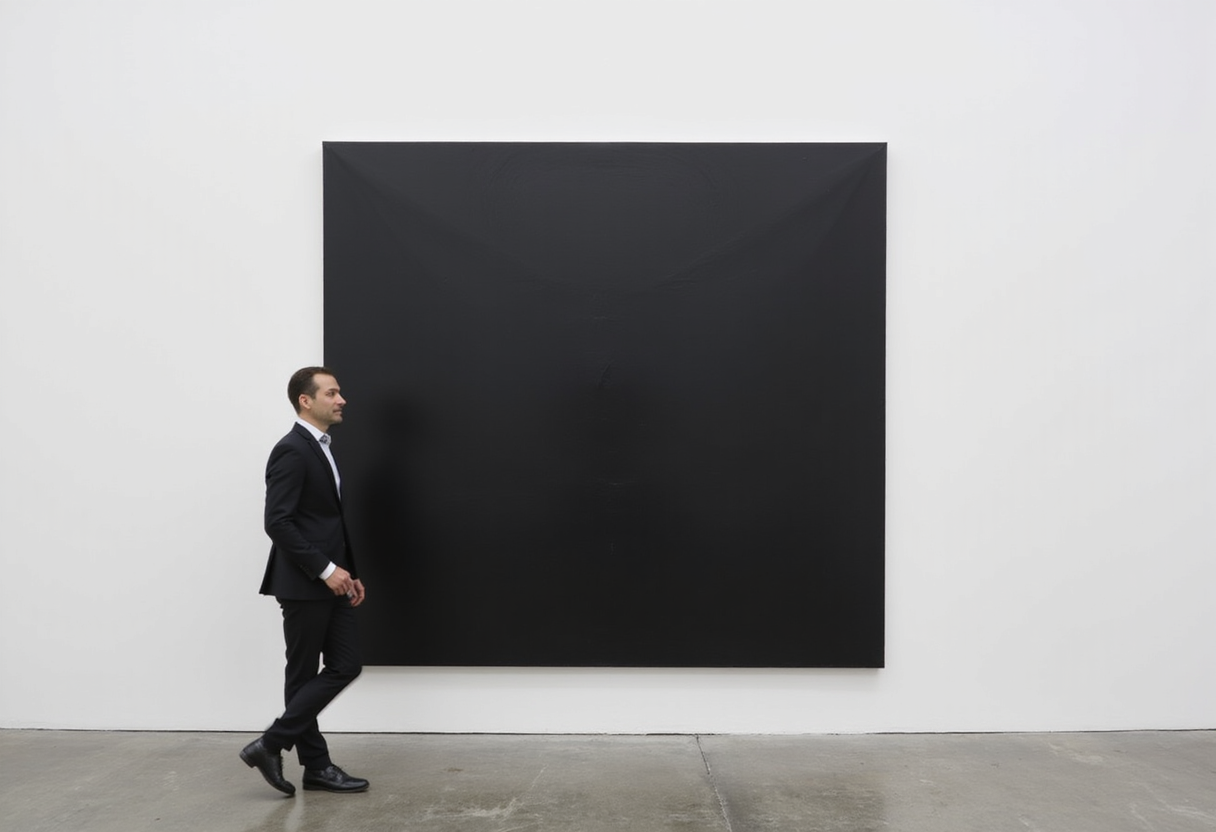
Marina Perez Simão Brings 11 Meditative Canvases to Frieze London
At Frieze London, Marina Perez Simão shows 11 new canvases at Pace's booth in blue, gray and magenta — and asks visitors to look closely and slowly.
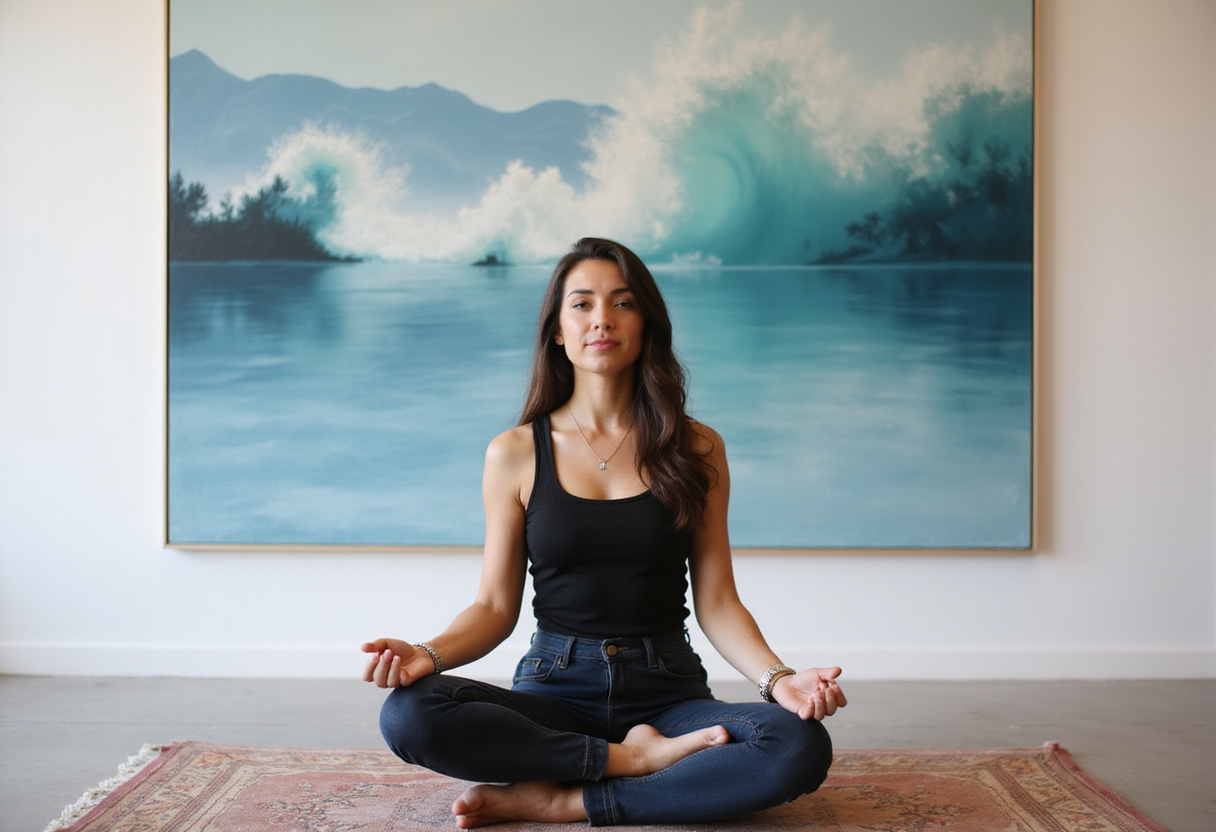
Programme
- Marina Perez Simão painted 11 canvases for Pace Gallery's booth at Frieze London: three blue, three gray, five magenta.
- The booth is arranged in the shape of the letter X, with entry through the middle or the sides.
- Simão began working with darker, limited hues in 2024 with her show "Solanaceae" at Pace Los Angeles.
- The blue canvases required three photography sessions because the pigments shift so much.
- She cites Picasso's Blue and Rose Periods and Fra Angelico's pinks as inspirations for the new palette.
By Daniel Okafor
Marina Perez Simão has painted 11 canvases in three colors for Pace Gallery's booth at Frieze London, and she'd like you to stand in front of them quietly. Three are blue, three are gray, five are magenta. No champagne required.
The Brazilian abstract artist has arranged the booth in the shape of the letter X. Two blue paintings flank one side, a gray canvas sits in the middle, and two more hold the other side. Visitors can enter through the middle or the sides. It reads a bit like a spaceship docked among the fair's dealmaking.
"The structure is super open and closed at the same time, but there's also a sense of discovery depending on which side you walk through," Simão told ARTnews, speaking from São Paulo.
What does she want from viewers?
Closeness, first of all. Simão describes the paintings as "more or less vague descriptions of strange worlds" and says each artwork has its own "nature and behaviors."
"It's abstract yet it has so many elements of landscape," she said. "Nature is a big, complex and vast organism that we don't fully understand how it works, art is a way to approach these things that are difficult to explain."
She also wants to remind people that looking at art is physical. "We see so many images through Instagram and digital platforms, which is fine, but we can't forget that when you get close to a painting, there are different layers and textures," she said.
She hopes people notice the imperfections. That's one reason she doesn't varnish her paintings.
Why only three colors?
The new works are cooler than her usual rich palettes of sky blues over grass greens, or reds against orange. She drew inspiration from Pablo Picasso's Blue and Rose Periods and Fra Angelico's use of pink — the Renaissance painter, not the candy aisle.
"Pink is a difficult color because when you look at mass culture, there's Barbie pink, bubblegum pink, and cotton candy pink. I didn't want all these industrial pinks and their associations," Simão said. She settled on magenta because it can be manipulated to mimic colors found in nature.
Blue proved harder. She worked it straight from the tube, the pigment already strong, adding only an occasional dash of white for tinting. She also mixed cobalt and cerulean into a greenish tone. The blue paintings "are almost impossible to photograph," she explained. "We had to do three sessions of photographing as the pigments change so much."
The gray paintings combine magenta and blue, with hints of yellow and ocher hidden in the first layers. The effect, she says, resembles fog passing in front of the sun. The blue paintings are warm like summer; the pinks are cold like winter. Together, they form an abstract season.
Where did the restraint come from?
Simão began experimenting with darker hues in 2024, with her exhibition "Solanaceae" at Pace in Los Angeles — the title borrowed from the scientific name for the nightshade family of plants. The same silhouettes appeared later that year at Mendes Wood DM's Paris gallery.
"I've been thinking about working with a limited color range [for a while] because color in my work is super important, and I wanted to study tonalities and limit myself, I'm always evolving," she said.
The project changed her routine. She hid everything in her studio that featured an ounce of color and returned to her usual spot painting away from the door, by a small terrace with a window.
"I paint standing up and in my socks. I don't use chairs and sometimes I sit on the ground. These paintings required my body to be engaged," said Simão.
She started the series at the beginning of this year and felt a natural development in her practice taking place — one she still finds inexplicable. That's the wager of the booth: fewer colors, slower looking, and a fairgoer willing to stand still for a minute.
Source: ARTnews
More from Daniel Okafor
Show full bio
News editor covering companies, deals and strategy in arts in the broadest sense at Arts & Voices.
457 articles