Martin Guerre Returns: Les Mis Duo's Musical Finds a New Hero
Matthew Warchus's in-the-round revival restructures Boublil and Schönberg's Martin Guerre into a ninety-minute melodrama — and hands the story to Liv Andrusier's Bertrande.
Programme
- Martin Guerre premiered 16 years after Boublil and Schönberg's 1980 hit Les Misérables.
- The new version runs 90 minutes without an interval, performed in the round on the set floor of A Christmas Carol.
- New lyrics come from Alain Boublil, Annabel Mutale Reed and Paul Hodge, with folkier orchestrations.
- Matthew Warchus directs; Liv Andrusier plays Bertrande, who emerges as the story's new protagonist.
- Set design by Rob Howell transforms from courtroom to battlefield for flashbacks to France's religious war.
A musical written 16 years after Les Misérables has returned to the stage in a radically overhauled form. Alain Boublil and Claude-Michel Schönberg's Martin Guerre, first seen after their 1980 hit, now runs ninety minutes without an interval, performed in the round on the floor of the theatre's returning show, A Christmas Carol. Matthew Warchus directs.
The production restructures the 16th-century French story with new lyrics by Boublil, Annabel Mutale Reed and Paul Hodge, and folkier orchestrations. Critics have called it a miniature Les Mis in spirit, filled with the same booming melodrama and the same preoccupations with crime and disguise.
The plot rests on a real-life case. A Frenchman fled his home after getting married and returned years later to face claims of deception and false identity. The show keeps its audience guessing throughout, and its twists echo other recent works dealing with returned soldiers, from the Austrian film Rose, selected for the London film festival, to Anjet Daanje's novel The Remembered Soldier, published in English last year.
What does the revival change?
The most striking outcome is a shift in protagonist. The restructuring turns the underlying hero of the story into Guerre's abandoned wife, Bertrande, who stands unerringly by him. Liv Andrusier plays her with such power that her rendition of one of the show's new songs, Someday, lands as a blast of pure passion — as if a new hero has arisen to take claim of the story.
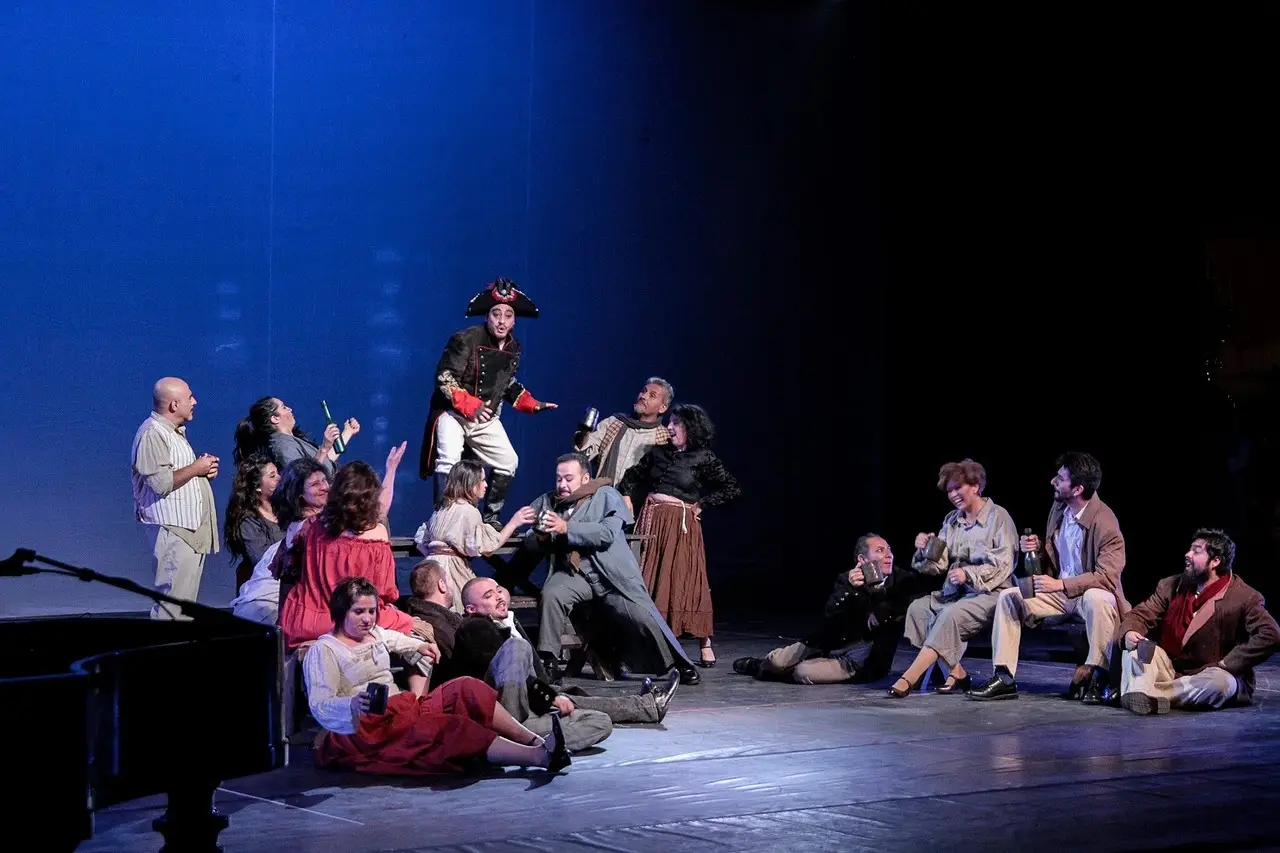
Warchus's ingenuity supplies the production's real fireworks. His in-the-round staging creates intimacy between Martin and Bertrande, yet it also produces a frothing sense of mob rule as the villagers brand her a witch and punish her for her husband's desertion.
Not every problem of the musical can be directed away. The reworking feels simultaneously fast and slow: the sleeker shape brings momentum, but the songs — operatic, emotional and too tonally similar — slow everything down again. At least the title number stands apart, swooping and swooning infectiously.
The flashbacks rank among the production's finest moments. In a few quick scenes from the intervening years, Martin fights France's religious war against the Protestant Huguenots. For these quicksilver passages, Rob Howell's set transforms from courtroom to battlefield and back so cleanly it leaves the viewer gasping with admiration.
Elsewhere the context stays bare-boned. The war remains vague and some characters indistinct. The village oddball Benoit, played by Colin Ryan, carries a puppet representing the scarecrow Louison — an underexplained figure likely to confuse those unfamiliar with the story. The relationship between Guerre and a fellow soldier, which proves key within the deception, also deserves more stage time.
How does the production build its menace?
The melodrama arrives with full sensory force:
- Lizzi Gee's choreography of a baying, weapon-carrying mob captures the era's Christian zeal about curses and demons.
- Fergus O'Hare's sound design supplies thunder and rumble.
- Sharply contrasting lighting by Hugh Vanstone, Luca Panetta and Toby Ison punctuates the action in blasts.
The show does develop an emotional pull as the plot speeds up, and sympathies settle on the man the town brands an impostor. What the overhaul ultimately demonstrates is that a 1990s musical need not simply be dusted off: restructured, re-lyricised and re-orchestrated, Martin Guerre now belongs as much to Bertrande as to its title character — and to the performer who makes her roar.
Original: guardianbookshop.com
More from Marcus Bennett
Show full bio
Staff writer covering people, launches and day-to-day practice in arts in the broadest sense at Arts & Voices.
753 articles