Matthew Connors' The Axe Will Survive the Master Asks the Big Questions
Matthew Connors' £50 photobook spans 12 years and nine cities, asking urgent questions about violence, surveillance and authoritarianism worldwide.

Programme
- The Axe Will Survive the Master is published by SPBH Editions/MACK, priced £50.
- The book collates images made over 12 years across nine cities including Kyiv, Pyongyang and Hong Kong.
- The title quotes a former NKVD executioner recorded in Svetlana Alexievich's Secondhand Time.
- It is the third book in a trilogy by Matthew Connors.
Matthew Connors' new photobook The Axe Will Survive the Master collates photographs made over 12 years across Bangkok, Cairo, Chernobyl, Hong Kong, Kyiv, Naples, Pyongyang, Varanasi and Washington DC. SPBH Editions/MACK publishes the book, priced £50, as the third in a trilogy that asks demanding questions of a world facing violence and uncertainty.
The title comes from a former NKVD executioner (the NKVD was the Soviet secret police), recorded by Svetlana Alexievich in Secondhand Time: The Last of the Soviets, her oral history of the USSR's collapse. "The axe is always there, ready. The master's axe… survives everything. Don't ever forget it," the executioner said. Connors borrows that sentiment for something even more ambitious: a photographic insight into the contemporary world.
A sprawling topic like this risks dissipating into nothing — if something is about everything, is it about anything? Connors keeps the narrative tight. The opening pages focus on flat planes, advertisements and images in public space. The narrative then expands out to scenes of violence and repression.
How is the book structured?
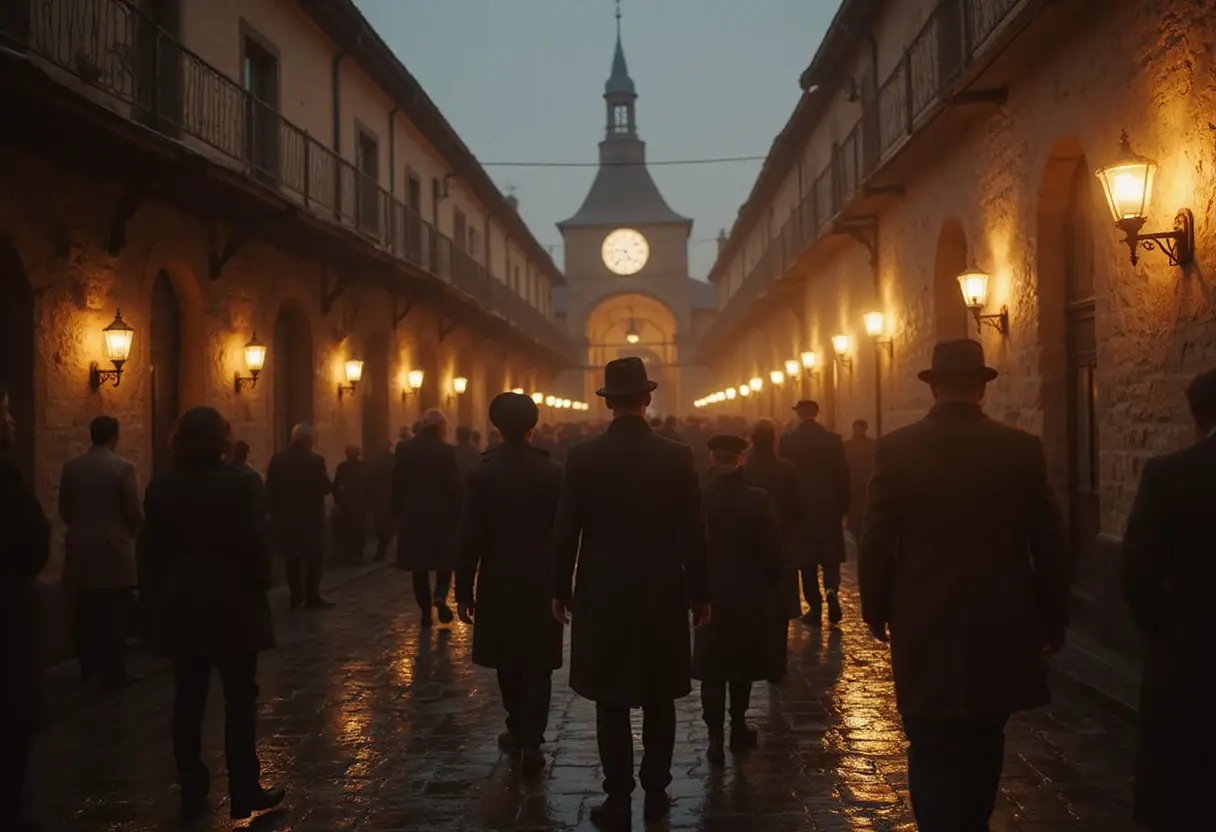
The book divides into chapters with titles such as 'Maculate Origins' (maculate is the opposite of immaculate) and 'A Caucus of Shadows'. It is often hard to judge where Connors has taken particular shots, suggesting that the many locations have much in common.
That ambiguity is the point. Globalisation has flattened differences between cultures, with the same clothes, technology and rising authoritarianism mapping onto everywhere.
The cover depicts glass smashed into a circle that also suggests a camera lens. There may be a metacriticism at work here, in which the camera is part of the problem. The photographs show a reality fracturing partly because of images — billboards and reflections intersect with flat planes and fragments of views. Laser pointers and masks document attempts to evade surveillance.
What does the companion text do?
Connors' text, The Knotted Alliance, is written in the first-person plural ('we') and describes a petition annotated and updated by many hands. It refers to a group effort. Something interesting is going on around the group versus the individual, the ability to reach a consensus — or, as in Alexievich's case, to gather many voices.
Where Connors' images fit into that is moot. Does his assemblage of scenes suggest a sense of the polyvocal? Or the organising perspective of his particular vision of things? Does the camera allow us to think of the individual point of view — or, as Donna Haraway had it, encourage a "god trick" in which everything is apparently seen from nowhere?
Conclusions are not easy to draw. But the book is asking the big questions, and making a case for their urgency — a case readers can now weigh for themselves at £50, via mackbooks.co.uk.
Original: 1854.photo
More from Grace Kim
Show full bio
Correspondent covering technology and product news in arts in the broadest sense at Arts & Voices.
748 articles