Matthew Walker on AI, Clay and the Human Fingerprint
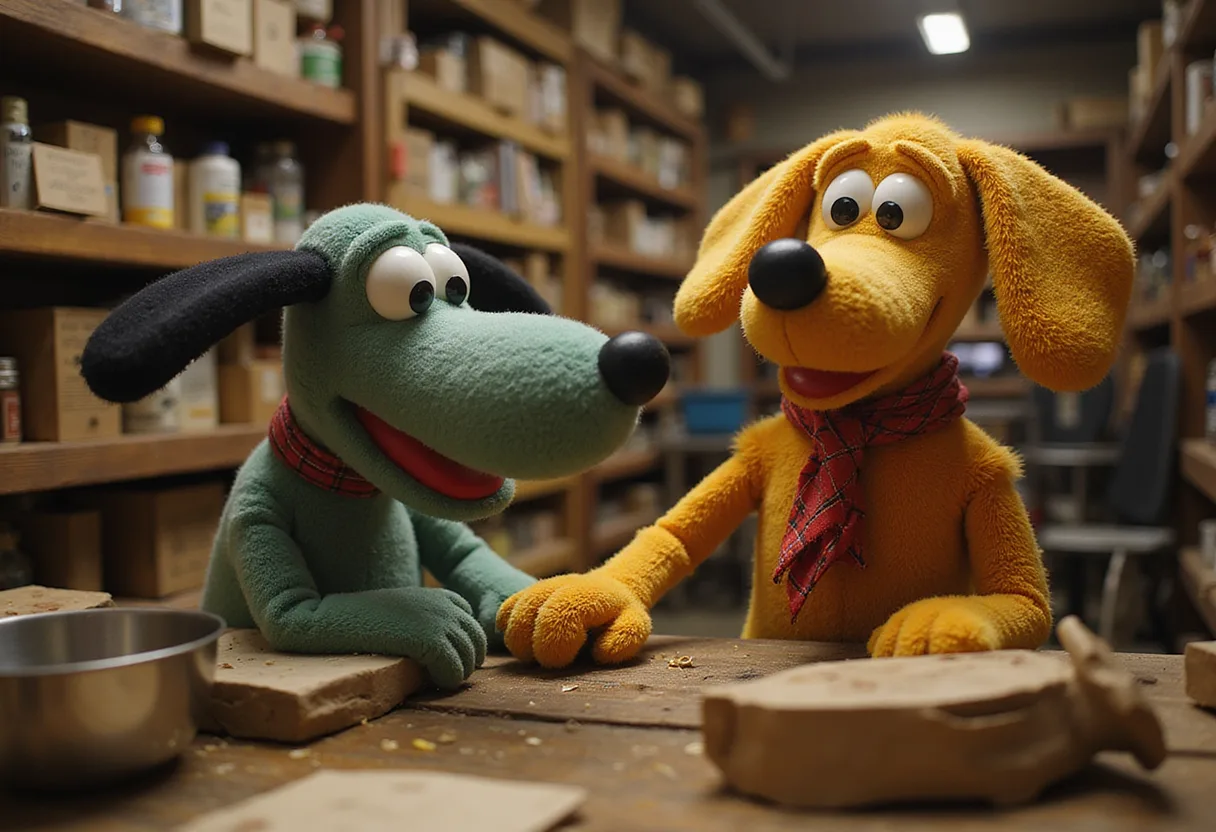
Matthew Walker, co-director of “Shaun the Sheep: The Beast of Mossy Bottom,” says AI can replicate art but not the emotion, physical craft and human fingerprints behind Aardman’s stop motion.
Programme
- Matthew Walker co-directed Aardman Animations’ third Shaun the Sheep feature.
- The Beast of Mossy Bottom opens Lucca Comics and Games in Italy on the eve of Halloween, at the event’s 60th edition.
- Lucca Comics and Games takes place within the town’s 16th-century walls.
- Walker says audiences can currently detect AI-made work through an uncanny quality.
- Live action provides AI with a vast stock of footage, while animation starts from scratch.
Daniel Okafor
At the 60th Lucca Comics and Games, co-director Matthew Walker says AI-made animation is not an existential threat to Aardman Animations, at least not yet. Walker co-directs the studio’s third Shaun the Sheep feature, Shaun the Sheep: The Beast of Mossy Bottom.
The film serves as the opener of Lucca Comics and Games in Italy on the eve of Halloween. Its story is set at Halloween, too. The Italian geek gathering takes place within the 16th-century walls of the medieval Tuscan town of Lucca.
Walker was pleased with the company, describing himself as a geek. When he met the Italian press, their first question was whether the film, handmade frame by frame with clay puppets, could stand as a symbolic bastion against AI’s spread through filmmaking.
He discussed those concerns with Variety in an interview edited and condensed for clarity. His answer favors the visible labor behind stop motion, an animation technique that moves physical puppets frame by frame.
What makes stop motion harder to fake?
Walker values the tactile physicality of stop motion and its ability to tell funny, emotional stories through characters. The figures are real models, built with intricate detail by artists. Behind-the-scenes videos remain popular because audiences want to see how the work happens.
He said viewers respond to the contrast between huge, detailed sets and small puppets. These are elements AI cannot replicate, in his view. Digital tools can also make almost anything look beautifully polished. That perfection has produced, he argues, an appetite for visible imperfection.
He cited Sony Pictures Animation’s “Spider-Verse” franchise, which introduces 2D elements and hand-drawn pencil lines. “There’s a desire to see the craft behind the finished product,” Walker said. In stop motion, he said, the process leaves fingerprints. Technology has yet to acquire convincing fingerprints.
That, for Walker, is the point: audiences want to see how a scene was made, and the evidence of the hand remains visible in the result. It is a more durable proposition than any claim that one tool will defeat another.
Can audiences recognize AI?
Walker thinks audiences can identify AI-made work at present. He expects AI to keep advancing, potentially making it harder to distinguish. Even when viewers cannot pinpoint what is wrong, he says, artificial work may feel a little bit uncanny.
He also expects audiences who recognize AI to disengage emotionally. His case rests on a distinction between surface and substance. “AI can replicate art, but I don’t think it can replicate the emotion and reason behind the art,” Walker said. He argues that AI does not understand why a pencil line was made. Human viewers, by contrast, recognize the craftsmanship involved.
His proposed defense is performance. Wallace & Gromit, Chicken Run and Shaun the Sheep all rely on dialogue-free physical comedy, and their audience starts with toddlers. Walker sees early encounters with those characters as part of how children learn to recognize and respond to art.
Children carry those early viewing experiences into adulthood, according to Walker, and that exposure shapes how they recognize art, respond to it and understand its value. For him, animators are actors who put their own emotions into characters and work much more slowly than live-action performers.
Why does Walker think animation is safer than live action?
Walker considers animation more immune to AI than live action, at least at present, because available footage gives the technology an easier route into photographed human behavior. Live action, he says, supplies AI with a vast wealth of footage from which to reproduce human activity.
Animation offers no comparable footage bank. Its production starts entirely from scratch. A good animator can turn any object into a character, with movement supplying features the object does not possess.
His example is the Pixar lamp. It has no face, features or limbs. Animation can make audiences see it as a character and a sentient being. That creation copies nothing already filmed. It depends, Walker says, on an animator’s understanding of what a human can connect with.
Walker’s position is narrower than a rejection of technology. AI may improve, and audiences may eventually struggle to identify it. For now, he says, its traces can feel wrong. The visible labor, including fingerprints and emotional performance, remains his practical advantage.
The film’s Italian launch now tests the proposition. If audiences still value clay, imperfection and emotional performance, Walker’s case will have an audience beyond Lucca.
Source: Variety Film
More from Daniel Okafor
Show full bio
News editor covering companies, deals and strategy in arts in the broadest sense at Arts & Voices.
877 articles