New York Production Spending Hits $1.06 Billion as Film Boom Returns
New York production spending jumped 57% to nearly $1.06 billion in Q2 2026. Expanded tax credits, new soundstages and faster permits have drawn Hollywood back after six years of decline.
Programme
- New York production spending rose 57% year-over-year in Q2 2026 to nearly $1.06 billion, with 19% more projects shooting.
- The state offers a 30% refundable tax credit backed by $800 million annually after Gov. Kathy Hochul's 2025 budget amendments.
- "The Devil Wears Prada 2" generated $67.9 million in economic activity and $45.8 million in local wages across its 46-day New York shoot.
- New York City processed 4,311 filming permits in 2026 so far, up 27% from last year.
- Los Angeles logged its worst year of location shooting outside the pandemic period in 2025.
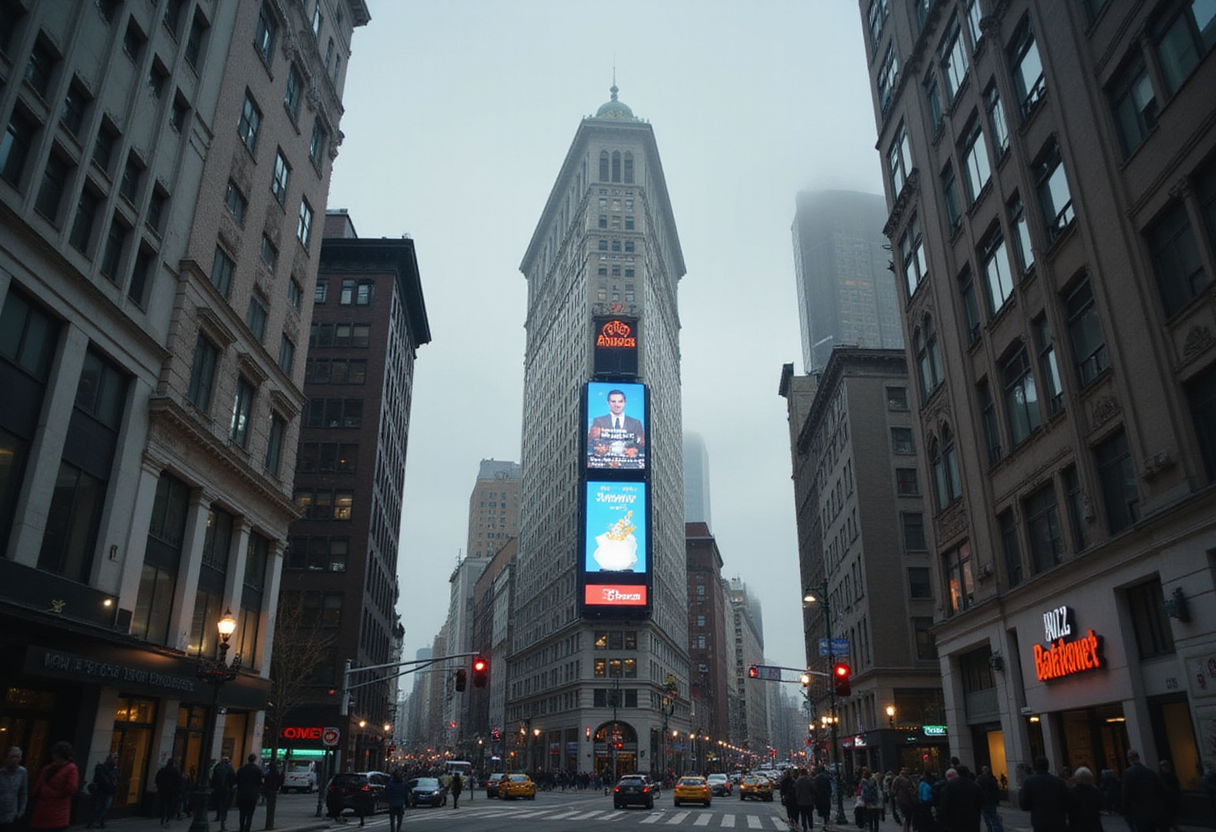
New York State's film and television production spending rose 57% year-over-year in the second quarter of 2026, reaching nearly $1.06 billion, with 19% more projects shooting. After six years of decline, the industry has returned to the city in force.
The turnaround began with policy. Governor Kathy Hochul signed budget amendments in 2025 that expanded New York's incentives to a 30% refundable tax credit backed by an annual pot of $800 million, plus enhanced post-production and above-the-line incentives. "New York is one of the more affordable places to shoot in the world," says Rafael Espinal, the city's media and entertainment commissioner, who took office in February.
When Espinal arrived, permits stood at 50% of pre-pandemic levels. "I joked to my team that I remember seeing tumbleweeds roll through our office," he says. The city has since processed 4,311 filming permits in 2026 so far, a 27% increase from last year, with more than 600 projects filmed on public property this summer. Productions now shooting in New York include "The Gilded Age," "American Horror Story" and an upcoming "Exorcist" movie.
The budget enhancements kept "The Devil Wears Prada 2" in New York. According to Empire State Development, the state's economic development agency, the 46-day shoot supported more than 1,400 local cast and crew members, engaged 550 local vendors, and generated $67.9 million in total economic activity and $45.8 million in local wages.
The boom has filled the city's soundstages. Wildflower Studios, the Astoria compound co-founded by real estate developer Adam Gordon with Robert De Niro and his son Raphael De Niro, opened in 2024 amid shrinking studio budgets and the aftermath of twin labor strikes. It has never been busier. "The tax incentives are oxygen. You can't live without them," Gordon says.
The argument for subsidizing productions extends beyond direct spending. Doug Steiner, who opened Brooklyn's Steiner Studios — home to "The Marvelous Mrs. Maisel" and "Boardwalk Empire" — in 2004, puts it in marketing terms. "Screen time alone pays for the credit," he says. "That visibility for New York is so important. It's product placement: New York City is the product."
No other city can replicate New York on screen — not even Toronto, which is standing in for Queens in FX's "Adults" and Manhattan in Sarah Polley's upcoming "The Bell Jar" adaptation. "You can't replicate the city anywhere else. It's not the same," says Robert De Niro, whose career rests on "Taxi Driver," "Raging Bull" and "Goodfellas" — New York movies shot in New York. "I consider it the best city in the world, and the more that's happening here, the better."
New York will also play other places when it can. "We're happy to 'cheat' other locations," says Rhoda Glickman, ESD's film and arts chief. "When something's supposed to be in Washington, D.C., and we film it here — it's not beneath us to do that."
The first production Espinal greenlit tested the city's new approach. "A Quiet Place Part III" required shutting down the Manhattan Bridge for an alien invasion, coordinated with the NYPD, the MTA and the Port Authority. A vocal community group, amplified by the New York Post, opposed the production and its temporary disturbance of local businesses, which the production compensated. Espinal went to the set and posted a video explaining the long-term benefits. "We're going to have folks flying into our city, spending tourist dollars to be able to see where that shot took place," he says.
"When a [project] is filmed in New York, the paycheck stays in New York," says Emily Mijatovic, ESD's downstate communications director. "It's also about the jobs for the local folks: the electricians, the carpenters, the drivers, the makeup artists."
The boom extends beyond film and TV. Espinal cites Cardi B's "Ah Ha" music video and Josh Safdie's Knicks-themed Nike commercial, and the city is streamlining permits and giving awards to creators behind short-form series like "SubwayTakes" and "Are You Okay?" "Every single city, state, country in the world is thinking about how they lure the big productions," Espinal says. "But I think the meat and potatoes is our smaller productions."
Los Angeles tells the opposite story. In 2025, L.A. logged its worst year of location shooting outside the pandemic period, and below-the-line workers have left for Texas, New Jersey and New York. "You could fire a rifle down a street in L.A. where there's studios and not hit anybody. That should tell you something," Gordon says. "We're not gloating, because it's sad, but L.A. is a deeply troubled city with horrible leadership at the state and local level."
"I don't think all is lost yet," Raphael De Niro says. Paramount is staying in Los Angeles despite David Ellison's threats, and California continues to expand its incentives as production becomes a key issue in statewide races. Both De Niros support the bipartisan federal tax incentive moving through Congress, backed by Donald Trump — a rare issue on which the Oscar winner and the president are aligned.
Espinal argues the tax credit alone will not sustain the recovery. "No matter how high the tax credit is, if you don't have an infrastructure in place that supports filming, then it creates a burden on productions that's not going to further attract them to your city," he says, crediting his office's "white-glove service." With permits climbing and soundstages at capacity, New York's bet is that infrastructure, incentives and the unreplicable city itself can keep productions from leaving again.
Source: Variety Film
More from Daniel Okafor
Show full bio
News editor covering consumer brands and retail at Arts & Voices.
202 articles