Nicolás Pereda's Everything Else Is Noise Turns a TV Shoot Into Chaos
Nicolás Pereda's docufiction Everything Else Is Noise follows cellist Teresa through power cuts, barking dogs and a botched TV interview in Mexico City.

Programme
- Everything Else Is Noise is the latest docufiction by Mexican-Canadian film-maker Nicolás Pereda.
- The opening sequence evokes Jacques Tati's ending of Playtime (1967) at a Mexico City intersection.
- Composer Teresa is played by Teresita Sánchez; musician Rosa by Rosa Estela Juárez Vargas.
- The in-film television crew consists of two men whose interview is derailed by barking dogs and power cuts.
Nicolás Pereda's new docufiction, Everything Else Is Noise, opens with a game of Tetris played on Mexico City traffic. At a busy intersection, lanes and signals appear purely symbolic. Cars crisscross and squeeze past each other, carving their own paths. The Guardian's review likens the sequence to Jacques Tati's famous roundabout ending of Playtime (1967). One long sentence sets the stakes: this entrancing dance of machines encapsulates Pereda's central dilemma, the question of seizing one's personal and artistic space amid a world of distractions.
What is the film about?
The protagonist is a composer called Teresa, played by Teresita Sánchez. She performs an expressionistic cello piece over the city's honks and revving engines. To some of her neighbours, her music makes no distinction from the traffic noise. That collision of art and cacophony gives the film its title and its rhythm.
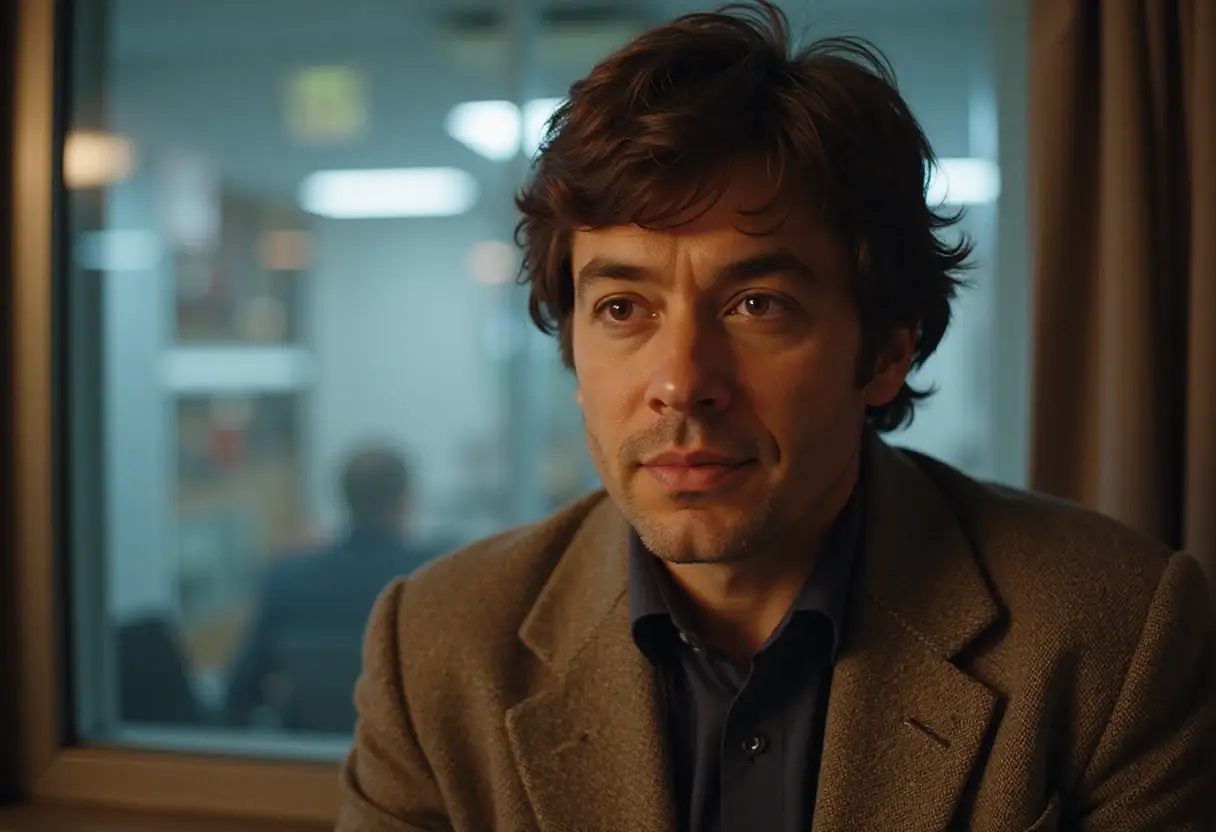
On the day the film captures, Teresa opens her home to a fellow musician, Rosa, played by Rosa Estela Juárez Vargas. Rosa wants the space for an interview with a two-man television crew. The shoot immediately falls apart around them. A nearby dog barks loudly. Power cuts strike at intervals. The interruptions never stop.
Where does the drama sit?
Pereda frames the tension as much in people as in noise. Panning shots swing from the banal questions posed by the male interviewers to the women's unimpressed faces. The review reads these glances as evidence of repetition: this is not the first time the two musicians have faced mediocrity. Subtle frictions grow between the characters while the cameras keep rolling.
The film works as docufiction rather than straightforward documentary. Pereda, a Mexican-Canadian film-maker, blends staged and found elements, a method consistent with his career. Chaos is not the obstacle here; it is the material. The barking, the blackouts and the personal animosities all feed the film's sense that artistic space must be carved out, much like the drivers in the opening intersection carve their lanes.
The Guardian's review locates the film's achievement in that parallel. The opening traffic sequence plays as comedy. The interior scenes play as endurance. Both ask the same question of Teresa and Rosa: how do you hold onto your own signal when everything around you is transmission?
Why does it matter?
Everything Else Is Noise joins a tradition of films that treat the city itself as an antagonist, from Tati's gridlocked roundabout onward. Pereda's contribution is to make the fight spatial and domestic at once: a woman's living room, a cello, a dog, a failing power supply and a television crew that does not listen. The takeaway is plain: the film argues that making art in a distracted world is less about inspiration than about claiming room.
The film stands as Pereda's latest exercise in finding rhythm amid chaos — and in showing who pays for the noise.
Source: theguardian.com
More from Elena Vasquez
Show full bio
Senior reporter covering technology and product news in arts in the broadest sense at Arts & Voices.
1,717 articles