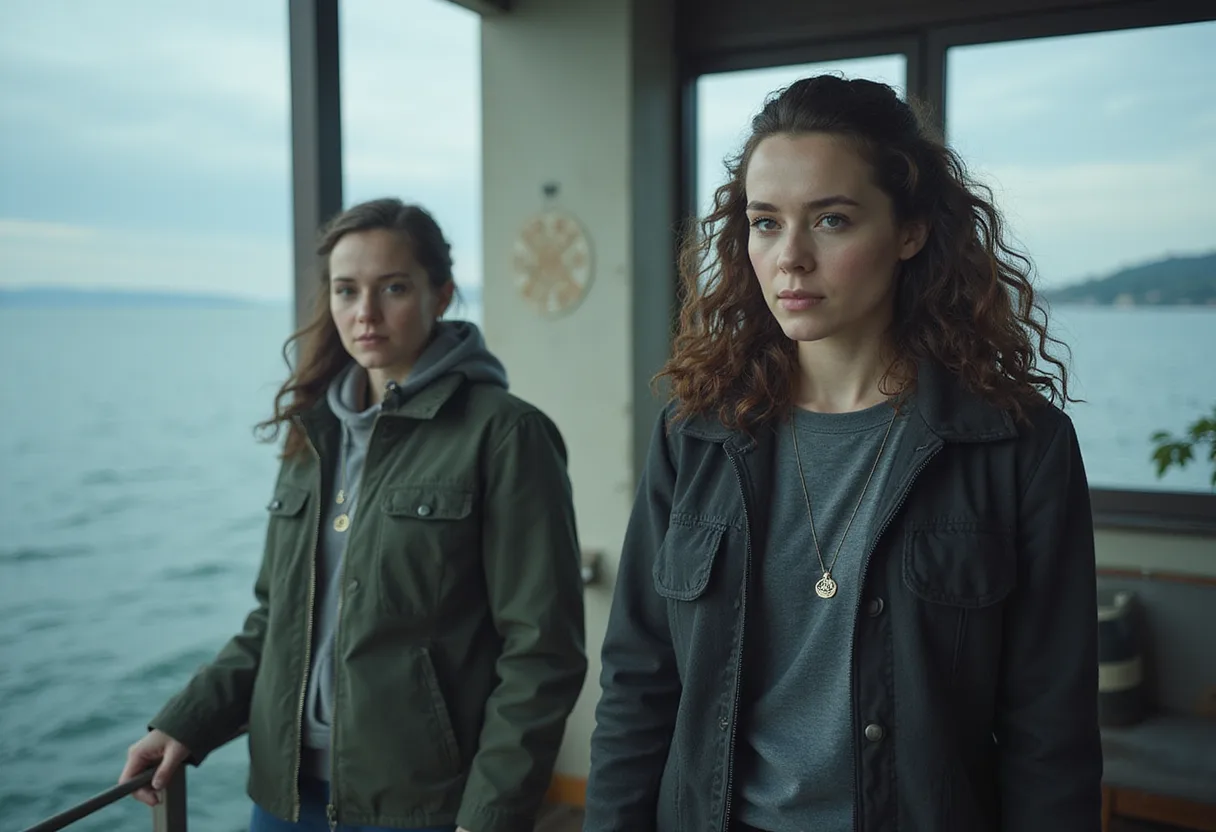
Olivia Colman and a Wicker Alexander Skarsgård in Sundance's 'Wicker'
Wilson and Fischer's Sundance fairy tale 'Wicker' pairs Olivia Colman with a wicker Alexander Skarsgård in a satire of jealousy, opening October 23.

Programme
- *Wicker* premiered at the 2026 Sundance Film Festival and opens in US theaters on October 23.
- The cast includes Olivia Colman, Alexander Skarsgård, Peter Dinklage, Elizabeth Debicki and Richard E. Grant.
- Practical effects were created by Joe Dunckley and WETA Workshop, with sound design by Andy Neil.
- The screenplay adapts Ursula Wills-Jones's short story *The Wicker Husband*.
- It is the sophomore feature of co-writer-directors Eleanor Wilson and Alex Huston Fischer.
A woman married to a man made of wicker, played by Alexander Skarsgård, is the premise at the center of Wicker, the sophomore feature from writer-directors Eleanor Wilson and Alex Huston Fischer, which premiered at the 2026 Sundance Film Festival and opens in theaters on October 23.
The film adapts Ursula Wills-Jones's short story The Wicker Husband. It unfolds in an unspecified medieval English village — a period and place, as the review in The Film Stage notes, that never actually existed. Wilson and Fischer use that invented setting to skewer patriarchal relationship dynamics and traditions. The characters carry no proper names: men are identified by occupation, women by their relationship to those men, a deliberate jab at the old practice of wives adopting their husbands' surnames.
Olivia Colman plays The Fisherwoman, mocked by the village for her unibrow, fishy odor, limp, and lack of a husband. "Love seems like more of a burden than a prize," is how she sees it. Her only respectful relationship is with The Basketweaver, played by Peter Dinklage, himself a target of ridicule despite his talents. After a wedding scene in which a husband clasps a matrimonial collar onto his bride rather than exchanging rings, The Fisherwoman opens a woven "maid's egg" signifying she will marry next — and the village responds with scorn.
Who leads the attack?
Elizabeth Debicki, in what the review calls perfect casting, plays The Tailor's Wife, the village's insidiously passive-aggressive social leader. The village women follow her charge, using The Fisherwoman as a target of ridicule to maintain the fragile facade that their own lives are good. The Tailor's Wife has her own grievances: a bright, skillful woman kept at bay by her husband and dismissed by her father, The Doctor, played by Richard E. Grant.
Determined to mock the village's traditions, The Fisherwoman asks The Basketweaver to make her a wicker husband. He delivers a walking, talking, anatomically correct creation — one that happens to look like Skarsgård. The village is initially curious; the novelty of the relationship becomes the talk of the town.
What does the craftsmanship look like?
Practical effects are the film's stand-out element. Joe Dunckley and New Zealand's WETA Workshop — credited with tangible effects work on projects from Mad Max: Fury Road to the Lord of the Rings trilogy over the last 40 years — built the woven components, which rotate and shift with what the review describes as artisan precision. Dunckley's prosthetics let Skarsgård emote while avoiding the grotesque. Sound designer Andy Neil renders the strains and stretches of the woven body. Skarsgård plays the role, per the review, as more Terminator than Scarecrow.
The stakes sharpen when The Fisherwoman keeps working while her Wicker Husband fixes the house. Village women grow envious of her capable partner, her agency as breadwinner, and, the film makes clear, the couple's passionate sex life. Her happiness exposes the unspoken problems in other households, and the husbands sheepishly commiserate at the inn's bar. The Tailor's Wife sets out to end the inconvenient bliss.
The Film Stage's review, marked as a Critics' Pick, calls the film a "can't-miss curiosity" that weaves humor and social commentary into a contemplation of jealousy's self-destructive perils. Wilson and Fischer close, in the review's words, with a sentiment aimed at the current age: "It's easier to believe the bad than the good, isn't it?" The October 23 theatrical release will test whether that curiosity travels beyond Park City.
Source: The Film Stage
More from Tom Whitfield
Show full bio
Market editor covering people, launches and day-to-day practice in arts in the broadest sense at Arts & Voices.
711 articles