Oxford Street Goes Car-Free: First Phase of Pedestrianisation Opens
Nearly a kilometre of Oxford Street, between Orchard Street and Great Portland Street, is now permanently car-free as East's pedestrianisation scheme begins its road to 2028.
Programme
- Almost a kilometre of Oxford Street closed to traffic yesterday, between Orchard Street and Great Portland Street
- Full transformation begins in 2027 and completes in 2028, designed by studio East with JL Gibbons, Gehl and Publica
- Two new squares will be created near Holles Street and Duke Street
- Sadiq Khan first announced traffic-free plans in 2017; Westminster Council blocked them in 2018
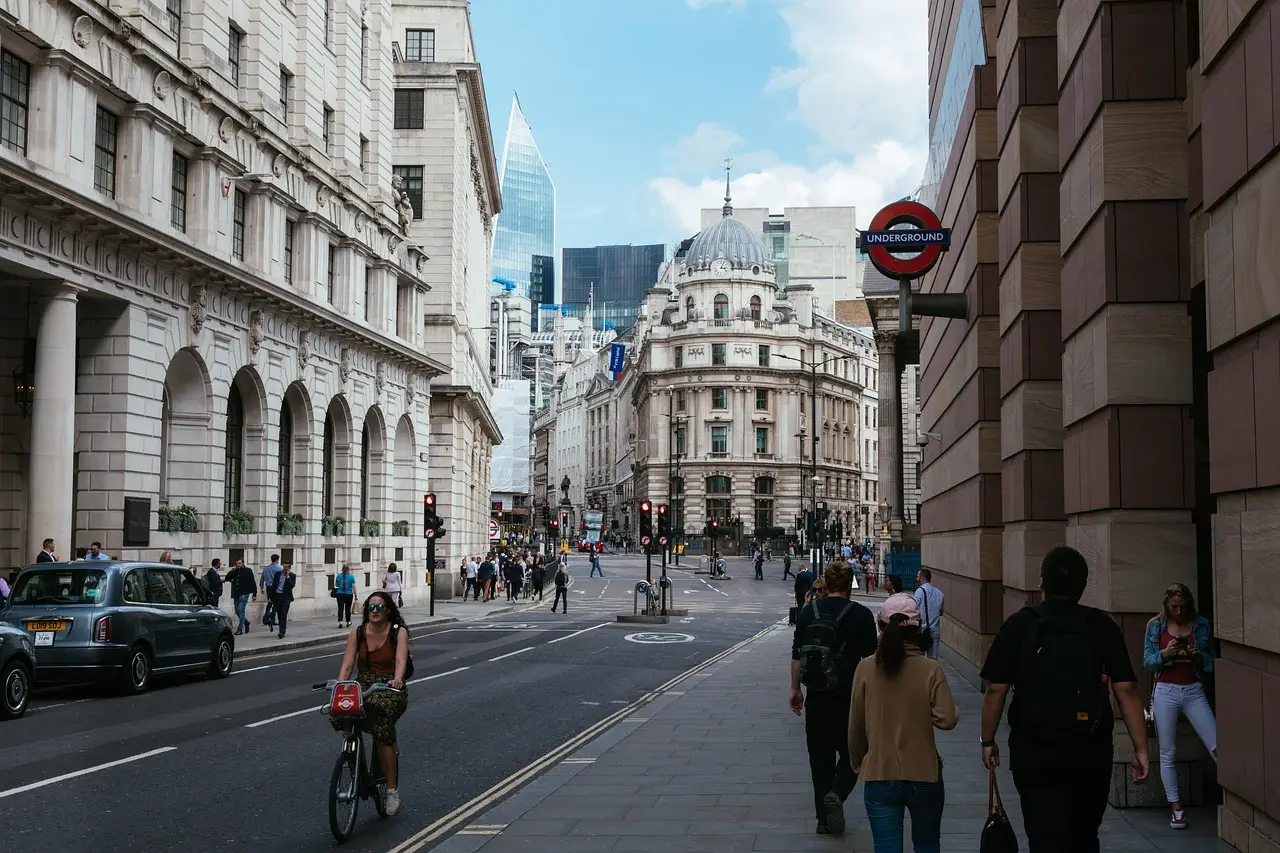
Almost a kilometre of Oxford Street is now permanently closed to traffic. The pedestrianisation of central London's main shopping thoroughfare began yesterday, covering the stretch between Orchard Street and Great Portland Street on the two-kilometre-long street.
Cars, buses, taxis, private hire vehicles, cycles, scooters and pedicabs are all banned from the section. They will be routed via side streets instead.
Photographs from yesterday's unveiling show the roadway decorated with a large sign reading "Oxford St". Green bollards keep traffic out.
Who is designing the new street?
Local architecture studio East produced the design for the pedestrianisation. It is working with landscape architecture studio JL Gibbons and urban design studios Gehl and Publica on the project.
Hawkins\Brown, meanwhile, has been developing a long-term vision for the entirety of the street, which runs from Tottenham Court Road to Marble Arch.
The first section is now in a transition period. During it, the East team will add new signage, seating and planters to make the area more visitor-friendly. The full transformation is expected to begin in 2027 and be completed by 2028.
"As we have seen from Borough High Street to Eltham, from Croydon to Green Lanes, London's high streets are the public face of the city in all its diversity, its greenery and its energy," East director Julian Lewis said.
"We design to preserve and support this energy, maintaining the ebbs and flows of these places which make our neighbourhoods unique."
What will change on the ground?
The transformed section will feature two new squares, one close to Holles Street and the other close to Duke Street. A new surface dressing will mark them and make the ground level across the carriageway (the roadbed itself, now absorbed into the pedestrian realm).
Trees will also be added in "sculptural pots", East said, before being planted into the ground as part of the permanent scheme.
Why did it take so long?
London mayor Sadiq Khan first announced plans to make Oxford Street traffic-free almost a decade ago, in 2017. Westminster Council blocked them in 2018.
East revealed updated renders of its vision for the final scheme earlier this month, and the timeline now points to a completed transformation by 2028 — a slow walk for a scheme first promised nearly ten years ago.
Original: east.uk.com
More from Daniel Okafor
Show full bio
News editor covering companies, deals and strategy in arts in the broadest sense at Arts & Voices.
777 articles