PBS Brings Carnegie Hall's Space Race Spectacle 'We Chose to Go to the Moon' to Television
PBS televises John Monsky's Carnegie Hall multimedia concert on the Space Race: a 45-piece orchestra, Broadway stars, theremins and a Martin Luther King Jr. anecdote.
Programme
- PBS is televising 'We Chose to Go to the Moon,' first staged at Carnegie Hall last April.
- The Carnegie Hall production used a 45-piece orchestra, Broadway performers, film footage and still photos.
- Creator-narrator John Monsky's American History Unbound series has previously covered World War II and Vietnam.
- Skylar Astin reads Neil Armstrong's Korean War-era letter; Joy Woods performs as Star Trek's Nichelle Nichols.
- The program streams on pbs.org and the PBS app.
By Marcus Bennett
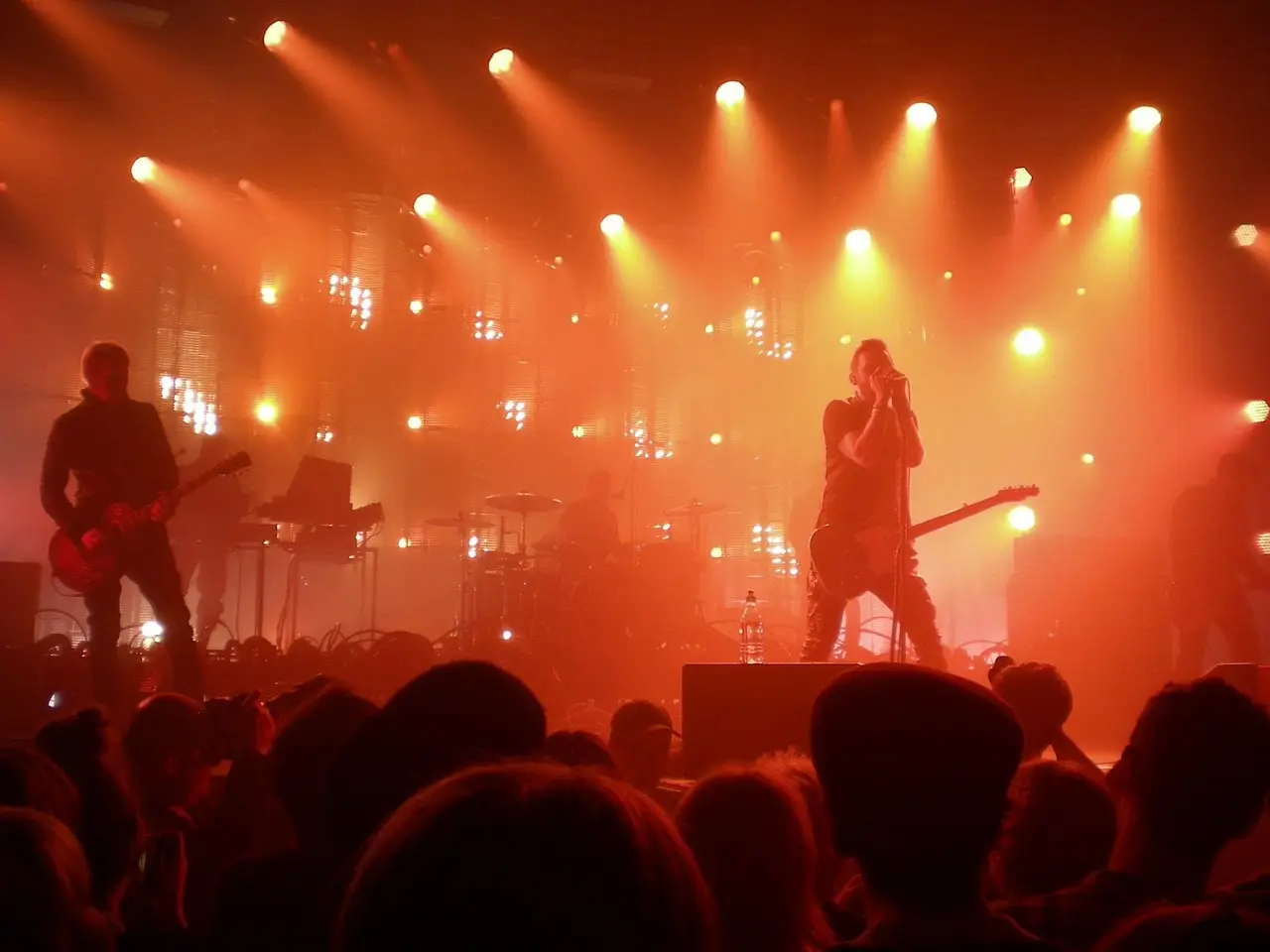
PBS is now streaming a televised version of "We Chose to Go to the Moon," the multimedia concert that played Carnegie Hall last April and retold the history of the Space Race with a 45-piece orchestra, Broadway singers, film footage and still photographs. TV critic David Bianculli reviewed the production for NPR's Fresh Air, calling its approach "very unconventional, extremely emotional and exciting."
Who made it, and how does it work?
The show's creator, writer and onstage narrator is the historian John Monsky. As Bianculli put it, Monsky "knows his stuff" and, like Ken Burns, seeks out viewpoints from minorities, women and overlooked contributors. The Carnegie Hall staging belongs to Monsky's American History Unbound concert series, which has previously presented programs on World War II and Vietnam. Bianculli credits Monsky with being, beyond his scholarship, "one hell of a showman": the production brings history to life "in ways as touching as they are illuminating."
The Armstrong section illustrates the method. The show introduces the first man on the moon not in July 1969 but as a teenager obsessed with flying lessons, then as a 20-year-old Navy pilot flying jets off an aircraft carrier in the Korean War. Skylar Astin, of Broadway's Spring Awakening, reads Armstrong's letter to his father while the orchestra plays "Suicide Is Painless," the theme of M*A*S*H.
The letter itself carries the weight: "The day after I wrote my last letter, I was hit by enemy fire, and I almost lost my aircraft in a dive about a hundred miles behind enemy lines. However, I managed to nurse the plane back to friendly territory, and I bailed it out safely. But the next day, two of our boys in the squadron were shot down. It was a pretty grim day."
What does the music add?
The songs map popular culture's obsession with the Space Race. Astin sings "Fly Me to the Moon"; the program also includes Elton John's "Rocket Man," The Byrds' "Mr. Spaceman," and two David Bowie classics, "Life on Mars?" and "Space Oddity." Lesser-known repertoire matters too. Armstrong loved an obscure album, "Music Out of the Moon," whose featured instrument was the theremin, and he carried a recording of it into space.
Monsky connects that instrument to the venue's own history: "In 1932, The Theremin Orchestra, led by Leon Theremin, performs right here on this stage, in this spot at Carnegie Hall. And now, 94 years later, I present to you 'Music Out of the Moon.'" Samuel J. Hoffman's "Lunar Rhapsody" follows. The theremin returns again in Alexander Courage's theme from Star Trek, a series Monsky calls a hit — a claim Bianculli corrects, noting it was not one at the time, though future scientists would design phones and computers based on what they saw on it.
A scene-stealing King anecdote
Joy Woods, Tony-nominated for the recent Gypsy revival, performs as Nichelle Nichols, who played Lieutenant Uhura and nearly quit Star Trek midway through. In character, Woods recounts how Dr. Martin Luther King Jr. told Nichols: "Don't you know that a Uhura represents more than just a part for Nichelle Nichols? ... while we're out there marching and having hoses turned on us and dogs jumping on us, there is a TV show that says we don't stop here. We go on. And there is a woman on that show who looks just like us." Nichols stayed.
The staging delivers further coups de théâtre: performers dressed as astronauts, suspended above the stage like the cast of Peter Pan, walk in space, while projections carry cartoons, films, the first Earthrise seen from space, and Armstrong's lunar landing. Bianculli judges the whole "a persuasive template for a dynamic, fresh approach to teaching history" and urges viewers to seek it out. "We Chose to Go to the Moon" is available now on pbs.org and the PBS app — a broadcast that could turn one historian's stage experiment into a model for how television teaches the past.
Source: NPR Arts
More from Marcus Bennett
Show full bio
Staff writer covering people, launches and day-to-day practice in arts in the broadest sense at Arts & Voices.
1,346 articles