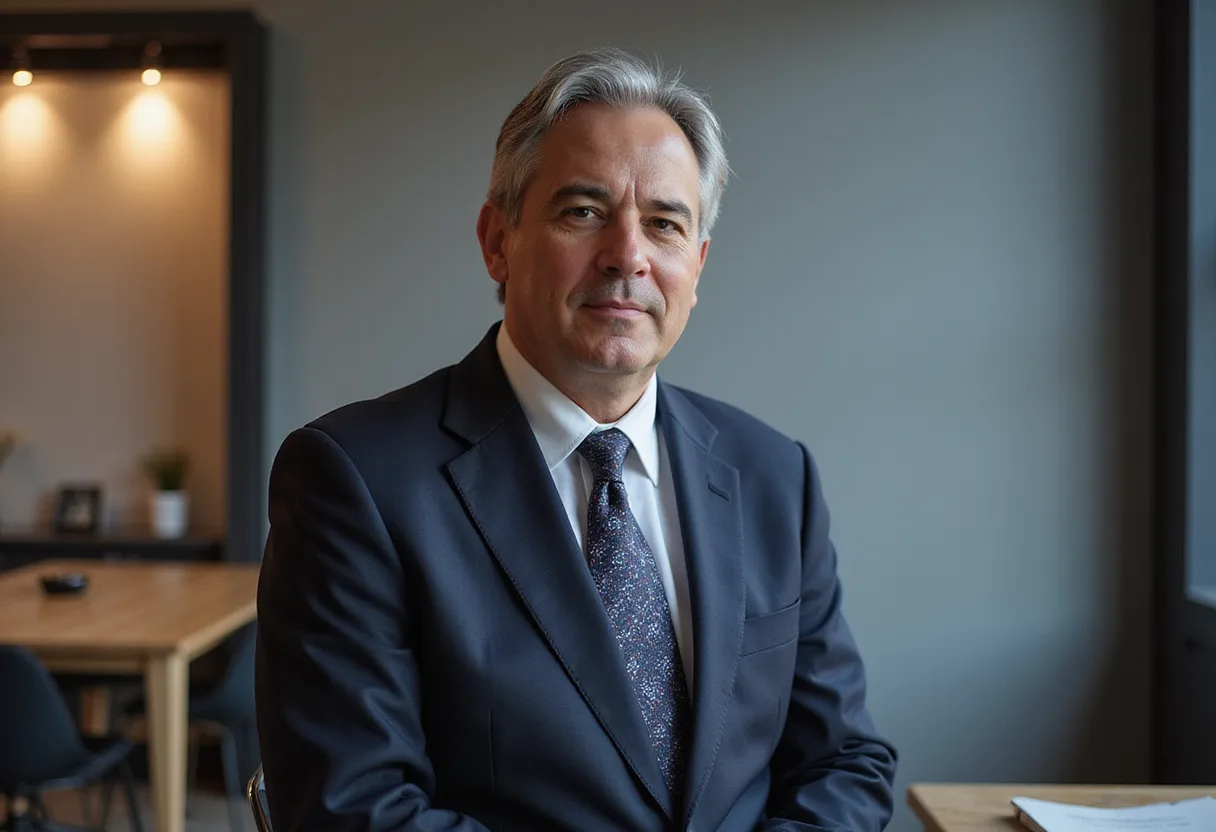
Pedro Pascal Says Therapy Has Carried Him Through Childhood Trauma
Pedro Pascal, 51, says therapy has been part of most of his adult life, linking childhood separation from his mother under Pinochet and her suicide in 2020 to lasting emotional wounds.
Programme
- Pedro Pascal, 51, spoke in an interview published Saturday, March 29
- The actor says he has used therapy for most of his adult life
- His mother died by suicide in 2020
- He was separated from his mother as a child during the Pinochet dictatorship in Chile
- Pascal was born in Santiago and describes his childhood as a difficult period
Pedro Pascal, 51, has revealed that he has relied on therapy for most of his adult life. In an interview published on Saturday, March 29, the actor traced that need back to a childhood shaped by Chile's dictatorship under Augusto Pinochet.
Pascal, born in Santiago, described his early years as a difficult period marked by the forced separation from his mother. The circumstances of the military regime, not any family choice, drove her away from him, he indicated. He now views that political rupture as a decisive factor in who he became.
The actor did not treat the disclosure as a confession so much as an explanation. He tied the emotional instability he has experienced in adulthood directly to the traumatic events of his earliest years, and he framed ongoing therapeutic support (regular sessions with a mental health professional) as the tool that lets him process what happened.
What does the disclosure add to Pascal's public story?
Pascal said he has been open about his difficulties over the years, and the interview extends that openness to the darkest chapter of his family history. He confirmed that his mother died by suicide in 2020. Her death compounded the earlier traumas, he said, and required professional support to work through.
The timeline matters here. Pascal's childhood separation from his mother happened under a regime that ruled Chile from 1973 to 1990, and he carried its consequences for decades before her death in 2020. Two events, separated by roughly half a century, sit at the center of his account.
The interview also names the mechanism plainly: therapy. Pascal didn't romanticize the process. He described it as a necessity, something he has returned to throughout most of his adult life to manage the psychological aftereffects of a childhood spent under dictatorship and the later loss of his mother to suicide.
Why the personal history is inseparable from the political one
Pascal's account makes clear that the Pinochet era was not background noise for his family but an active force in it. His mother's absence was, in his telling, forced by the political conditions of the time. The dictatorship separated mother and son; the separation left marks that therapy still addresses.
That framing converts a celebrity interview into a small document of Chilean history. The actor, born in Santiago in 1973 at the start of the regime, is describing how state violence reached into one household and stayed there — through his adult emotional life, through his mother's death in 2020, and into a conversation with the international press published on March 29.
What changes for Pascal's audience is largely this: the actor known for large franchises has now placed his own biography alongside the public record of the dictatorship, and he has done it without softening either the politics or the grief.
Source: brasilemfolhas.com
More from Grace Kim
Show full bio
Correspondent covering technology and product news in arts in the broadest sense at Arts & Voices.
1,862 articles