Phil Lord and Chris Miller Break Down ‘Project Hail Mary’
Phil Lord and Chris Miller detailed the puppetry, stop-motion tests and spontaneous karaoke scene behind “Project Hail Mary” at IndieWire’s 2026 filmmaking summit.

Programme
- The IndieWire Future of Filmmaking 2026 Summit hosted a one-hour keynote from Phil Lord and Chris Miller, presented by AT&T.
- Lord said making the whole film with physical puppetry would have cost $1 billion.
- Sandra Hüller received the singing request 36 hours before filming and chose Harry Styles’ “Sign of the Times.”
- Miller said the crew had no rehearsal time, kept the song from the cast and filmed the cast’s reactions before Hüller’s performance.
- AT&T Untold Stories, a multi-year collaboration with the Tribeca Festival, awards $1.2 million, mentorship and comprehensive support.
By Marcus Bennett
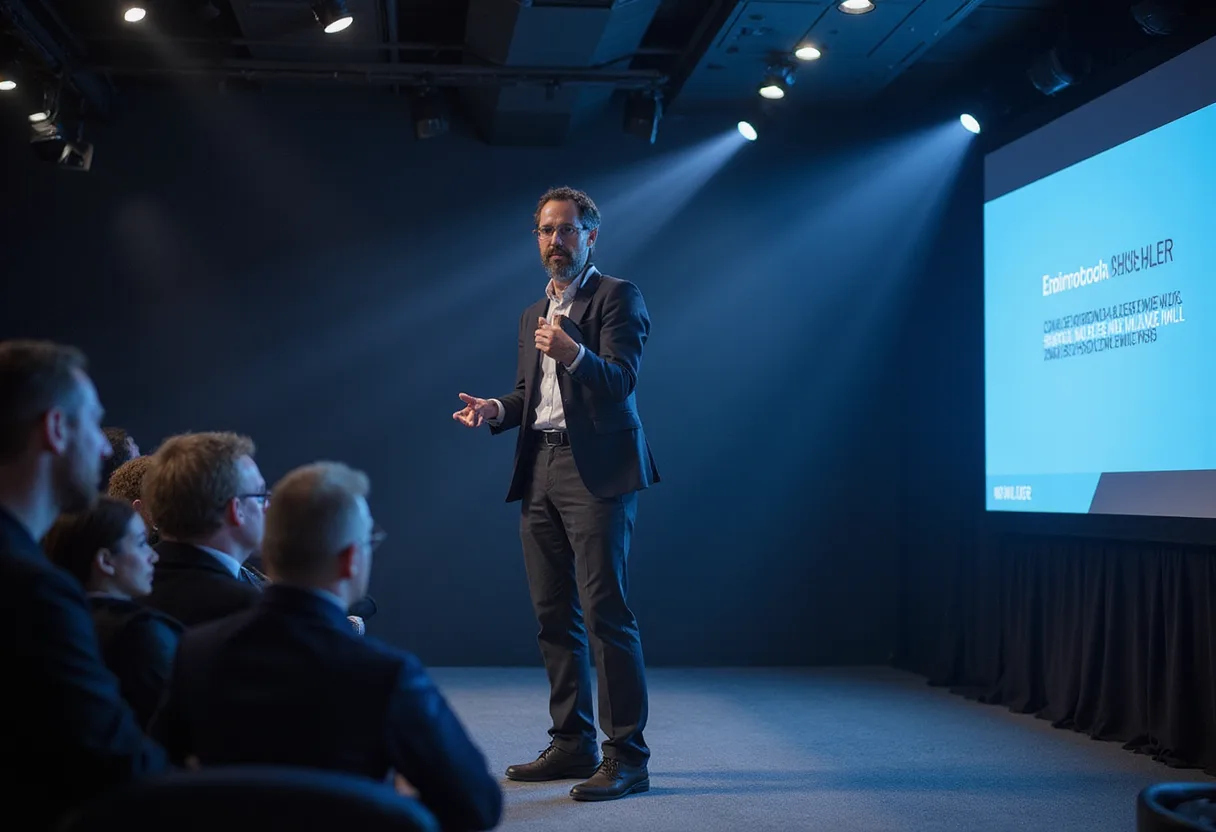
Phil Lord and Chris Miller called Project Hail Mary “the hardest movie” they had ever made during a one-hour keynote at the IndieWire Future of Filmmaking 2026 Summit presented by AT&T.
In their presentation, the directors used a slide deck to trace how the film’s production design evolved. They showed stop-motion tests and explained how spontaneity shaped its emotional highs. They framed the production as challenging but positive. IndieWire described Lord and Miller as the filmmaking duo behind one of the year’s biggest hits.
“We wanted to make a movie about doing difficult things. And in order to do that, we had to make the movie as difficult as possible,” Lord said with a laugh.
“A movie about people coming together to accomplish something really hard,” Miller added. “This is what people have said to us about this movie.”
Their deck then displayed a slide reading, “You made me cry over a rock.”
What does the production process change on screen?
In the story Lord and Miller described, Ryan Gosling stars as the sole survivor of an Earth-saving interstellar expedition. He is often the only human face on screen, but Rocky becomes his animated scene partner.
Rocky, a fun-loving geode alien, comes from a mixture of puppetry, computer-generated imagery, onstage vocal work and other production processes, the directors said.
“We knew that we wanted to make him a physical puppet, at least to start. There’s a lot of CG in the movie, but we wanted the inspiration to be puppetry,” Lord said while presenting stop-motion tests for the character.
“I begged them to let us do the whole movie this way. It would have cost a billion dollars.”
“The movie lives and dies on their relationship,” Miller added. “The idea that Ryan could do the whole movie talking to a tennis ball on a stick by himself was impossible. We knew it had to be real scenes …”
“The reason why you [watch ‘Star Wars’ and] believe Yoda — who’s kind of a shitty puppet — is because Mark Hamill believes it’s real and he confers authenticity onto it. Ryan really makes you believe because he has so much range and so much heart.”
For the audience, the practical change is that Rocky is not confined to a digital performance. Lord and Miller built the role around physical puppetry, real filmed scenes and Gosling’s reactions, then combined those elements with computer-generated imagery and onstage vocal work.
Lord and Miller traced one of the film’s stand-out scenes to a flashback. A usually stone-faced task force leader, played by Sandra Hüller, uncorks her own emotions through a karaoke performance of Harry Styles’ “Sign of the Times.”
“Ryan came to us and was like, ‘Sandra has an amazing singing voice. And she sings in between takes.’ And if you’ve ever saw the film ‘Toni Erdmann’ — if you haven’t, I recommend it — she sings and it’s fantastic,” Miller said.
“We concocted this idea that, instead of her staying apart from the karaoke thing to express how stoic and lonely she was, Ryan dares her to show her more human side that he can see,” Lord said.
“The most uncool thing you can do to an actor is come to them 36 hours before and say, ‘Do you mind singing a song tomorrow?’ And she being a very gracious, incredible, delightful, super talented artist was like, ‘I’ll do it if I get to pick the song.’”
“Harry Styles! Really, really expensive song. That’s fine. That’s great,” Miller interjected jokingly.
“That should be easy to pay for and clear,” Lord said. “But you know what? Movie crews do impossible things.”
“We were able to get a clearance on it. We had no time to rehearse … And we didn’t tell the cast what she was going to sing,” Miller said. “The first thing we shot was the reaction of the cast, which is very genuine. We are very agog at how beautiful it was.”
“And then we came around and shot Sandra’s side. And then our amazing editor — Joel Negron, who we’ve worked with for years — we ask them to cut it together like a dialog where she’s talking to the crew at first. And then by the end, she’s talking to Ryan directly,” Miller continued.
The sequence depended on a chain of specific choices: Hüller selected the song shortly before filming; the cast did not know what she would sing; and the crew filmed their reactions before shooting her performance. Editor Joel Negron assembled the exchange so Hüller appears to address the crew before speaking directly to Gosling’s Ryan.
IndieWire placed Lord and Miller’s complete conversation above the presentation. AT&T Untold Stories, a multi-year collaboration between AT&T and Tribeca Festival, presents the summit. The program awards $1.2 million, mentorship and comprehensive support to the next generation of filmmakers looking to bring their films to the big screen.
As AT&T Untold Stories continues its multi-year work, Lord and Miller’s open production account gives emerging filmmakers a concrete case study in testing performance and retaining genuine reactions.
Original: pmc.com
More from Marcus Bennett
Show full bio
Staff writer covering people, launches and day-to-day practice in arts in the broadest sense at Arts & Voices.
731 articles