Protest Songs Keep Outliving Their Moments — Streaming Proves It
Cooke's 'A Change Is Gonna Come' saw streams rise 112.7% during 2020 protests. From 'Bella Ciao' in Iran to 'Les Mis' in Hong Kong, protest songs keep finding new crowds.
Programme
- "A Change Is Gonna Come" streams rose 112.7% during 2020 Black Lives Matter protests (Nielsen midyear report).
- Kendrick Lamar's "Alright" (2015) saw a 237.5% stream increase in 2020 per Nielsen.
- "Money Heist" (2018) introduced "Bella Ciao" to a new global audience; a Persian version circulated during Iran's 2022 protests.
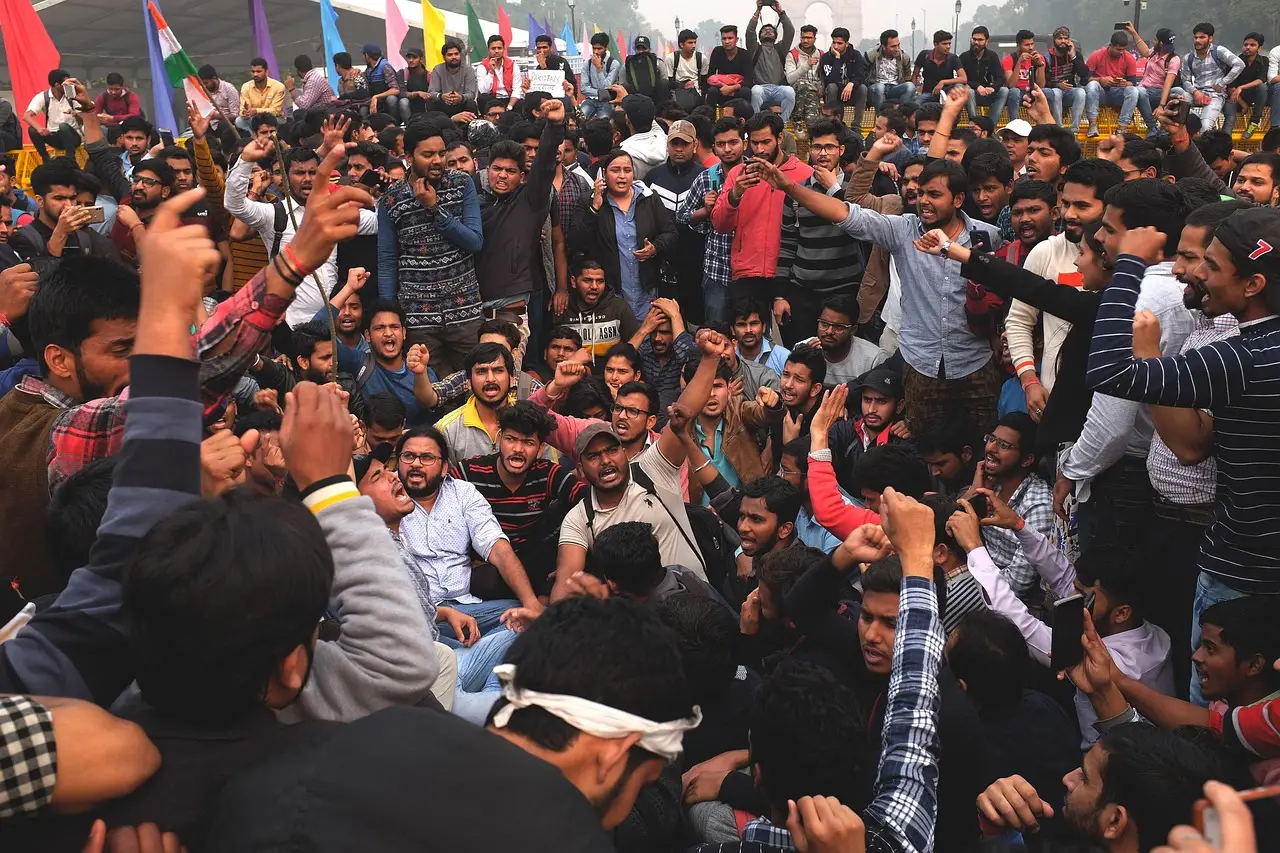
- "Do You Hear the People Sing?" was sung in English and Cantonese during Hong Kong's 2019 protests.
Sam Cooke recorded "A Change Is Gonna Come" shortly before his death in 1964. Fifty-six years later, during the protests that followed the killing of George Floyd, its on-demand audio streams rose by 112.7 per cent, according to Nielsen's midyear music report.
The song hadn't changed. The circumstances had.
That gap between a fixed recording and a shifting world is the engine of protest music. A song attaches itself to one movement, fades, then returns when another generation finds its message fits. No instruments required. No stage, no professional musicians — just a crowd in a square that somehow already knows the melody.
Which songs keep coming back?
The canon is short and durable:
- Bob Dylan's "Blowin' in the Wind" (early 1960s), which asks questions about freedom and war instead of making an argument
- "We Shall Overcome," which travelled from African American spiritual traditions through labour organizing into the civil rights movement
- Nina Simone's "Mississippi Goddam" (1964), written after the murder of Medgar Evers and the Birmingham church bombing that killed 4 Black girls
- "Bella Ciao," the Italian resistance song now sung from Chile to Iran
"We Shall Overcome" has the strangest biography. An early version traces to "I'll Overcome Someday," associated with Black minister and composer Charles Albert Tindley. Striking tobacco workers in Charleston, South Carolina, carried a version into the labour movement in the 1940s. Pete Seeger and Guy Carawan popularized it through the Highlander Folk School's orbit. By the 1960s it anchored the civil rights movement — the Smithsonian identifies it as a central anthem, and the Library of Congress has documented its long migration through communities and traditions.
Its design explains the endurance. The melody is memorable, the pace deliberate, the words learnable after a few hearings. As I said, no rehearsal needed. That simplicity lets it work as a solemn memorial rendition or a mass demonstration chant without losing its identity.
What does television have to do with it?
Sometimes the revival route is not a movement at all. In 2018, the Spanish series "Money Heist" ("La Casa de Papel") introduced "Bella Ciao" to a global streaming audience. Researchers Daniele Salerno and Marit van de Warenburg then documented the song's continued appearance in Chilean protests, Indian farmers' demonstrations, feminist activism and environmental movements — describing it as a form of cultural memory that moves between political contexts.
In 2022, after the death of Jina Mahsa Amini, a Persian-language version circulated widely online during protests in Iran.
The pattern repeats with show tunes. "Do You Hear the People Sing?" — written by Claude-Michel Schönberg and Alain Boublil, with English lyrics by Herbert Kretzmer, for "Les Misérables" — was sung in English and Cantonese during Hong Kong's 2019 pro-democracy protests. The Smithsonian's Center for Folklife and Cultural Heritage has documented the role of such melodies in communicating shared identity.
How fast can a new anthem age?
Kendrick Lamar's "Alright," from 2015's "To Pimp a Butterfly," became a Black Lives Matter anthem and then, during the 2020 protests, saw streams jump 237.5 per cent by Nielsen's count. Five years old and already functioning as tradition. Hip-hop joins the folk-and-soul lineage with different instruments and the same job.
There is a distinction worth keeping: a song about politics is not the same as a song useful to a crowd. Anthems need singable melodies, repeatable words and an emotional message people recognize. Peter, Paul and Mary took "Blowin' in the Wind" to an enormous pop audience for precisely that reason — accessibility.
Older songs can also acquire meanings their creators never intended, and rights holders sometimes object to the new uses. The artist writes the song; the public writes its second life.
None of this settles political disagreements, and music replaces neither organizing nor civic work. What it does is let one generation speak to another. When the next crowd starts singing, the conversation begins again.
Source: thatericalper.com
More from Daniel Okafor
Show full bio
News editor covering companies, deals and strategy in arts in the broadest sense at Arts & Voices.
1,669 articles